
 افریقا
 اسیا
اسیا اروپا
اروپا سویلي امریکا
 استرالیا او اوقیانوسیه
 انټارکټیکا
 ارام سمندر
 اطلس سمندر
 هند سمندر
 شمالي منجمد سمندر
 مدیترانه بحیره
 سره بحیره
 د کارائیب بحیره
 مرجاني بحیره
 د سویلي چین بحیره
 د فیلیپین بحیره
 د اندامان بحیره
 شمالي بحیره
 د تیمور او ارافورا بحیره
 د بنګال خلیج
 د کالیفورنیا خلیج
Clinging jellyfish
 نیش وهونکي تارونه
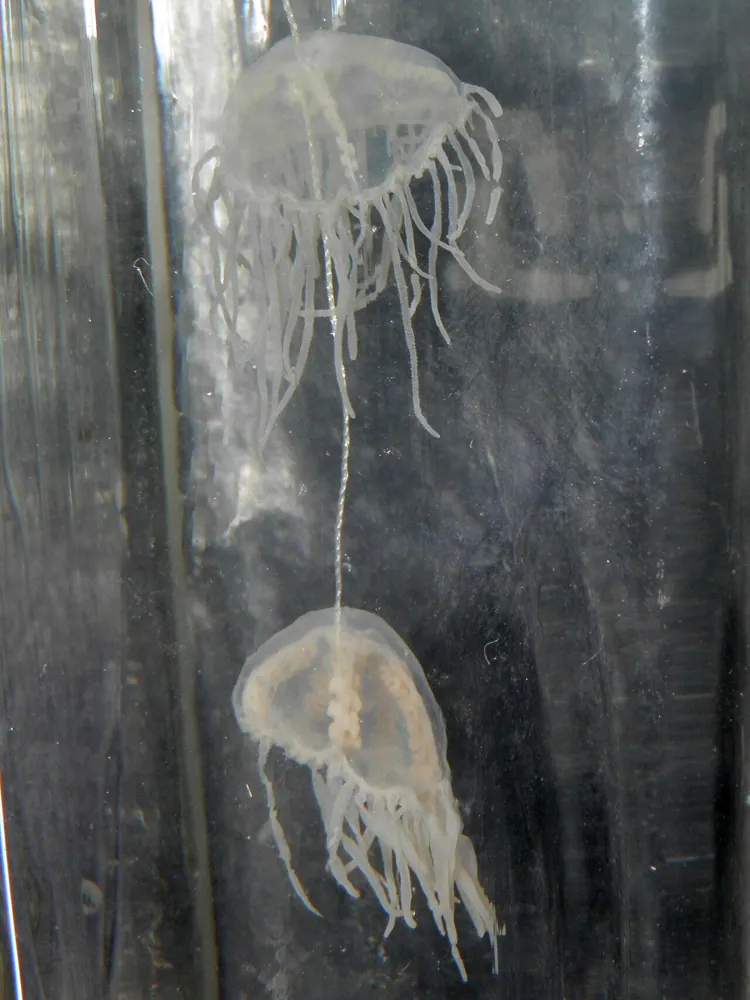
The clinging jellyfish is a small jellyfish, with a bell only 1 to 3 cm across. It lives in shallow coastal waters across much of the Northern Hemisphere. Its sting can be strong in some areas, so it is worth knowing what it looks like.1



 څنګه یې وپېژنې
- Has a transparent bell lined with about 60 to 80 tentacles1
- Gonads are orange, red or violet in females and yellow-brown in males1
- The tan manubrium (mouth structure) hangs down in the middle of the bell1
- Bell is usually 1 to 3 cm across; a tentacle can be twice the bell's diameter when fully extended1
د زهرو ځواک
زرګونه کوچني نیش وهونکي حجرې هغه وخت ډزې کوي چې څه ورسره ولګېږي.
زهر یې (چیچل یا نیش) څه کوي؟
Its sting can cause pain, a swollen throat, chest tightness, muscle cramps, neuropsychiatric changes (effects on mood, thinking or behaviour) and anaphylactic shock, a severe allergic reaction.1
انسانانو ته څومره خطرناک دی؟
انسانانو ته خطر: جدينیش ډاکټر ته اړتیا لري. مړینه ډېره کمه ده.In much of its range the sting is strong enough to cause serious symptoms. Stinging incidents have been reported from East Asia, Europe and the Atlantic coast of the United States. Off North America's northeast Pacific coast, its sting cannot be felt and it is considered harmless to people.1
 که نیش ووهي
- له اوبو ووځه او ټول نښتي تارونه (لاسکي) لرې کړه (د دستکشو یا ټوکر سره).
- د استوايي بکس جیليفش لپاره: لږ تر لږه 30 ثانیې پر نیش ځایونو سرکه واچوه، د مرستې لپاره زنګ ووهه او چمتو اوسه چې CPR (د زړه او سږو بیا ژوندي کول) وکړې. د بلوبوټل او نورو ډېرو لپاره: په سمندري اوبو یې ومینځه، بیا د درد لپاره ګرمې اوبه.
تل لومړی خپلې بیړنۍ شمېرې ته زنګ ووهه (112، 000، 911). دا د لومړنۍ مرستې عمومي لارښوونه ده، طبي مشوره نه ده. د لومړنۍ مرستې بنسټونه
 خوندي اوسه
- هېڅکله ځنګلی ژوی مه لمسوه، مه یې نیسه او مه یې ځوروه، حتی که کوچنی وي، او حتی که ویده یا مړ ښکاري.
- ورته ځای ورکړه. که له یوه سره مخ شوې، ارام اوسه، ورو ورو شاته شه او پرېږده چې خپله لار ولاړ شي.
- که یو نیش درکړي: ارام اوسه، بېحرکته پاتې شه، خپلې بیړنۍ شمېرې ته زنګ ووهه (112، 000، 911) یا ژر روغتون ته ورسېږه. په یاد ولره چې څه ډول ښکارېده، عکس مرسته کوي.
دا ستا پسې نه ګرځي. خپل زهر د خوراک نیولو یا د ځان ساتلو لپاره کاروي، او ډېر غوره ګڼي چې پټ شي. د خوندي پاتې کېدو په اړه نور
څومره لوی دی؟
څومره اوږد دی؟
 شاوخوا د کاغذ کلیپ هومره اوږد
Clinging jellyfish ستا په پرتله څومره لوی دی؟
یوازې ستا په براوزر کې حساب کتاب. هېڅ شی نه خوندي کېږي او نه چېرته لېږل کېږي.
څومره چټک دی؟


حقیقتونه
Some scientists think the clinging jellyfish may be a group of closely related species, because its sting and body shape vary from place to place.1
The jellyfish appear once the water warms to about 17 to 18 °C, so they follow a yearly pattern and sometimes appear in large numbers at once.1
The medusa (jellyfish) stage usually lasts no more than three months, but the polyp stage can last for years.1
Polyps can split into several new polyps by budding.1
In Europe, the species is non-native and has been found in the Mediterranean and along the Atlantic coast from Portugal to Norway and Sweden.1
د افسانو ماتوونکی
افسانه: The clinging jellyfish is harmless everywhere.
حقیقت: Its sting is harmless off the northeast Pacific coast of North America, but it can be strong and dangerous in East Asia, Europe and the Atlantic coast of the United States.1
د زهرو د کارپوهانو لپاره
- علمي نوم
- Gonionemus vertens
- ډله
- جیليفشونه او سمندري نیش وهونکي
- کورنۍ
- Olindiidae2
- ترتیب
- Limnomedusae
- وچې
- ارام سمندر, اطلس سمندر, سمندرونه
- کوچني ماشومان
- Medusae release tens of thousands of eggs and sperm into the sea. The fertilised young become planula larvae, which settle on the seabed as tiny polyps.1
- انسانانو ته خطر
- 3 / 5: جدي3
حقیقتونه له کومه راځي
- Gonionemus vertens (Wikipedia (CC BY-SA 4.0))
- Gonionemus vertens (iNaturalist): نومونه او ډلبندي.
- Venom Wiki: د خطر کچه، عادي اندازه او د سرعت اټکل زموږ خپل دي. وګوره چې څنګه یې محاسبه کوو: موږ خطر څنګه اندازه کوو.
په دې پاڼه کې هر حقیقت یوه شمېره لري چې خپلې سرچینې ته اشاره کوي. که موږ څه غلط کړي وي، بښنه غواړو، موږ د ژویو مینهوال یو، نه علمي مجله. په [email protected] کې راته ووایه او موږ به یې سم کړو.
 لړم وږی دی! Venom Wiki د یو کس پروژه ده: وړیا، پرته له اعلانونو او تعقیبوونکو. یوه کوچنۍ ډالۍ یې په انټرنېټ کې ساتلو کې مرسته کوي.لړم ته خواړه ورکړه
له همدې ډلې نور: جیليفشونه او سمندري نیش وهونکي
 Australian box jellyfishجیليفشونه او سمندري نیش وهونکيوژونکیمه یې لمسوه
 Irukandji jellyfishجیليفشونه او سمندري نیش وهونکيوژلای شيمه یې لمسوه
 Portuguese man o' warجیليفشونه او سمندري نیش وهونکيډاکټر ته اړتیا لريمه یې لمسوه
 Lion's mane jellyfishجیليفشونه او سمندري نیش وهونکيیوازې درد کويمه یې لمسوه
 Moon jellyfishجیليفشونه او سمندري نیش وهونکيبېضرره
 Common kingslayerجیليفشونه او سمندري نیش وهونکيوژلای شيمه یې لمسوه
 Geography cone
 Greater blue-ringed octopus
 Japanese pufferfish
 Southern blue-ringed octopus
 Hawksbill sea turtle
 Reef stonefish