
 África
 Ásia
Ásia Europa
 América do Sul
 Austrália e Oceania
 Antártida
 Oceano Pacífico
 Oceano Atlântico
 Oceano Índico
 Oceano Ártico
 Mar Mediterrâneo
 Mar Vermelho
 Mar do Caribe
 Mar de Coral
 Mar do Sul da China
 Mar das Filipinas
 Mar de Andamão
 Mar do Norte
 Mar de Timor e de Arafura
 Golfo de Bengala
 Golfo da Califórnia
Common lancehead
 Mordidas
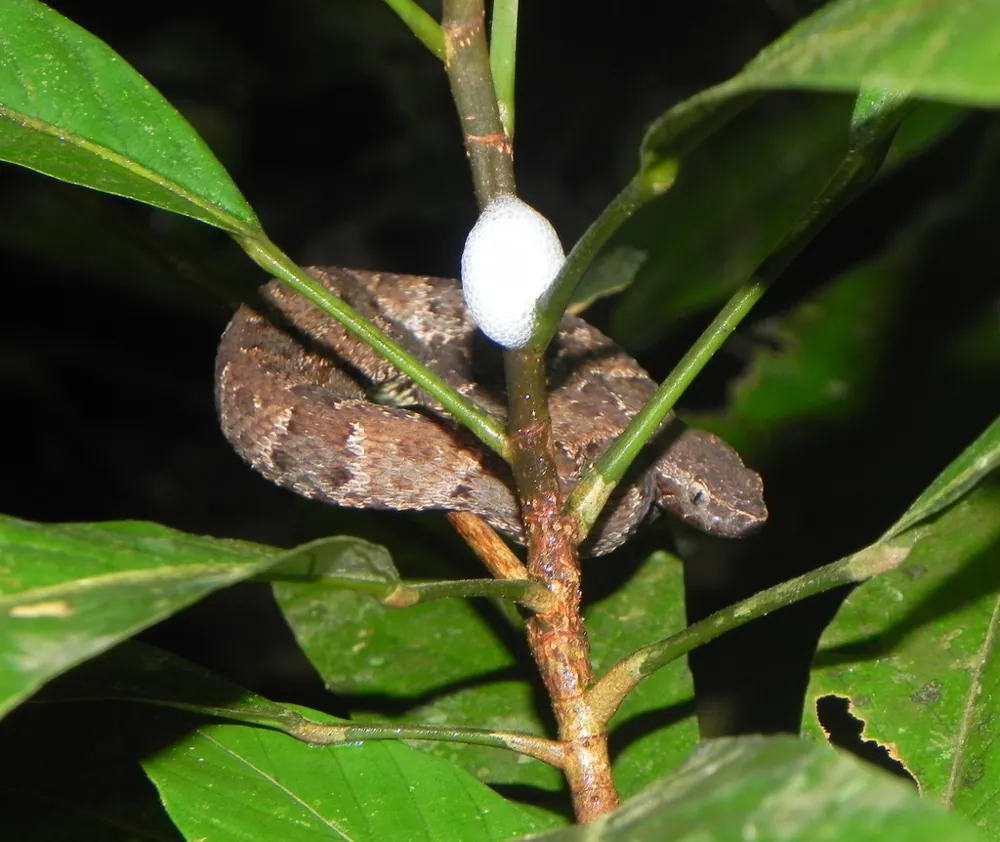
The common lancehead is a highly venomous pit viper that lives in the tropical lowlands of northern South America and on the Caribbean island of Trinidad. It is one of the most common pit vipers in its range and is not endangered. Its venom disrupts blood clotting, which makes its bite especially serious.1



 Como reconhecer
- Ground colour is olive, brown, tan, grey or yellow, and rarely rusty.1
- The body pattern is a series of blotches that often fuse into bands. The markings are X-like, which is why some local names refer to the letter X.1
- The chin is pale yellow, and a dark stripe runs from behind the eye to the corner of the mouth.1
- The irises are gold or bronze, and the tongue is black.1
- Adults usually measure 75 to 125 cm in total length and are moderately heavy-bodied.1
Muitas vezes confundido com: It is often confused with Bothrops asper, which was once included in this species. Most authorities now consider B. asper to be a separate species. This confusion also makes reports of its maximum size unclear.1
Poder do veneno
O veneno sai pelas presas ou pelos dentes quando ele morde.
O que o veneno dele faz?
Its venom is haemorrhagic, meaning it damages the lining of blood vessels and uses up the substances that allow blood to clot. Symptoms can include severe bleeding, kidney failure, abnormal clotting, blisters and necrosis (death of body tissue). Bleeding in the brain can also occur. Recovery from the clotting problem has been seen 14 to 30 hours after a bite.1
Qual é o perigo para as pessoas?
Perigo para as pessoas: MortalUm dos animais mais perigosos do mundo.The bite is serious and can be fatal. Plantation workers are often bitten. Juvenile snakes have more lethal venom that kills more quickly, and people bitten by young snakes are more likely to develop the clotting problem. In a case reported in the Brazilian Amazon, the patient died of a stroke even after antivenom was given. A Mexican polyvalent antivenom tested against it had no effect on the clotting problem.1
O que ele faz quando está com medo?
It is easily agitated, and it can lie camouflaged for hours, nearly undetectable, then strike at high speed.1
 Se ele morder
- Mantenha a pessoa parada e calma, deixe o membro mordido na altura do coração, tire anéis e coisas apertadas e leve-a rápido para um hospital.
Sempre ligue primeiro para o número de emergência (112, 000, 911). Estas são orientações gerais de primeiros socorros, não um conselho médico. Primeiros socorros básicos
 Fique em segurança
- Nunca toque, pegue ou provoque um animal selvagem, mesmo que seja pequeno, e mesmo que pareça estar dormindo ou morto.
- Dê espaço a ele. Se encontrar um, fique calmo, dê alguns passos para trás devagar e deixe que ele siga o caminho dele.
- Se um deles morder você: fique calmo, fique parado, ligue para o número de emergência (112, 000, 911) ou vá rápido para um hospital. Lembre como ele era, uma foto ajuda.
Ele não está atrás de você. Usa o veneno para pegar comida ou se proteger, e prefere muito mais se esconder. Mais sobre como ficar em segurança
Em que lugar do mundo?
Qual é o tamanho dele?
Qual é o comprimento dele?
 tem o comprimento de 3 gatos domésticos do focinho à cauda
 tem o comprimento de 9 bananas enfileiradas
 poderia percorrer 100 metros em 92 segundos (o humano mais rápido precisa de 9,6)
Qual é o tamanho de Common lancehead comparado com VOCÊ?
Só contas no seu navegador. Nada é salvo nem enviado para lugar nenhum.
Quão rápido ele é?


Informações
An enzyme called reptilase, or batroxobin, is taken from its venom and used in modern medical laboratories to measure fibrinogen levels and blood clotting. The enzyme is not affected by heparin.1
Although it is mostly terrestrial, it is an excellent swimmer and will climb trees when needed to reach prey.1
Females with developing embryos move in and out of sunlight to keep themselves and the embryos at a constant temperature.1
Venom yield averages 124 milligrams, but can reach 342 milligrams.1
Despite the large-scale destruction of rainforests, it is among the most numerous and common of pit vipers.1
Para especialistas em veneno
- Nome científico
- Bothrops atrox
- Grupo
- Víboras de fosseta
- Família
- Viperidae2
- Ordem
- Squamata
- Continentes
- América do Sul
- Filhotes
- It gives birth to live young, up to 80 at once, with an average of about 60 per litter in equatorial regions after a gestation of three to four months.1
- Como ele está na natureza
- Not endangered1
- Perigo para as pessoas
- 5 / 5: Mortal3
De onde vêm as informações
- Bothrops atrox (Wikipedia (CC BY-SA 4.0))
- Bothrops atrox (iNaturalist): nomes e classificação.
- Venom Wiki: o nível de perigo, o tamanho típico e o palpite de velocidade são nossos. Veja como calculamos: Como avaliamos o perigo.
Cada informação desta página tem um número que leva à fonte. Se a gente errou alguma coisa, desculpe, somos fãs de animais, não uma revista científica. Avise a gente em [email protected] e nós corrigimos.
 O escorpião está com fome! O Venom Wiki é um projeto de uma pessoa só: grátis, sem anúncios e sem rastreadores. Uma pequena contribuição ajuda a manter o site no ar.Alimente o escorpião
 Terciopelo
 Eyelash viper
 Golden lancehead
 South American bushmaster
 Jararaca
 Jararacussu
 Golden poison frog
 Brazilian wandering spider
 Cane toad
 Peruvian giant centipede
 Bullet ant
 Common vampire bat