
 África
 Ásia
Ásia Europa
 América do Sul
 Austrália e Oceania
 Antártida
 Oceano Pacífico
 Oceano Atlântico
 Oceano Índico
 Oceano Ártico
 Mar Mediterrâneo
 Mar Vermelho
 Mar do Caribe
 Mar de Coral
 Mar do Sul da China
 Mar das Filipinas
 Mar de Andamão
 Mar do Norte
 Mar de Timor e de Arafura
 Golfo de Bengala
 Golfo da Califórnia
Jameson's mamba
 Mordidas
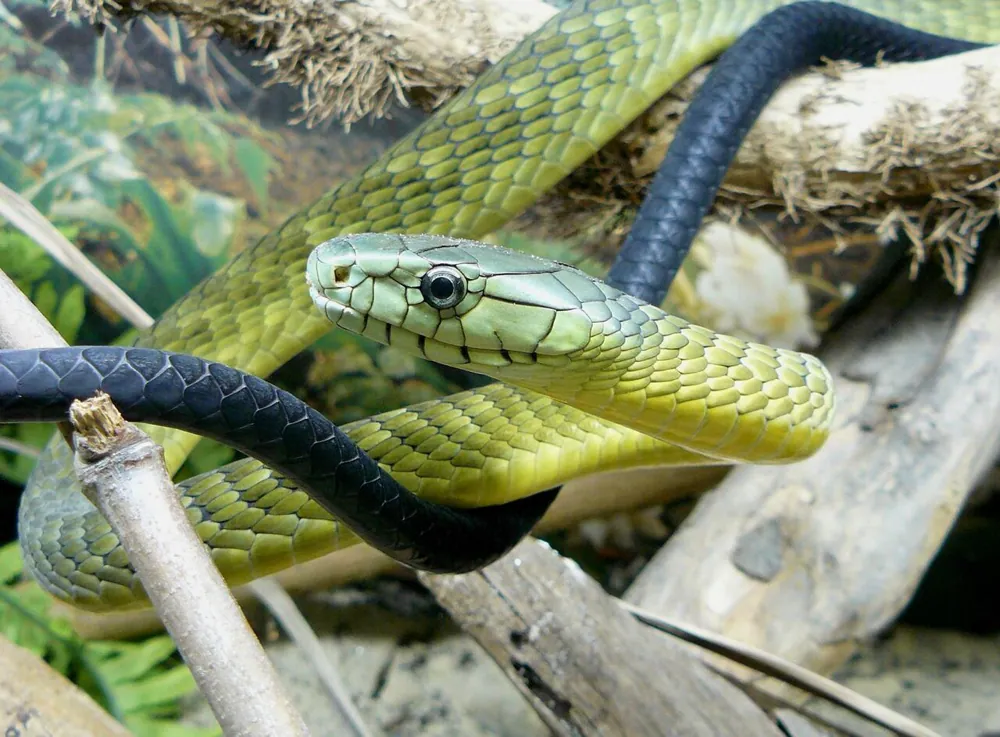
Jameson's mamba is a highly venomous snake that lives in the forests and woodlands of equatorial Africa. It spends much of its time in trees and is often found near towns, farms and plantations. Its venom attacks the nerves, so it is a snake to treat with respect and keep well away from.1



 Como reconhecer
- Slender body with dull green upper parts that fade to pale green towards the belly1
- Neck, throat and underparts are cream or yellowish1
- Narrow, elongated head with small eyes and round pupils1
- Tail is black in the eastern subspecies (kaimosae) and pale green or yellow in the central and western subspecies1
- Adults typically measure 1.5 to 2.2 metres in total length1
Poder do veneno
O veneno sai pelas presas ou pelos dentes quando ele morde.
O que o veneno dele faz?
The venom is highly neurotoxic, meaning it attacks the nerves, and also contains cardiotoxins, which affect the heart. Bite pain and swelling are followed by chills, sweating, abdominal pain and vomiting. Later symptoms can include slurred speech, difficulty breathing and paralysis.1
Qual é o perigo para as pessoas?
Perigo para as pessoas: MortalUm dos animais mais perigosos do mundo.The World Health Organization classes it as a Snake of Medical Importance in sub-Saharan Africa, although few bites are recorded. Deaths have been recorded within three to four hours of a bite. An unconfirmed report describes a child dying within 30 minutes. Access to antivenom is difficult in some areas, and workers in palm oil plantations have died after falling from trees when they met one in the canopy.1
 Boa notícia: os médicos têm um remédio (soro antiveneno) ou um tratamento para isso.1
O que ele faz quando está com medo?
When threatened, it flattens its neck like a cobra, and it will usually try to escape rather than attack.1
 Se ele morder
- Apply a pressure bandage, keep the victim as still as possible and get them to a hospital or clinic quickly. An arterial tourniquet may help because of the neurotoxic venom. Antivenom is the main treatment, and tetanus toxoid is sometimes given.1
- Mantenha a pessoa parada e calma, tire anéis e coisas apertadas e leve-a rápido para um hospital: o tratamento é o soro antiveneno.
Sempre ligue primeiro para o número de emergência (112, 000, 911). Estas são orientações gerais de primeiros socorros, não um conselho médico. Primeiros socorros básicos
 Fique em segurança
- Nunca toque, pegue ou provoque um animal selvagem, mesmo que seja pequeno, e mesmo que pareça estar dormindo ou morto.
- Dê espaço a ele. Se encontrar um, fique calmo, dê alguns passos para trás devagar e deixe que ele siga o caminho dele.
- Se um deles morder você: fique calmo, fique parado, ligue para o número de emergência (112, 000, 911) ou vá rápido para um hospital. Lembre como ele era, uma foto ajuda.
Ele não está atrás de você. Usa o veneno para pegar comida ou se proteger, e prefere muito mais se esconder. Mais sobre como ficar em segurança
Em que lugar do mundo?
Qual é o tamanho dele?
Qual é o comprimento dele?
 tem o comprimento de 2,5 cachorros do focinho à cauda
 tem o comprimento de 15 bananas enfileiradas
 poderia percorrer 100 metros em 41 segundos (o humano mais rápido precisa de 9,6)
Qual é o tamanho de Jameson's mamba comparado com VOCÊ?
Só contas no seu navegador. Nada é salvo nem enviado para lugar nenhum.
Quão rápido ele é?


Informações
Females lay their eggs in abandoned termite colonies.1
In Nigeria, males fight each other for access to females during the dry season.1
Its main predators are birds of prey, including the martial eagle, the bateleur and the Congo serpent eagle.1
It is difficult to study in the wild because it lives in trees and its green colouring helps it hide among leaves.1
De onde vêm as informações
- Jameson's mamba (Wikipedia (CC BY-SA 4.0))
- Dendroaspis jamesoni (iNaturalist): nomes e classificação.
- Venom Wiki: o nível de perigo, o tamanho típico e o palpite de velocidade são nossos. Veja como calculamos: Como avaliamos o perigo.
Cada informação desta página tem um número que leva à fonte. Se a gente errou alguma coisa, desculpe, somos fãs de animais, não uma revista científica. Avise a gente em [email protected] e nós corrigimos.
 O escorpião está com fome! O Venom Wiki é um projeto de uma pessoa só: grátis, sem anúncios e sem rastreadores. Uma pequena contribuição ajuda a manter o site no ar.Alimente o escorpião
 Mamba-negra
 Naja-egípcia
 Cape cobra
 Eastern green mamba
 Western green mamba
 Ashe's spitting cobra
 Escorpião-amarelo-palestino
 Víbora-bufadora
 Boomslang
 Fat-tailed scorpion
 Gaboon viper
 Western honey bee
.jpg)