
 África
 Ásia
Ásia Europa
 América do Sul
 Austrália e Oceânia
 Antártida
 Oceano Pacífico
 Oceano Atlântico
 Oceano Índico
 Oceano Ártico
 Mar Mediterrâneo
 Mar Vermelho
 Mar das Caraíbas
 Mar de Coral
 Mar da China Meridional
 Mar das Filipinas
 Mar de Andamão
 Mar do Norte
 Mar de Timor e de Arafura
 Golfo de Bengala
 Golfo da Califórnia
Diving bell spider
 Mordeduras
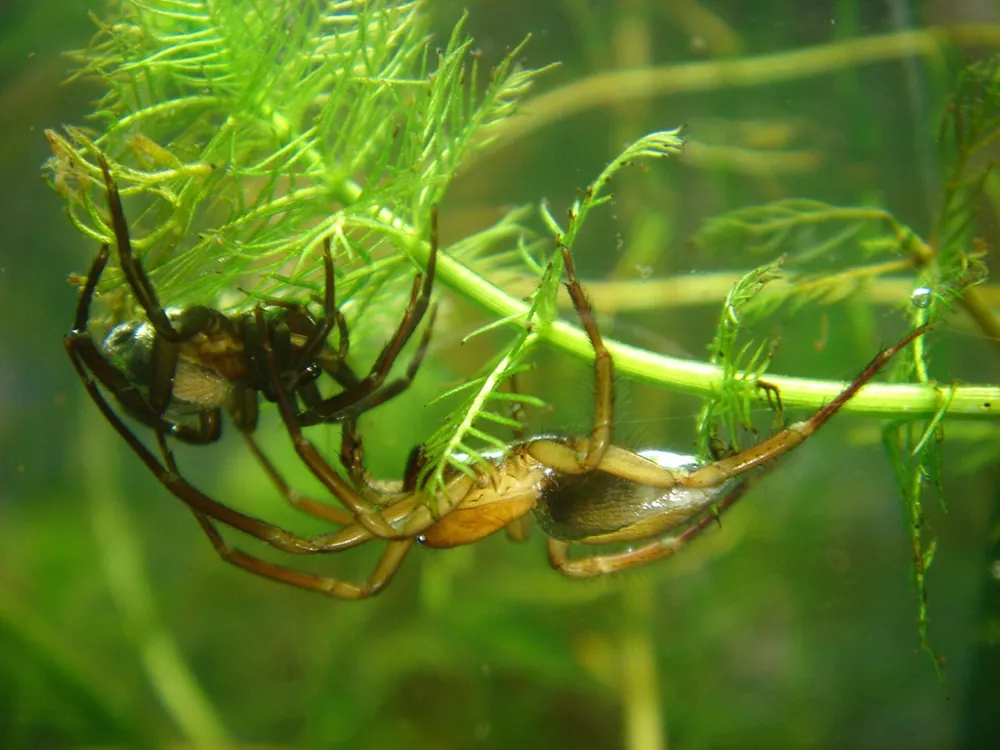
The diving bell spider is the only spider known to live almost entirely underwater. It makes its home in clean freshwater across Europe and Asia. It is special because it breathes air that it carries down from the surface and keeps in a silk bell under the water.1



 Como reconhecê-lo
- Out of the water, it is mid to dark brown.1
- Hairs on the abdomen give it a dark grey, velvet-like look.1
- Underwater, an air bubble trapped by dense hairs on the abdomen and legs makes it look silvery.1
- Males have a head-and-body length of 10 to 15 mm, and females 8 to 12 mm.1
- It spends most of its time inside a silk diving bell, darting out to catch prey.1
Poder do veneno
O veneno sai pelas presas ou pelos dentes quando morde.
O que faz o seu veneno?
Reports describe a bite that is painful, with local swelling, vomiting and a slight fever that lasts 5 to 10 days. These reports are old and unverified, so the effects are not well confirmed.1
Quão perigoso é para as pessoas?
Perigo para as pessoas: DolorosoPode doer muito, mas quase nunca é grave.The bite is reputedly painful, but there is no solid evidence of serious harm to people. Recent confirmed reports are lacking.1
 Se morder
- Lava a mordedura e põe gelo para a dor. Procura ajuda médica se a dor for forte, se espalhar ou se a pessoa se sentir mal.
Liga sempre primeiro para o teu número de emergência (112, 000, 911). Isto são orientações gerais de primeiros socorros, não conselho médico. Primeiros socorros básicos
 Fica em segurança
- Nunca toques, apanhes ou provoques um animal selvagem, mesmo pequeno, e mesmo que pareça a dormir ou morto.
- Dá-lhe espaço. Se encontrares um, mantém a calma, recua devagar e deixa-o seguir o seu caminho.
- Se te morder: mantém a calma, fica quieto, liga para o teu número de emergência (112, 000, 911) ou vai depressa para um hospital. Lembra-te de como era, uma foto ajuda.
Não anda atrás de ti. Usa o veneno para caçar ou para se proteger, e prefere muito mais esconder-se. Mais sobre como estar seguro
Que tamanho tem?
Quanto mede?
 mais curto do que o teu dedo mindinho
Que tamanho tem Diving bell spider comparado contigo?
São só contas no teu navegador. Nada é guardado nem enviado para lado nenhum.
Quão rápido é?


Factos
It is the only known spider that spends almost its whole life underwater, including resting, hunting, mating, laying eggs and overwintering. It surfaces only briefly to refill its air supply.1
Its diving bell is made of waterproof silk and lets gases pass through. Oxygen flows in and carbon dioxide flows out, so the bell works like a kind of gill.1
Nitrogen slowly leaves the bell, so the air bubble shrinks and the spider must keep refilling it.1
Unlike most spiders, the males are larger than the females, and they are more active hunters.1
Caça-mitos
Mito: Its bite is very painful and causes vomiting and fever.
Verdade: These effects are based on old, unverified reports. There is no solid evidence for them, and recent confirmed reports are lacking.1
Para especialistas em veneno
- Nome científico
- Argyroneta aquatica
- Grupo
- Aranhas
- Família
- Argyronetidae2
- Ordem
- Araneae
- Continentes
- Europa, Ásia
- Crias
- After mating in the female's bell, she builds an egg sac inside it and lays between 30 and 70 eggs.1
- Esperança de vida
- cerca de 2 anos1
- Como está na natureza
- Endangered in South Korea1
- Perigo para as pessoas
- 2 / 5: Doloroso3
De onde vêm os factos
- Diving bell spider (Wikipedia (CC BY-SA 4.0))
- Argyroneta aquatica (iNaturalist): nomes e classificação.
- Venom Wiki: o nível de perigo, o tamanho típico e a velocidade estimada são nossos. Vê como os calculamos: Como avaliamos o perigo.
Cada facto desta página tem um número que aponta para a sua fonte. Se nos enganámos em alguma coisa, desculpa, somos fãs de animais, não uma revista científica. Diz-nos em [email protected] e nós corrigimos.
 O escorpião tem fome! A Venom Wiki é um projeto de uma só pessoa: gratuito, sem anúncios e sem rastreadores. Uma pequena gorjeta ajuda a mantê-la online.Alimenta o escorpião
Mais do mesmo grupo: Aranhas
 Mediterranean black widow
 European yellow sac spider
 Noble false widow
 Tarantula wolf spider
 Daddy long-legs spider
 European garden spider
Também vive em: Europa
 Common European adderVíborasPrecisa de médico
 Spanish flyOutros animais tóxicosPrecisa de médicoNão tocar
 Common waspAbelhas, vespas e vespõesSó dói
 European hornetAbelhas, vespas e vespõesSó dói
 Fire salamanderRãs venenosas, sapos e tritõesSó dóiNão tocar
 Western honey beeAbelhas, vespas e vespõesSó dói