
 África
 Ásia
Ásia Europa
 América do Sul
 Austrália e Oceânia
 Antártida
 Oceano Pacífico
 Oceano Atlântico
 Oceano Índico
 Oceano Ártico
 Mar Mediterrâneo
 Mar Vermelho
 Mar das Caraíbas
 Mar de Coral
 Mar da China Meridional
 Mar das Filipinas
 Mar de Andamão
 Mar do Norte
 Mar de Timor e de Arafura
 Golfo de Bengala
 Golfo da Califórnia
Pumpkin toadlet
 Veneno na pele
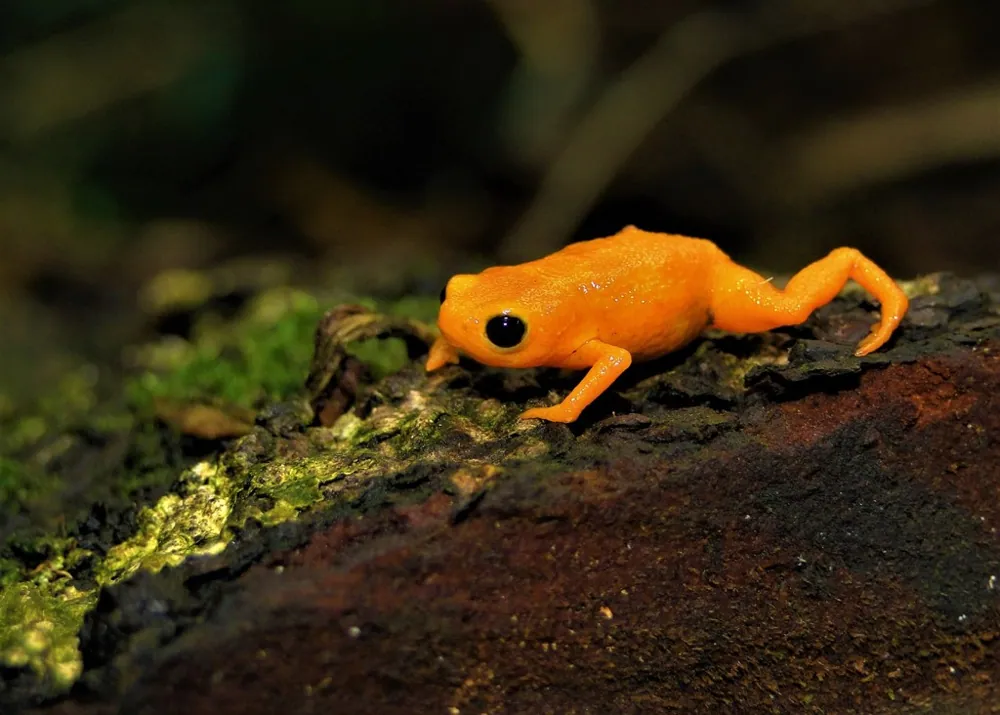
The pumpkin toadlet is a tiny, brightly coloured frog that lives in the leaf litter of the Atlantic rainforests of southeastern Brazil. Adults are bright yellow-orange, a warning sign that their skin and body carry a strong toxin. Scientists have found that the head and back of this frog glow under ultraviolet light.1
 Como reconhecê-lo
- Adults are bright yellow-orange.1
- Newly hatched young are brown and well camouflaged.1
- It is very small, with adults measuring 12.5 to 19.7 mm from snout to vent.1
- Females tend to be larger than males.1
Muitas vezes confundido com: It is closely related to the red pumpkin toadlet (B. pitanga), which also glows under ultraviolet light and shares its inability to hear its own call.1
Poder tóxico
A pele é venenosa. É perigoso tocar-lhe, lambê-lo ou comê-lo.
O que faz a sua toxina?
This frog is poisonous rather than venomous, so it does not inject venom. Its main toxin is 11-oxotetrodotoxin, which is extremely rare in animals, even marine ones, and is four to five times more potent than tetrodotoxin. The toxins are found in the skin and ovaries but are mostly concentrated in the liver.1
Quão perigoso é para as pessoas?
Perigo para as pessoas: DolorosoPode doer muito, mas quase nunca é grave.O que faz quando tem medo?
Its bright yellow-orange colour is a warning display (aposematism) that tells predators it is toxic.1
 Se alguém lhe tocou ou o comeu
- Se alguém lhe tocou: lava bem as mãos e não toques nos olhos nem na boca. Se uma criança ou um animal o lambeu ou comeu: liga para o centro antivenenos ou para o número de emergência.
Liga sempre primeiro para o teu número de emergência (112, 000, 911). Isto são orientações gerais de primeiros socorros, não conselho médico. Primeiros socorros básicos
 Fica em segurança
- Nunca toques, apanhes ou provoques um animal selvagem, mesmo pequeno, e mesmo que pareça a dormir ou morto.
- Dá-lhe espaço. Se encontrares um, mantém a calma, recua devagar e deixa-o seguir o seu caminho.
- Se lhe tocaste ou o comeste: não esfregues os olhos nem a boca, lava as mãos e procura ajuda médica.
Não anda atrás de ti. O veneno só existe para que nada o coma. Mais sobre como estar seguro
Que tamanho tem?
Quanto mede?
 mais curto do que o teu dedo mindinho
 conseguia percorrer 100 metros em 180 segundos (o humano mais rápido precisa de 9,6)
Que tamanho tem Pumpkin toadlet comparado contigo?
São só contas no teu navegador. Nada é guardado nem enviado para lado nenhum.
Quão rápido é?


Factos
In 2019, scientists found that the head and back of this frog glow under ultraviolet light because of fluorescent skeletons. Young frogs that have gained adult colours still do not glow.1
Adults cannot hear the frequency of their own calls because their ears are underdeveloped. They communicate with movements such as inflating the vocal sac, gaping the mouth and waving their arms.1
Its main toxin, 11-oxotetrodotoxin, is extremely rare in animals, even in marine species.1
Its young hatch directly into tiny toadlets, skipping the tadpole stage.1
It is among the largest frogs in its genus, Brachycephalus.1
Caça-mitos
Mito: Its glow under ultraviolet light is a warning signal to predators.
Verdade: Studies suggest this is unlikely. Predators attack the frogs at the same rate whether or not they glow.1
Para especialistas em veneno
- Nome científico
- Brachycephalus ephippium
- Grupo
- Rãs venenosas, sapos e tritões
- Família
- Brachycephalidae2
- Ordem
- Anura
- Continentes
- América do Sul
- Crias
- It breeds by direct development. The female lays a few eggs on land, which hatch into young toadlets with no tadpole stage.1
- Como está na natureza
- Not considered threatened1
- Perigo para as pessoas
- 2 / 5: Doloroso3
De onde vêm os factos
- Pumpkin toadlet (Wikipedia (CC BY-SA 4.0))
- Brachycephalus ephippium (iNaturalist): nomes e classificação.
- Venom Wiki: o nível de perigo, o tamanho típico e a velocidade estimada são nossos. Vê como os calculamos: Como avaliamos o perigo.
Cada facto desta página tem um número que aponta para a sua fonte. Se nos enganámos em alguma coisa, desculpa, somos fãs de animais, não uma revista científica. Diz-nos em [email protected] e nós corrigimos.
 O escorpião tem fome! A Venom Wiki é um projeto de uma só pessoa: gratuito, sem anúncios e sem rastreadores. Uma pequena gorjeta ajuda a mantê-la online.Alimenta o escorpião
Mais do mesmo grupo: Rãs venenosas, sapos e tritões
 Golden poison frogRãs venenosas, sapos e tritõesMortalNão tocar
 Cane toadRãs venenosas, sapos e tritõesPrecisa de médicoNão tocar
 Dyeing poison dart frogRãs venenosas, sapos e tritõesSó dóiNão tocar
 Black-legged poison frogRãs venenosas, sapos e tritõesPode matarNão tocar
 Bruno's casque-headed frogRãs venenosas, sapos e tritõesPrecisa de médicoNão tocar
 Harlequin poison frogRãs venenosas, sapos e tritõesPrecisa de médicoNão tocar
 Terciopelo
 Brazilian wandering spider
 Eyelash viper
 Golden lancehead
 South American bushmaster
 Peruvian giant centipede