
 Afurika
 Aziya
Aziya Uburayi
 Amerika y'Amajyepfo
 Ositaraliya na Oseyaniya
 Antaragitika
 Inyanja ya Pasifika
 Inyanja ya Atalantika
 Inyanja y'Abahinde
 Inyanja ya Arigitika
 Inyanja ya Mediterane
 Inyanja Itukura
 Inyanja ya Karayibe
 Inyanja ya Korali
 Inyanja y'Amajyepfo y'u Bushinwa
 Inyanja ya Filipine
 Inyanja ya Andamani
 Inyanja y'Amajyaruguru
 Inyanja ya Timor na Arafura
 Ikigobe cya Bengali
 Ikigobe cya Kaliforuniya
Baja California bark scorpion
 Itera urubori
The Baja California bark scorpion is a slender scorpion with a long tail. It lives in the western deserts and wet places of North America, mainly in Baja California. It matters because it is closely related to the Arizona bark scorpion, and scientists only confirmed in 2004 that the two are separate species.1


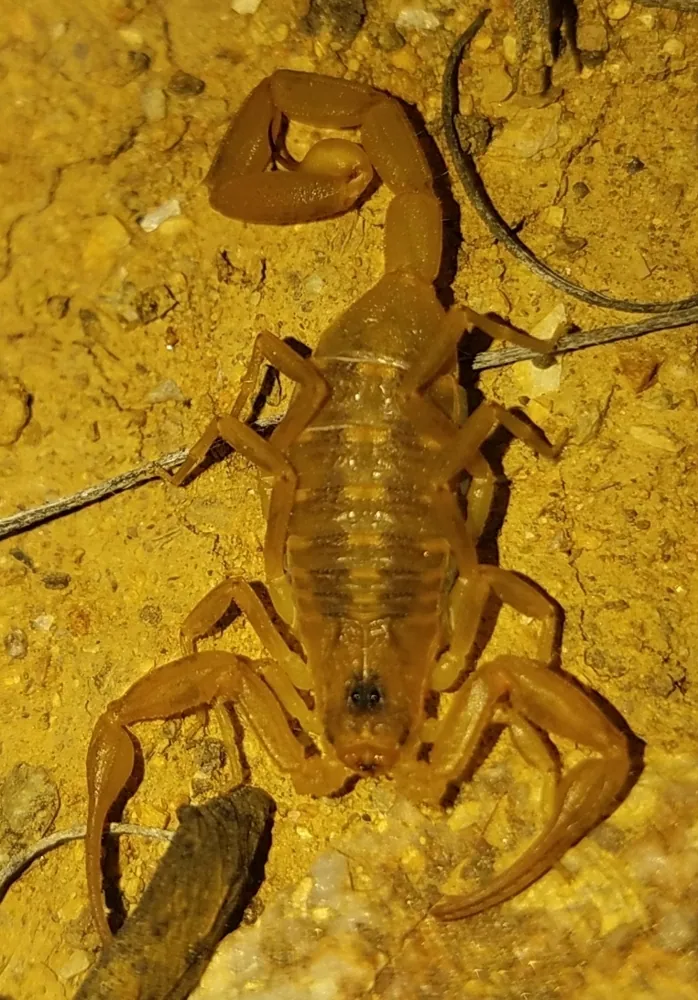
 Uko wayimenya
- Slender body with a long tail1
- Typically sand-coloured, though it can appear darker1
- Exoskeleton can be yellow, light brown or gold1
- Body length of about 3.8 to 7.6 cm1
- Rests its tail on the ground, unlike other scorpions that hold it arched over the back. It also has a subaculear tooth at the tip of its stinger1
Ikunze kwitiranywa na: It is closely related to the Arizona bark scorpion, and their body shapes can be almost impossible to tell apart. Differences in venom and DNA are used to separate the two species. The subaculear tooth at the tip of the stinger and the way the tail rests on the ground are the main features that set it apart from other scorpions.1
Imbaraga z'ubumara
Ubumara busohokera mu rubori.
Ubumara bwayo bukora iki?
It uses venom to hunt, injecting it into prey to immobilise or kill it. Each scorpion species has a unique venom profile, which is used to tell species apart. In humans, its venom may cause difficulty breathing or muscle spasms.1
Iteje akaga kangana iki ku bantu?
Akaga ku bantu: IrababazaIshobora kubabaza cyane, ariko hafi ya buri gihe nta kibazo gikomeye biteza.Its venom has the potential to be fatal to humans, but the chances of this happening are low. It is not considered dangerous, and it is less of a medical threat than its close relative, the Arizona bark scorpion.1
 Niba itera urubori
- Konjesha aho yateye urubori ukoresheje agapaki k'urubura, kandi umuntu agume atuje atanyeganyega. Shaka ubufasha bwa muganga vuba, cyane cyane ku bana: sikorupiyo zimwe zica abana.
Buri gihe banza uhamagare nimero y'ubutabazi (112, 000, 911). Izi ni inama rusange z'ubutabazi bw'ibanze, si inama za muganga. Ibanze by'ubutabazi bw'ibanze
 Irinde akaga
- Ntuzigere ukora, ufata cyangwa ushotora inyamaswa yo mu gasozi, nubwo yaba ntoya, kandi nubwo yasa n'isinziriye cyangwa yapfuye.
- Yihe umwanya. Niba uhuye n'imwe, tuza, usubire inyuma buhoro buhoro kandi uyireke yigendere.
- Niba imwe igutereye urubori: tuza, ntunyeganyege, hamagara nimero y'ubutabazi (112, 000, 911) cyangwa ujye ku bitaro vuba. Ibuka uko yasaga, ifoto irafasha.
Ntigushakisha ngo ikugirire nabi. Ikoresha ubumara bwayo kugira ngo ifate ibyo kurya cyangwa yirinde, kandi ikunda cyane kwihisha. Ibindi ku kwirinda
Ingana gute?
Ireshya ite?
 ireshya n'ibice 2,5 by'ibikinisho byo kubaka biri ku murongo
 yakwiruka metero 100 mu masegonda 260 (umuntu wihuta kurusha abandi akenera 9,6)
Baja California bark scorpion ingana ite ugereranyije NAWE?
Ni imibare gusa ikorerwa muri mudasobwa yawe. Nta kintu kibikwa cyangwa cyoherezwa ahandi.
Yihuta gute?


Ibintu by'ukuri
Usenya ibinyoma
Ikinyoma: It is the same species as the Arizona bark scorpion.
Ukuri: The two were grouped as one species in 1980, but differences in venom toxicity and DNA analysis in 2004 showed they are separate species.1
Aho ibintu bivugwa bituruka
- Centruroides exilicauda (Wikipedia (CC BY-SA 4.0))
- Centruroides exilicauda (iNaturalist): amazina n'ibyiciro.
- Venom Wiki: urwego rw'akaga, ingano isanzwe n'ikigereranyo cy'umuvuduko ni ibyacu bwite. Reba uko tubibara: Uko tugena akaga.
Buri kintu kivugwa kuri iyi paji gifite nimero yerekana aho cyavuye. Niba twibeshye, tubabarire, turi abakunzi b'inyamaswa, ntituri ikinyamakuru cya siyansi. Tubwire kuri [email protected] tuzabikosora.
 Sikorupiyo irashonje! Venom Wiki ni umushinga w'umuntu umwe: ni ubuntu, nta matangazo kandi nta bikurikirana abantu. Impano ntoya ifasha kugira ngo ikomeze kuboneka kuri interineti.Gaburira sikorupiyo
 Arizona bark scorpion
 Cuban blue scorpion
 Striped bark scorpion
 Giant desert hairy scorpion
 Colima scorpion
 Durango scorpion
 Terciopelo
 Eastern coral snake
 Eastern diamondback rattlesnake
 Eyelash viper
 Timber rattlesnake
 Western diamondback rattlesnake
.jpg)