
 Afurika
 Aziya
Aziya Uburayi
 Amerika y'Amajyepfo
 Ositaraliya na Oseyaniya
 Antaragitika
 Inyanja ya Pasifika
 Inyanja ya Atalantika
 Inyanja y'Abahinde
 Inyanja ya Arigitika
 Inyanja ya Mediterane
 Inyanja Itukura
 Inyanja ya Karayibe
 Inyanja ya Korali
 Inyanja y'Amajyepfo y'u Bushinwa
 Inyanja ya Filipine
 Inyanja ya Andamani
 Inyanja y'Amajyaruguru
 Inyanja ya Timor na Arafura
 Ikigobe cya Bengali
 Ikigobe cya Kaliforuniya
Common desert centipede
 Iraruma
The common desert centipede is a large centipede that lives in the deserts and dry grasslands of western North America. It is known for its striped body and for its venom, which scientists are studying for possible medical uses.1
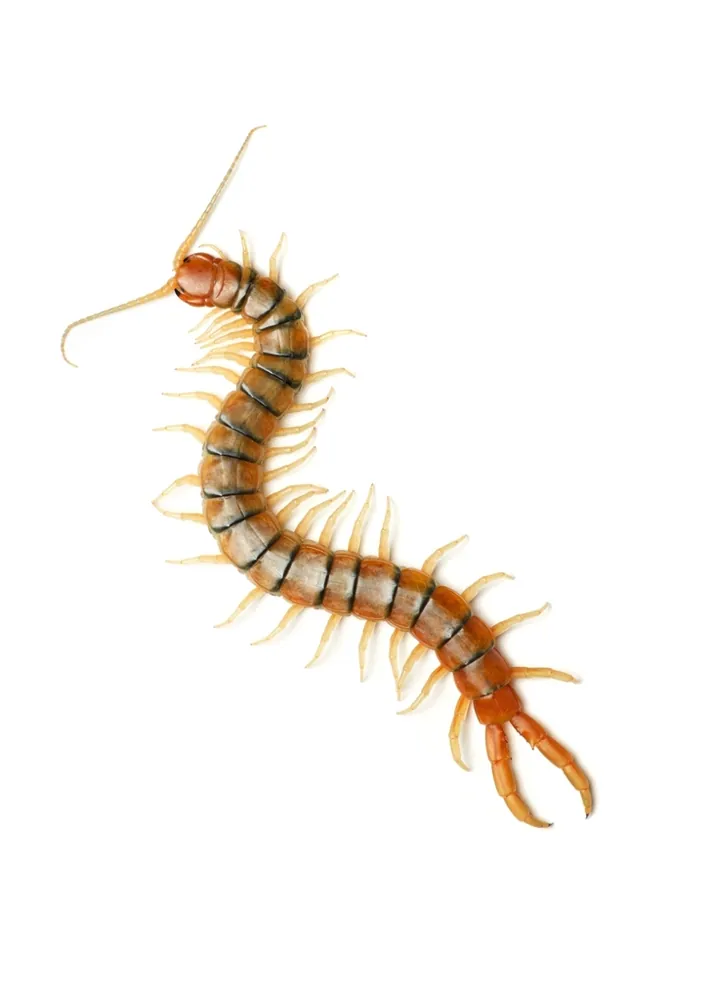
 Uko wayimenya
- Adults usually measure 10 to 18 cm long.1
- Each body segment has one dark stripe along its side, which gives it the name tiger centipede.1
- Most have a darker brown, red or orange head, lighter brown, tan or orange body segments and yellow legs.1
- Some populations, such as those in Southern California, are entirely light blue with indigo stripes and turquoise legs.1
- Its antennae have seven or more smooth segments.1
Imbaraga z'ubumara
Ubumara busohokera mu menyo yayo y'ubumara cyangwa mu yandi menyo iyo iriye.
Ubumara bwayo bukora iki?
Its venom contains a peptide called SPC13 that kills or slows some bacteria, including Staphylococcus aureus and Pseudomonas aeruginosa. In studies on mice, the venom damaged muscle, causing tissue death and abnormal mitochondria (the parts of cells that make energy). It may also affect the respiratory complexes, the chemical systems cells use to make energy, of the animals it hunts.1
Iteje akaga kangana iki ku bantu?
Akaga ku bantu: IrababazaIshobora kubabaza cyane, ariko hafi ya buri gihe nta kibazo gikomeye biteza.Ikora iki iyo ifite ubwoba?
Its venom is used to defend itself, but it cannot fully rebuild its venom within 48 hours, which limits how well it can defend itself.1
 Niba iruma
- Oza aho yarumye, uhakonjeshe cyangwa uhinjize mu mazi y'akazuyazi kubera ububabare, kandi ushake ubufasha bwa muganga niba bikomeje kuba bibi.
Buri gihe banza uhamagare nimero y'ubutabazi (112, 000, 911). Izi ni inama rusange z'ubutabazi bw'ibanze, si inama za muganga. Ibanze by'ubutabazi bw'ibanze
 Irinde akaga
- Ntuzigere ukora, ufata cyangwa ushotora inyamaswa yo mu gasozi, nubwo yaba ntoya, kandi nubwo yasa n'isinziriye cyangwa yapfuye.
- Yihe umwanya. Niba uhuye n'imwe, tuza, usubire inyuma buhoro buhoro kandi uyireke yigendere.
- Niba imwe ikurumye: tuza, ntunyeganyege, hamagara nimero y'ubutabazi (112, 000, 911) cyangwa ujye ku bitaro vuba. Ibuka uko yasaga, ifoto irafasha.
Ntigushakisha ngo ikugirire nabi. Ikoresha ubumara bwayo kugira ngo ifate ibyo kurya cyangwa yirinde, kandi ikunda cyane kwihisha. Ibindi ku kwirinda
Ingana gute?
Ireshya ite?
 ireshya n'ibice 6 by'ibikinisho byo kubaka biri ku murongo
 yakwiruka metero 100 mu masegonda 220 (umuntu wihuta kurusha abandi akenera 9,6)
Common desert centipede ingana ite ugereranyije NAWE?
Ni imibare gusa ikorerwa muri mudasobwa yawe. Nta kintu kibikwa cyangwa cyoherezwa ahandi.
Yihuta gute?


Ibintu by'ukuri
Its venom contains a peptide that has shown antimicrobial activity against bacteria that cause hospital infections.1
Within two days it regenerates 65 to 86% of its venom volume, but its venom levels do not return to their original amounts even after 7 months.1
The bigger the centipede, the slower its venom regenerates, so body size limits how quickly it can recover its venom.1
Its colours are so varied that its species name, polymorpha, means "many forms".1
It is most active at night during the cool winter months, or during the summer New Mexico Monsoon, when it is cooler and wetter.1
Aho ibintu bivugwa bituruka
- Scolopendra polymorpha (Wikipedia (CC BY-SA 4.0))
- Scolopendra polymorpha (iNaturalist): amazina n'ibyiciro.
- Venom Wiki: urwego rw'akaga, ingano isanzwe n'ikigereranyo cy'umuvuduko ni ibyacu bwite. Reba uko tubibara: Uko tugena akaga.
Buri kintu kivugwa kuri iyi paji gifite nimero yerekana aho cyavuye. Niba twibeshye, tubabarire, turi abakunzi b'inyamaswa, ntituri ikinyamakuru cya siyansi. Tubwire kuri [email protected] tuzabikosora.
 Sikorupiyo irashonje! Venom Wiki ni umushinga w'umuntu umwe: ni ubuntu, nta matangazo kandi nta bikurikirana abantu. Impano ntoya ifasha kugira ngo ikomeze kuboneka kuri interineti.Gaburira sikorupiyo
 Giant desert centipede
 Green centipede
 Haitian giant centipede
 Eastern red centipede
 Florida blue centipede
 Peruvian giant centipede
 Terciopelo
 Eastern coral snake
 Eastern diamondback rattlesnake
 Eyelash viper
 Timber rattlesnake
 Western diamondback rattlesnake