
 Afurika
 Aziya
Aziya Uburayi
 Amerika y'Amajyepfo
 Ositaraliya na Oseyaniya
 Antaragitika
 Inyanja ya Pasifika
 Inyanja ya Atalantika
 Inyanja y'Abahinde
 Inyanja ya Arigitika
 Inyanja ya Mediterane
 Inyanja Itukura
 Inyanja ya Karayibe
 Inyanja ya Korali
 Inyanja y'Amajyepfo y'u Bushinwa
 Inyanja ya Filipine
 Inyanja ya Andamani
 Inyanja y'Amajyaruguru
 Inyanja ya Timor na Arafura
 Ikigobe cya Bengali
 Ikigobe cya Kaliforuniya
Texas lyre snake
 Iraruma
The Texas lyre snake is a medium-sized, mildly venomous snake that lives in deserts and rocky land in the south-western United States and northern Mexico. It is secretive and hides in rock crevices during the day, so it is often hard to spot.1



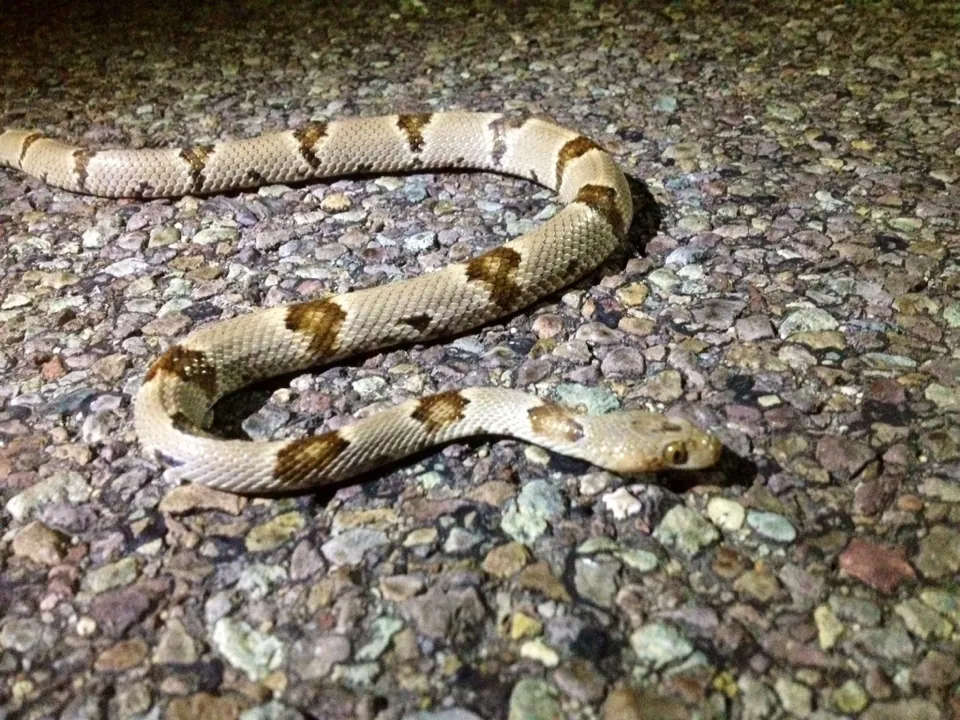
 Uko wayimenya
- Brown, tan or grey, with 17 to 24 dark brown blotches down the back1
- Large eyes with vertical pupils1
- Medium-sized, reaching about 1 metre in total length, including the tail1
- No V-shaped mark on the head, unlike other lyre snakes1
Ikunze kwitiranywa na: Other lyre snakes in the genus Trimorphodon have a V-shaped pattern on the head that looks like a lyre. This subspecies does not have that mark.1
Imbaraga z'ubumara
Ubumara busohokera mu menyo yayo y'ubumara cyangwa mu yandi menyo iyo iriye.
Ubumara bwayo bukora iki?
This snake is mildly venomous and is rear-fanged, meaning its fangs are at the back of the mouth. Its venom is not considered harmful to humans.1
Iteje akaga kangana iki ku bantu?
Akaga ku bantu: YorohejeNko guterwa urubori n'uruyuki cyangwa munsi yaho. Mu by'ukuri ntacyo itwaye abantu.Its venom is not considered harmful to people. The snake is secretive and often difficult to find.1
 Niba iruma
- Oza aho yarumye, umuntu agume atuje kandi ushake ubufasha bwa muganga. Amoko amwe (nka boomslang) ashobora kwica nyuma y'amasaha.
Buri gihe banza uhamagare nimero y'ubutabazi (112, 000, 911). Izi ni inama rusange z'ubutabazi bw'ibanze, si inama za muganga. Ibanze by'ubutabazi bw'ibanze
 Irinde akaga
- Ntuzigere ukora, ufata cyangwa ushotora inyamaswa yo mu gasozi, nubwo yaba ntoya, kandi nubwo yasa n'isinziriye cyangwa yapfuye.
- Yihe umwanya. Niba uhuye n'imwe, tuza, usubire inyuma buhoro buhoro kandi uyireke yigendere.
- Niba imwe ikurumye: tuza, ntunyeganyege, hamagara nimero y'ubutabazi (112, 000, 911) cyangwa ujye ku bitaro vuba. Ibuka uko yasaga, ifoto irafasha.
Ntigushakisha ngo ikugirire nabi. Ikoresha ubumara bwayo kugira ngo ifate ibyo kurya cyangwa yirinde, kandi ikunda cyane kwihisha. Ibindi ku kwirinda
Ingana gute?
Ireshya ite?
 ireshya n'injangwe zo mu rugo 2 zikurikiranye kuva ku zuru kugeza ku murizo
 ireshya n'imineke 6 ikurikiranye
 yakwiruka metero 100 mu masegonda 71 (umuntu wihuta kurusha abandi akenera 9,6)
Texas lyre snake ingana ite ugereranyije NAWE?
Ni imibare gusa ikorerwa muri mudasobwa yawe. Nta kintu kibikwa cyangwa cyoherezwa ahandi.
Yihuta gute?


Ibintu by'ukuri
Despite its name, this subspecies has no V-shaped mark on its head, which is the pattern that gives lyre snakes their name.1
It is nocturnal, spending the day hidden in rock crevices and coming out to feed at night.1
It is seemingly common throughout its habitat, even though it is hard to find.1
It was once listed as Threatened in Texas, but it was removed from that list in 2020.1
Usenya ibinyoma
Ikinyoma: The name 'lyre snake' means every lyre snake has a lyre-shaped V mark on its head.
Ukuri: This subspecies has no V mark on the head, even though the name refers to that pattern in other lyre snakes.1
Ku bahanga mu by'ubumara
- Izina rya siyansi
- Trimorphodon vilkinsonii
- Itsinda
- Inzoka zifite amenyo y'ubumara inyuma
- Umuryango
- Colubridae2
- Itsinda rinini (order)
- Squamata
- Imigabane
- Amerika y'Amajyaruguru
- Abana bato
- It lays eggs (it is oviparous), with about a dozen eggs per clutch.1
- Uko imeze mu gasozi
- Removed from the Threatened list in Texas in 20201
- Akaga ku bantu
- 1 / 5: Yoroheje3
Aho ibintu bivugwa bituruka
- Texas lyre snake (Wikipedia (CC BY-SA 4.0))
- Trimorphodon vilkinsonii (iNaturalist): amazina n'ibyiciro.
- Venom Wiki: urwego rw'akaga, ingano isanzwe n'ikigereranyo cy'umuvuduko ni ibyacu bwite. Reba uko tubibara: Uko tugena akaga.
Buri kintu kivugwa kuri iyi paji gifite nimero yerekana aho cyavuye. Niba twibeshye, tubabarire, turi abakunzi b'inyamaswa, ntituri ikinyamakuru cya siyansi. Tubwire kuri [email protected] tuzabikosora.
 Sikorupiyo irashonje! Venom Wiki ni umushinga w'umuntu umwe: ni ubuntu, nta matangazo kandi nta bikurikirana abantu. Impano ntoya ifasha kugira ngo ikomeze kuboneka kuri interineti.Gaburira sikorupiyo
Izindi zo mu itsinda rimwe: Inzoka zifite amenyo y'ubumara inyuma
 Western hognose snakeInzoka zifite amenyo y'ubumara inyumaNtacyo itwaye
 Brown vine snakeInzoka zifite amenyo y'ubumara inyumaNtacyo itwaye
 Eastern hognose snakeInzoka zifite amenyo y'ubumara inyumaNtacyo itwaye
 Green vine snakeInzoka zifite amenyo y'ubumara inyumaNtacyo itwaye
 Desert night snakeInzoka zifite amenyo y'ubumara inyumaNtacyo itwaye
 Night snakeInzoka zifite amenyo y'ubumara inyumaNtacyo itwaye
 Terciopelo
 Eastern coral snake
 Eastern diamondback rattlesnake
 Eyelash viper
 Timber rattlesnake
 Western diamondback rattlesnake