
 අප්රිකාව
 ආසියාව
 යුරෝපය
 දකුණු ඇමෙරිකාව
 ඕස්ට්රේලියාව සහ ඕෂනියාව
 ඇන්ටාක්ටිකාව
 පැසිෆික් සාගරය
 අත්ලාන්තික් සාගරය
 ඉන්දියන් සාගරය
 ආක්ටික් සාගරය
 මධ්යධරණී මුහුද
 රතු මුහුද
 කැරිබියන් මුහුද
 කොරල් මුහුද
 දකුණු චීන මුහුද
 පිලිපීන මුහුද
 අන්දමන් මුහුද
 උතුරු මුහුද
 ටිමෝර් සහ අරෆුරා මුහුද
 බෙංගාල බොක්ක
 කැලිෆෝනියා බොක්ක
Asian hornet
 ඇනීම්
ඇනීම්The Asian hornet is a hornet from Southeast Asia that has spread to many other countries, including most of Europe, where it is an invasive species. It is a concern because it hunts honeybees and its stings can be serious for people.1


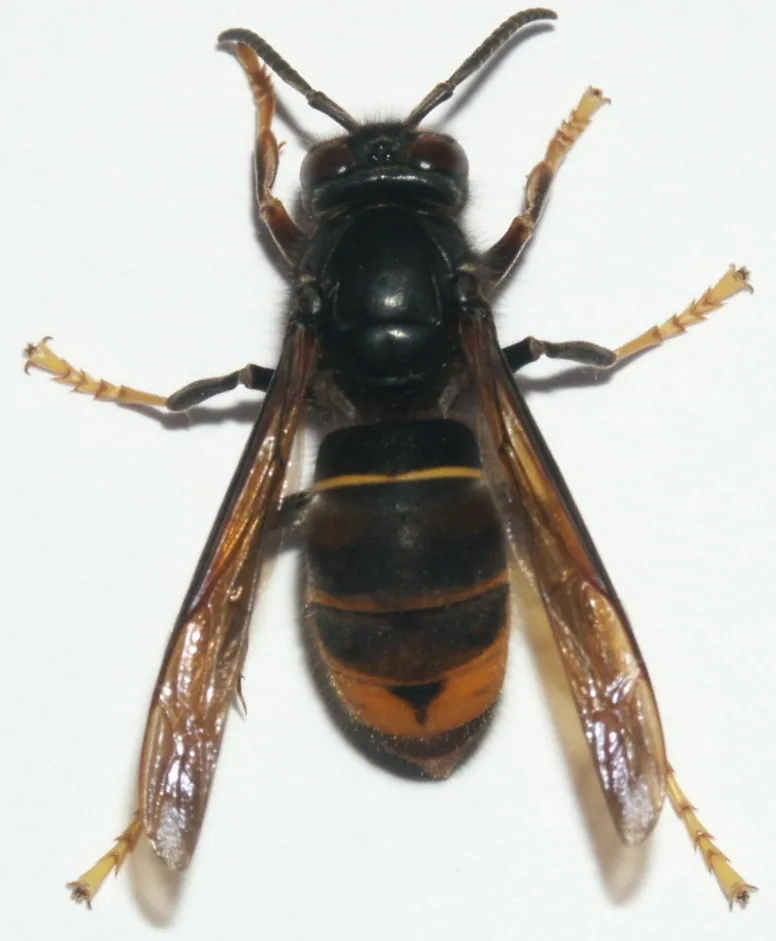
 ඒක හඳුනාගන්නේ කොහොමද
- Queens are about 3 cm long, males about 2.4 cm and workers about 2 cm, so it is significantly smaller than the European hornet.1
- Its legs (tarsi) are yellow, which gives it the name yellow-legged hornet.1
- The thorax is velvety brown or black, with a brown abdomen.1
- Each abdominal segment has a narrow yellow border at the back, except the fourth segment, which is orange.1
- The head is black and the face is yellow.1
බොහෝ විට පටලවා ගන්නේ: It looks like the European hornet (V. crabro), which is much larger. Its nest exit is usually on the side rather than at the bottom.1
විෂ බලය
විෂ එළියට එන්නේ ඇනුම් කටුවකින්.
ඒකේ විදින විෂ කරන්නේ මොකක්ද?
Multiple stings have caused anaphylactic shock, a severe allergic reaction, in people who were hospitalised in France.1
ඒක මිනිසුන්ට කොච්චර භයානකද?
මිනිසුන්ට ඇති අනතුර: වේදනාකාරීඇත්තටම රිදෙන්න පුළුවන්, නමුත් බරපතළ වෙන්නේ නැති තරම්.Although the species is not aggressive, people have been attacked after disturbing nests. A man in Galicia, Spain, was killed in 2017 after being stung over 20 times while pruning an apple tree. Several people have died in south west France, including in 2019 and 2020. Because of its larger size, its stings are more serious than those of western honeybees.1
බය වුණාම ඒක කරන්නේ මොකක්ද?
When it feels its nest is threatened, it charges in a group.1
 ඇන්නොත්
- මී මැසි කටුව සූරලා ඉවත් කරලා, ඒ තැන සිසිල් කරන්න.
- පුද්ගලයාට හුස්ම ගන්න අමාරු නම්, මූණ හෝ උගුර ඉදිමෙනවා නම්, හෝ ක්ලාන්ත ගතියක් දැනෙනවා නම්, එය අසාත්මිකතා හදිසි තත්ත්වයක්: ඔයාගේ හදිසි අංකයට කතා කරලා, ඔවුන් ළඟ ඇඩ්රිනලින් පෑනක් (ඇඩ්රිනලින් ස්වයං-එන්නත) තියෙනවා නම් ඒක පාවිච්චි කරන්න.
හැම විටම මුලින්ම ඔයාගේ හදිසි අංකයට කතා කරන්න (112, 000, 911). මෙය සාමාන්ය ප්රථමාධාර මඟපෙන්වීමක් මිස වෛද්ය උපදෙස් නොවේ. මූලික ප්රථමාධාර
 ආරක්ෂිතව ඉන්න
- වන සතෙක්ව කවදාවත් ස්පර්ශ කරන්න, අල්ලන්න හෝ කරදර කරන්න එපා, ඒක පුංචි වුණත්, ඒක නිදාගෙන හෝ මැරිලා වගේ පෙනුනත්.
- ඒකට ඉඩ දෙන්න. එකක් හමු වුණොත්, සන්සුන්ව ඉඳලා, හෙමින් පස්සට යන්න, ඒකට තමන්ගේ පාරේ යන්න ඉඩ දෙන්න.
- එකක් ඔයාට ඇන්නොත්: සන්සුන්ව ඉන්න, නොසෙල්වී ඉන්න, ඔයාගේ හදිසි අංකයට (112, 000, 911) කතා කරන්න, නැත්නම් ඉක්මනින් රෝහලකට යන්න. ඒක පෙනුනේ කොහොමද කියලා මතක තියාගන්න, ෆොටෝ එකක් උදව් වෙනවා.
ඒක ඔයාව අල්ලන්න එන්නේ නැහැ. ඒක විෂ පාවිච්චි කරන්නේ කෑම අල්ලගන්න හෝ තමන්ව ආරක්ෂා කරගන්න, ඒකට හැංගෙන්න තමයි වඩා කැමති. ආරක්ෂිතව ඉන්න ගැන තව
ඒක කොච්චර ලොකුද?
ඒක කොච්චර දිගද?
 කඩදාසි ක්ලිප් එකක් තරම් දිගයි
 මුළු පාපන්දු පිටියක් හරහා තත්පර 13කින් පියාඹන්න පුළුවන්
Asian hornet ඔයාට සාපේක්ෂව කොච්චර ලොකුද?
ඔයාගේ බ්රවුසරයේ ගණිතය විතරයි. කිසිම දෙයක් සේව් වෙන්නේවත් කොහේවත් යවන්නේවත් නැහැ.
ඒක කොච්චර වේගවත්ද?


කරුණු
In its native range, its main prey is the eastern honeybee, which defends the hive by balling hornets and raising the temperature inside the ball to a level that kills the hornet.1
A hornet hunting honeybees holds a territory of about 0.5 m² above a beehive and catches bees as they return to the hive.1
It is believed to have reached France in boxes of pottery from China in 2004.1
A colony often starts a nest in a low shrub, then abandons it after some months and builds a new one high in a tree, possibly to avoid parasites.1
Young queens leave the colony in late autumn and hibernate over winter.1
මිථ්යා බිඳින්නා
මිථ්යාව: Asian hornets are aggressive and will attack anyone who comes near.
ඇත්ත: The species is not aggressive, but it will charge in a group when it feels its nest is threatened.1
කරුණු එන්නේ කොහෙන්ද
- Asian hornet (Wikipedia (CC BY-SA 4.0))
- Vespa velutina (iNaturalist): නම් සහ වර්ගීකරණය.
- Venom Wiki: අනතුරු මට්ටම, සාමාන්ය ප්රමාණය සහ වේග අනුමානය අපේම ඒවා. අපි ඒවා ගණනය කරන හැටි බලන්න: අපි අනතුර ශ්රේණිගත කරන හැටි.
මේ පිටුවේ හැම කරුණකටම ඒකේ මූලාශ්රයට යොමු කරන අංකයක් තියෙනවා. අපි මොනවහරි වැරදියට කිව්වා නම්, සමාවෙන්න, අපි සත්ව ලෝලීන් මිසක් විද්යා සඟරාවක් නෙවෙයි. [email protected] වෙත අපිට කියන්න, අපි ඒක හදන්නම්.
 ගෝනුස්සාට බඩගිනියි! Venom Wiki එක පුද්ගලයෙකුගේ ව්යාපෘතියක්: නොමිලේ, දැන්වීම් නැහැ, ට්රැකර් නැහැ. පුංචි ටිප් එකක් ඒක ඔන්ලයින් තියන්න උදව් වෙනවා.ගෝනුස්සාට කන්න දෙන්න
එම කාණ්ඩයෙන් තව: මී මැස්සෝ, දෙබරු සහ හෝනට්
 Asian giant hornetමී මැස්සෝ, දෙබරු සහ හෝනට්මරන්න පුළුවන්
 Common waspමී මැස්සෝ, දෙබරු සහ හෝනට්රිදෙනවා විතරයි
 European hornetමී මැස්සෝ, දෙබරු සහ හෝනට්රිදෙනවා විතරයි
 Western honey beeමී මැස්සෝ, දෙබරු සහ හෝනට්රිදෙනවා විතරයි
 Giant honey beeමී මැස්සෝ, දෙබරු සහ හෝනට්දොස්තර කෙනෙක් ඕනෑ
 European paper waspමී මැස්සෝ, දෙබරු සහ හෝනට්රිදෙනවා විතරයි
 Deathstalker
 Indian cobra
 Indian saw-scaled viper
 King cobra
 Puff adder
 තිත් පොළඟා