
 අප්රිකාව
 ආසියාව
 යුරෝපය
 දකුණු ඇමෙරිකාව
 ඕස්ට්රේලියාව සහ ඕෂනියාව
 ඇන්ටාක්ටිකාව
 පැසිෆික් සාගරය
 අත්ලාන්තික් සාගරය
 ඉන්දියන් සාගරය
 ආක්ටික් සාගරය
 මධ්යධරණී මුහුද
 රතු මුහුද
 කැරිබියන් මුහුද
 කොරල් මුහුද
 දකුණු චීන මුහුද
 පිලිපීන මුහුද
 අන්දමන් මුහුද
 උතුරු මුහුද
 ටිමෝර් සහ අරෆුරා මුහුද
 බෙංගාල බොක්ක
 කැලිෆෝනියා බොක්ක
Giant honey bee
 ඇනීම්
ඇනීම්The giant honey bee is a large honey bee that lives in South and Southeast Asia. It builds its nests in open, high places, such as tree branches, cliff overhangs and buildings. It is known for fierce defence when its nest is disturbed.1


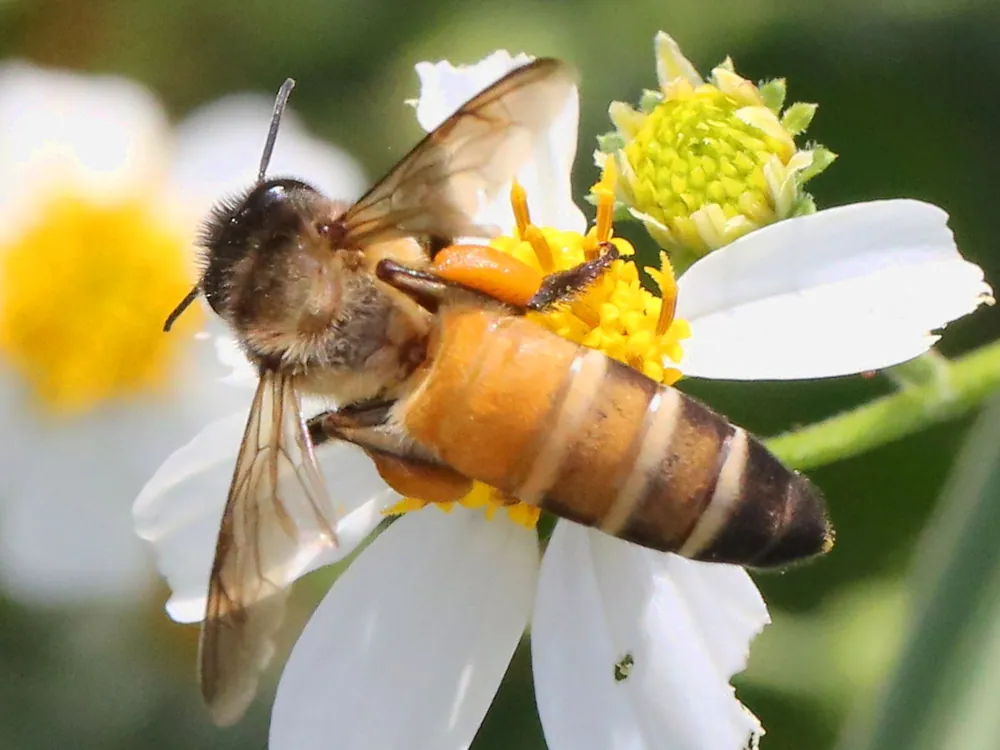
 ඒක හඳුනාගන්නේ කොහොමද
- Typically 17 to 20 mm long1
- Builds a single vertical comb of wax, hanging from above1
- The comb is covered by a dense mass of bees in several layers1
- Nests can reach up to 1 metre across and are often grouped, with up to 200 colonies in one tree1
- Aggressive when its nest is disturbed1
බොහෝ විට පටලවා ගන්නේ: The Himalayan giant honey bee (A. laboriosa) is very similar in shape. It has a darker abdomen and longer thoracic hair, and is now treated as a separate species from the giant honey bee.1
විෂ බලය
විෂ එළියට එන්නේ ඇනුම් කටුවකින්.
ඒක මිනිසුන්ට කොච්චර භයානකද?
මිනිසුන්ට ඇති අනතුර: බරපතළඇනීමකට වෛද්යවරයෙක් අවශ්යයි. මරණ ඉතාම කලාතුරකින්.This bee is known for aggressive defensive behaviour and vicious attacks when disturbed. Workers also attack bees from other colonies, so it is wise to keep well away from nests.1
බය වුණාම ඒක කරන්නේ මොකක්ද?
When disturbed, colonies defend their nest aggressively, and they attack intruders from other colonies.1
 ඇන්නොත්
- මී මැසි කටුව සූරලා ඉවත් කරලා, ඒ තැන සිසිල් කරන්න.
- පුද්ගලයාට හුස්ම ගන්න අමාරු නම්, මූණ හෝ උගුර ඉදිමෙනවා නම්, හෝ ක්ලාන්ත ගතියක් දැනෙනවා නම්, එය අසාත්මිකතා හදිසි තත්ත්වයක්: ඔයාගේ හදිසි අංකයට කතා කරලා, ඔවුන් ළඟ ඇඩ්රිනලින් පෑනක් (ඇඩ්රිනලින් ස්වයං-එන්නත) තියෙනවා නම් ඒක පාවිච්චි කරන්න.
හැම විටම මුලින්ම ඔයාගේ හදිසි අංකයට කතා කරන්න (112, 000, 911). මෙය සාමාන්ය ප්රථමාධාර මඟපෙන්වීමක් මිස වෛද්ය උපදෙස් නොවේ. මූලික ප්රථමාධාර
 ආරක්ෂිතව ඉන්න
- වන සතෙක්ව කවදාවත් ස්පර්ශ කරන්න, අල්ලන්න හෝ කරදර කරන්න එපා, ඒක පුංචි වුණත්, ඒක නිදාගෙන හෝ මැරිලා වගේ පෙනුනත්.
- ඒකට ඉඩ දෙන්න. එකක් හමු වුණොත්, සන්සුන්ව ඉඳලා, හෙමින් පස්සට යන්න, ඒකට තමන්ගේ පාරේ යන්න ඉඩ දෙන්න.
- එකක් ඔයාට ඇන්නොත්: සන්සුන්ව ඉන්න, නොසෙල්වී ඉන්න, ඔයාගේ හදිසි අංකයට (112, 000, 911) කතා කරන්න, නැත්නම් ඉක්මනින් රෝහලකට යන්න. ඒක පෙනුනේ කොහොමද කියලා මතක තියාගන්න, ෆොටෝ එකක් උදව් වෙනවා.
ඒක ඔයාව අල්ලන්න එන්නේ නැහැ. ඒක විෂ පාවිච්චි කරන්නේ කෑම අල්ලගන්න හෝ තමන්ව ආරක්ෂා කරගන්න, ඒකට හැංගෙන්න තමයි වඩා කැමති. ආරක්ෂිතව ඉන්න ගැන තව
ඒක කොච්චර ලොකුද?
ඒක කොච්චර දිගද?
 කඩදාසි ක්ලිප් එකක් තරම් දිගයි
 මුළු පාපන්දු පිටියක් හරහා තත්පර 15කින් පියාඹන්න පුළුවන්
Giant honey bee ඔයාට සාපේක්ෂව කොච්චර ලොකුද?
ඔයාගේ බ්රවුසරයේ ගණිතය විතරයි. කිසිම දෙයක් සේව් වෙන්නේවත් කොහේවත් යවන්නේවත් නැහැ.
ඒක කොච්චර වේගවත්ද?


කරුණු
Unlike most honey bees, this species forages at night, and it is the only bee of its genus known to do so.1
The queen mates with many drones, and the Himalayan subspecies has the highest levels of polyandry of any social insect.1
Each colony can have up to 100,000 bees, and colonies are only a few centimetres apart in large groups.1
Colonies migrate between nesting sites with the seasons, usually staying about 3 to 4 months at each site.1
Bees use a waggle dance to show other bees the distance, direction and value of a food source.1
Indigenous peoples have traditionally harvested the honey and beeswax of this bee, a practice known as honey hunting.1
කරුණු එන්නේ කොහෙන්ද
- Apis dorsata (Wikipedia (CC BY-SA 4.0))
- Apis dorsata (iNaturalist): නම් සහ වර්ගීකරණය.
- Venom Wiki: අනතුරු මට්ටම, සාමාන්ය ප්රමාණය සහ වේග අනුමානය අපේම ඒවා. අපි ඒවා ගණනය කරන හැටි බලන්න: අපි අනතුර ශ්රේණිගත කරන හැටි.
මේ පිටුවේ හැම කරුණකටම ඒකේ මූලාශ්රයට යොමු කරන අංකයක් තියෙනවා. අපි මොනවහරි වැරදියට කිව්වා නම්, සමාවෙන්න, අපි සත්ව ලෝලීන් මිසක් විද්යා සඟරාවක් නෙවෙයි. [email protected] වෙත අපිට කියන්න, අපි ඒක හදන්නම්.
 ගෝනුස්සාට බඩගිනියි! Venom Wiki එක පුද්ගලයෙකුගේ ව්යාපෘතියක්: නොමිලේ, දැන්වීම් නැහැ, ට්රැකර් නැහැ. පුංචි ටිප් එකක් ඒක ඔන්ලයින් තියන්න උදව් වෙනවා.ගෝනුස්සාට කන්න දෙන්න
එම කාණ්ඩයෙන් තව: මී මැස්සෝ, දෙබරු සහ හෝනට්
 Asian giant hornetමී මැස්සෝ, දෙබරු සහ හෝනට්මරන්න පුළුවන්
 Common waspමී මැස්සෝ, දෙබරු සහ හෝනට්රිදෙනවා විතරයි
 European hornetමී මැස්සෝ, දෙබරු සහ හෝනට්රිදෙනවා විතරයි
 Western honey beeමී මැස්සෝ, දෙබරු සහ හෝනට්රිදෙනවා විතරයි
 Asian hornetමී මැස්සෝ, දෙබරු සහ හෝනට්රිදෙනවා විතරයි
 European paper waspමී මැස්සෝ, දෙබරු සහ හෝනට්රිදෙනවා විතරයි
 Deathstalker
 Indian cobra
 Indian saw-scaled viper
 King cobra
 Puff adder
 තිත් පොළඟා