
 Afrika
 Ázia
Ázia Európa
 Južná Amerika
 Austrália a Oceánia
 Antarktída
 Tichý oceán
 Atlantický oceán
 Indický oceán
 Severný ľadový oceán
 Stredozemné more
 Červené more
 Karibské more
 Koralové more
 Juhočínske more
 Filipínske more
 Andamanské more
 Severné more
 Timorské a Arafurské more
 Bengálsky záliv
 Kalifornský záliv
Forest cobra
 Uhryznutia
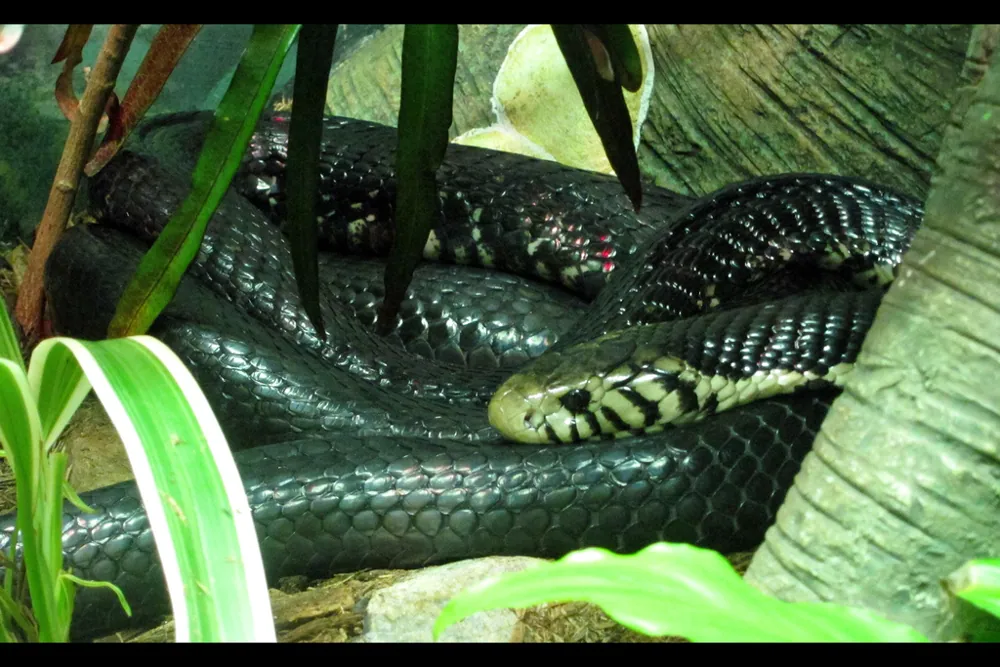
The forest cobra is a large, highly venomous snake that lives in central and western Africa. It is the largest true cobra, and it is one of the few African cobras that lives in high forest. It is dangerous, so anyone bitten needs urgent medical care.1



 Ako ho spoznať
- Forest and forest-edge forms are glossy black, with cream or white chin, throat and belly, and broad black cross-bars and blotches.1
- The sides of the head show black and white markings that look like vertical bars on the lips.1
- West African savanna forms are banded black and yellow, with a black tail and yellow lips, chin and throat.1
- East African coastal forms are brownish or blackish-brown above, with a yellow or cream belly speckled with brown or black.1
- Adults are usually 140 to 220 cm long.1
Sila jedu
Jed vychádza cez jedové zuby, keď hryzie.
Čo robí jeho jed?
Its venom is a postsynaptic neurotoxin, which attacks the nerves and causes severe neurotoxicity. Symptoms can include drooping eyelids, drowsiness, limb paralysis, hearing loss, inability to speak, dizziness, shock, low blood pressure, stomach pain, fever and breathing problems. A large amount of venom can be injected in one bite.1
Aké nebezpečné je pre ľudí?
Nebezpečenstvo pre ľudí: Veľmi nebezpečnéČloveka, ktorý nedostane liečbu, môže zabiť.It is one of the least frequent causes of snake bites among African cobras, largely because it lives in forests. Even so, it ranks as the 4th most venomous Naja (true cobra) species, and a bite is a life-threatening emergency. Deaths from respiratory failure have been reported. A child in Ghana died within 20 minutes of being bitten by a snake thought to be this species.1
 Dobrá správa: lekári na to majú liek (protijed) alebo liečbu.1
Čo robí, keď sa bojí?
When threatened, it raises the front of its body off the ground, spreads a narrow hood and hisses loudly. If cornered or agitated, it can attack quickly.1
 Ak uhryzne
- Most victims survive if antivenom is given promptly, as soon as signs of envenomation appear. Because a bite is a life-threatening emergency, the bitten person needs urgent medical care.1
- Drž postihnutého v pokoji a bez pohybu, daj dole prstene a všetko tesné a rýchlo sa dostaňte do nemocnice: liečbou je protijed.
Vždy najprv zavolaj na tiesňovú linku (112, 000, 911). Toto sú všeobecné rady prvej pomoci, nie lekárska rada. Základy prvej pomoci
 Buď v bezpečí
- Nikdy sa nedotýkaj divého zvieraťa, nechytaj ho ani ho nedráždi, aj keď je malé a aj keď vyzerá, že spí alebo je mŕtve.
- Nechaj mu priestor. Ak nejaké stretneš, zostaň pokojný, pomaly cúvni a nechaj ho ísť svojou cestou.
- Ak ťa uhryzne: zostaň pokojný, nehýb sa, zavolaj na tiesňovú linku (112, 000, 911) alebo sa rýchlo dostaň do nemocnice. Zapamätaj si, ako vyzeralo, fotka pomôže.
Nejde po tebe. Jed používa na chytanie potravy alebo na obranu a oveľa radšej sa schová. Viac o tom, ako zostať v bezpečí
Aké je veľké?
Aké je dlhé?
Koľko váži?
 dlhé ako 3 psov od nosa po chvost
 dlhé ako 18 banánov za sebou
 asi tak ťažké ako domáca mačka
 by prebehlo 100 metrov za 41 sekúnd (najrýchlejší človek potrebuje 9,6)
Aký veľký je Forest cobra v porovnaní s TEBOU?
Iba matematika v tvojom prehliadači. Nič sa neukladá ani nikam neposiela.
Aké je rýchle?


Fakty
It is the largest true cobra species and possibly the largest of all Naja species in the world.1
It is an excellent climber and has been known to climb trees to 10 m or more.1
It swims well and is often considered semi-aquatic.1
It does not spit or spray its venom.1
It is mainly active during the day in quiet areas, but it can be active at night in towns.1
Odkiaľ sú fakty
- Forest cobra (Wikipedia (CC BY-SA 4.0))
- Naja melanoleuca (iNaturalist): mená a klasifikácia.
- Venom Wiki: úroveň nebezpečenstva, typická veľkosť a odhad rýchlosti sú naše vlastné. Pozri, ako ich určujeme: Ako hodnotíme nebezpečenstvo.
Každý fakt na tejto stránke má číslo, ktoré ukazuje na jeho zdroj. Ak sme sa v niečom pomýlili, prepáč, sme fanúšikovia zvierat, nie vedecký časopis. Napíš nám na [email protected] a opravíme to.
 Škorpión je hladný! Venom Wiki je projekt jedného človeka: zadarmo, bez reklám a bez sledovania. Malý príspevok pomôže udržať ho online.Nakŕm škorpióna
Viac z tej istej skupiny: Kobry, mamby a bungary
 Black mambaKobry, mamby a bungarySmrteľne nebezpečné
 Egyptian cobraKobry, mamby a bungarySmrteľne nebezpečné
 Cape cobraKobry, mamby a bungarySmrteľne nebezpečné
 Eastern green mambaKobry, mamby a bungarySmrteľne nebezpečné
 Jameson's mambaKobry, mamby a bungarySmrteľne nebezpečné
 Western green mambaKobry, mamby a bungarySmrteľne nebezpečné
 Deathstalker
 Vretenica útočná
 Boomslang
 Fat-tailed scorpion
 Gaboon viper
 Western honey bee