
 Afrika
 Ázia
Ázia Európa
 Južná Amerika
 Austrália a Oceánia
 Antarktída
 Tichý oceán
 Atlantický oceán
 Indický oceán
 Severný ľadový oceán
 Stredozemné more
 Červené more
 Karibské more
 Koralové more
 Juhočínske more
 Filipínske more
 Andamanské more
 Severné more
 Timorské a Arafurské more
 Bengálsky záliv
 Kalifornský záliv
German wasp
 Bodnutia
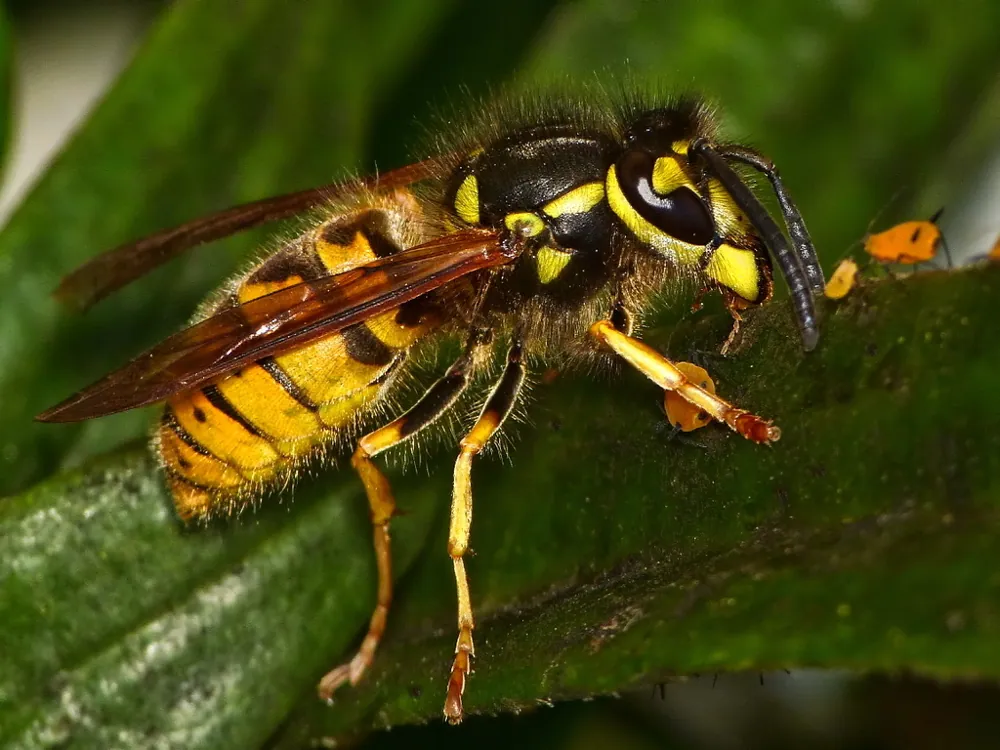
The German wasp is a black and yellow social wasp that lives in colonies. It is native to Europe, Northern Africa and temperate Asia, but it has spread to many other parts of the world. Because it competes with local wildlife, it is treated as a pest in most areas outside its native range.1


 Ako ho spoznať
- About 13 mm long, with typical wasp colours of black and yellow1
- Workers have three tiny black dots on the clypeus (the front part of the head, between the eyes and mouthparts)1
- Black marks on the abdomen are highly variable, so they are not a reliable way to identify it1
- Grey paper nests, often in the soil or in attics1
Často sa zamieňa s: The German wasp is very similar to the common wasp (Vespula vulgaris). Unlike the common wasp, it has three tiny black dots on the clypeus, but this only applies to workers. In males, the normally unbroken black mark on the common wasp's clypeus can look broken, which makes it hard to tell the two apart. Members of Vespula are also often confused with the paper wasp Polistes dominula.1
Sila jedu
Jed vychádza cez žihadlo.
Aké nebezpečné je pre ľudí?
Nebezpečenstvo pre ľudí: BolestivéMôže to poriadne bolieť, ale skoro nikdy to nie je vážne. Ak bodne
- Vyškrab včelie žihadlo a schlaď to miesto.
- Ak má postihnutý problémy s dýchaním, opuchnutú tvár alebo hrdlo, alebo sa cíti na odpadnutie, ide o alergickú núdzovú situáciu: zavolaj na tiesňovú linku a použi jeho adrenalínový autoinjektor, ak ho má.
Vždy najprv zavolaj na tiesňovú linku (112, 000, 911). Toto sú všeobecné rady prvej pomoci, nie lekárska rada. Základy prvej pomoci
 Buď v bezpečí
- Nikdy sa nedotýkaj divého zvieraťa, nechytaj ho ani ho nedráždi, aj keď je malé a aj keď vyzerá, že spí alebo je mŕtve.
- Nechaj mu priestor. Ak nejaké stretneš, zostaň pokojný, pomaly cúvni a nechaj ho ísť svojou cestou.
- Ak ťa bodne: zostaň pokojný, nehýb sa, zavolaj na tiesňovú linku (112, 000, 911) alebo sa rýchlo dostaň do nemocnice. Zapamätaj si, ako vyzeralo, fotka pomôže.
Nejde po tebe. Jed používa na chytanie potravy alebo na obranu a oveľa radšej sa schová. Viac o tom, ako zostať v bezpečí
Aké je veľké?
Aké je dlhé?
Koľko váži?
 také malé, že sa zmestí na tvoj necht
 také ľahké, že by si ho na ruke ani necítil
 by preletelo celé futbalové ihrisko za 16 sekúnd
Aký veľký je German wasp v porovnaní s TEBOU?
Iba matematika v tvojom prehliadači. Nič sa neukladá ani nikam neposiela.
Aké je rýchle?


Fakty
German wasps are invasive. They have spread to many continents and are especially successful at colonising new areas.1
They can outcompete many other animals for food, which has caused considerable harm to native wildlife where they have invaded.1
Female bee moths (Aphomia sociella) sometimes lay eggs in German wasp nests. Their larvae feed on the eggs, larvae and pupae, and can destroy large parts of the nest.1
In Australia, nests can grow very large and some survive the winter. In England, none of the nests in the study survive the winter.1
Queens mate with between one and seven males, and workers can lay eggs, although worker policing keeps most of their sons from reaching adulthood.1
Colonies grow rapidly over summer, with a large increase in worker numbers and nest size. In late summer, the colony focuses on producing new queens and males.1
Lovec mýtov
Mýtus: German wasps are paper wasps because they build grey paper nests.
Pravda: The name is used by mistake. Strictly speaking, paper wasps belong to the subfamily Polistinae, while German wasps belong to the genus Vespula.1
Pre znalcov jedov
- Vedecký názov
- Vespula germanica
- Skupina
- Včely, osy a sršne
- Rodina
- Vespidae2
- Rad
- Hymenoptera
- Kontinenty
- Európa, Ázia, Afrika
- Mláďatá
- A single queen starts a nest in spring and lays eggs in hexagonal cells, with one wasp developing in each cell through the egg, larva and pupa stages.1
- Nebezpečenstvo pre ľudí
- 2 / 5: Bolestivé3
Odkiaľ sú fakty
- Vespula germanica (Wikipedia (CC BY-SA 4.0))
- Vespula germanica (iNaturalist): mená a klasifikácia.
- Venom Wiki: úroveň nebezpečenstva, typická veľkosť a odhad rýchlosti sú naše vlastné. Pozri, ako ich určujeme: Ako hodnotíme nebezpečenstvo.
Každý fakt na tejto stránke má číslo, ktoré ukazuje na jeho zdroj. Ak sme sa v niečom pomýlili, prepáč, sme fanúšikovia zvierat, nie vedecký časopis. Napíš nám na [email protected] a opravíme to.
 Škorpión je hladný! Venom Wiki je projekt jedného človeka: zadarmo, bez reklám a bez sledovania. Malý príspevok pomôže udržať ho online.Nakŕm škorpióna
Viac z tej istej skupiny: Včely, osy a sršne
 Asian giant hornet
 Common wasp
 European hornet
 Western honey bee
 Giant honey bee
 Asian hornet
Žije aj v: Európa
 Common European adderVretenice a zmijeTreba lekára
 Spanish flyĎalšie toxické zvieratáTreba lekáraNedotýkaj sa
 Fire salamanderPralesničky, ropuchy a mlokyLen to bolíNedotýkaj sa
 Blunt-nosed viperVretenice a zmijeMôže zabiť
 Nose-horned viperVretenice a zmijeMôže zabiť
 Ottoman viperVretenice a zmijeMôže zabiť