
 Afrika
 Ázia
Ázia Európa
 Južná Amerika
 Austrália a Oceánia
 Antarktída
 Tichý oceán
 Atlantický oceán
 Indický oceán
 Severný ľadový oceán
 Stredozemné more
 Červené more
 Karibské more
 Koralové more
 Juhočínske more
 Filipínske more
 Andamanské more
 Severné more
 Timorské a Arafurské more
 Bengálsky záliv
 Kalifornský záliv
Oriental fire-bellied toad
 Toxín v koži
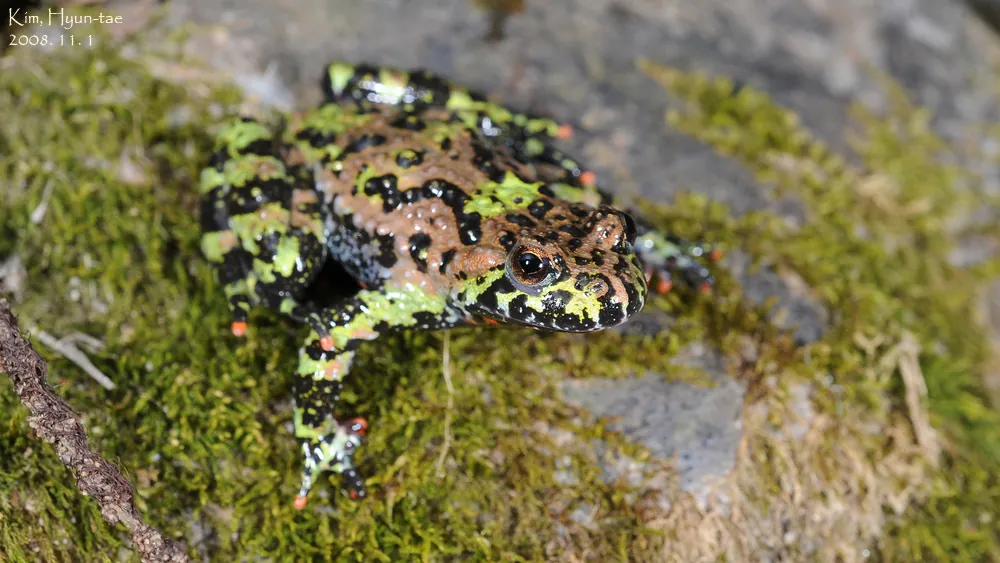
The Oriental fire-bellied toad is a small frog that lives in northeastern Asia, mostly near slow streams, ponds and forests. Its bright belly is a warning: when it is disturbed, it gives off a mild toxin through its skin. It is common across much of its range.1



 Ako ho spoznať
- Bright grey, brownish or green upper skin with black mottling.1
- Bright yellow, red or orange-red belly, mottled with dark spots.1
- Red finger and toe tips are usually present.1
- Skin on the upper side is covered in small bumps called tubercles, which give it a toad-like look.1
- Adults are about 3.8 to 5.1 cm long.1
Často sa zamieňa s: It is often mistaken for a toad, but it is not a true toad. Compared with other Bombina frogs, it has no gular sacs (throat pouches), its belly is usually more red than yellow, and it has bright finger tips.1
Sila toxínu
Jeho koža je toxická. Je nebezpečné dotknúť sa ho, olízať ho alebo ho zjesť.
Čo robí jeho toxín?
The toad's skin releases a milky, mildly toxic substance when it is disturbed or frightened, mostly from the hind legs and sometimes the belly. Its toxins are described as mild, and the toxin does not pose a significant threat to human health. Captive toads are generally less toxic than wild ones, because their diet in the wild adds to their toxicity.1
Aké nebezpečné je pre ľudí?
Nebezpečenstvo pre ľudí: MierneAko včelie bodnutie alebo menej. Pre ľudí v podstate neškodné.The toxin does not pose a significant threat to human health, but its skin mucus can cause discomfort to the mouth and eyes if the toad is handled.1
Čo robí, keď sa bojí?
When threatened, it releases toxin from its skin, lies on its back to show its brightly coloured belly, and arches its head and holds up its limbs as a warning.1
 Ak sa ho niekto dotkol alebo ho zjedol
- Ak sa ho niekto dotkol: dôkladne umy ruky a nedotýkaj sa očí ani úst. Ak ho dieťa alebo domáce zviera olízalo alebo zjedlo: volaj toxikologické centrum alebo tiesňovú linku.
Vždy najprv zavolaj na tiesňovú linku (112, 000, 911). Toto sú všeobecné rady prvej pomoci, nie lekárska rada. Základy prvej pomoci
 Buď v bezpečí
- Nikdy sa nedotýkaj divého zvieraťa, nechytaj ho ani ho nedráždi, aj keď je malé a aj keď vyzerá, že spí alebo je mŕtve.
- Nechaj mu priestor. Ak nejaké stretneš, zostaň pokojný, pomaly cúvni a nechaj ho ísť svojou cestou.
- Ak si sa ho dotkol alebo si ho zjedol: nešúchaj si oči ani ústa, umy si ruky a vyhľadaj lekársku pomoc.
Nejde po tebe. Jeho toxín je tam len na to, aby ho nikto nezjedol. Viac o tom, ako zostať v bezpečí
Aké je veľké?
Aké je dlhé?
Koľko váži?
 kratšie ako tvoj malíček
 by prebehlo 100 metrov za 180 sekúnd (najrýchlejší človek potrebuje 9,6)
Aký veľký je Oriental fire-bellied toad v porovnaní s TEBOU?
Iba matematika v tvojom prehliadači. Nič sa neukladá ani nikam neposiela.
Aké je rýchle?


Fakty
Unusually for a frog, this species has no eardrum or resonator, and it makes its calls by inhaling.1
In experiments, these toads learned to solve mazes using water as a reward, which other frog types did not manage.1
Its skin contains bombesin, a peptide that affects stomach function in mammals. It was first found in its relative, the European fire-bellied toad.1
Males call to females with a light sound that is compared to a musical triangle.1
Grass snakes and other water-dwelling snakes are known to eat these toads without any ill effect.1
In captivity they often live for around 12 years, and some have lived up to 30 years.1
Lovec mýtov
Mýtus: It is a true toad.
Pravda: It is not a true toad, although its bumpy skin gives it a toad-like appearance.1
Pre znalcov jedov
Odkiaľ sú fakty
- Oriental fire-bellied toad (Wikipedia (CC BY-SA 4.0))
- Bombina orientalis (iNaturalist): mená a klasifikácia.
- Venom Wiki: úroveň nebezpečenstva, typická veľkosť a odhad rýchlosti sú naše vlastné. Pozri, ako ich určujeme: Ako hodnotíme nebezpečenstvo.
Každý fakt na tejto stránke má číslo, ktoré ukazuje na jeho zdroj. Ak sme sa v niečom pomýlili, prepáč, sme fanúšikovia zvierat, nie vedecký časopis. Napíš nám na [email protected] a opravíme to.
 Škorpión je hladný! Venom Wiki je projekt jedného človeka: zadarmo, bez reklám a bez sledovania. Malý príspevok pomôže udržať ho online.Nakŕm škorpióna
Viac z tej istej skupiny: Pralesničky, ropuchy a mloky
 Japanese fire-bellied newtPralesničky, ropuchy a mlokyTreba lekáraNedotýkaj sa
 Common toadPralesničky, ropuchy a mlokyLen to bolíNedotýkaj sa
 Asian common toadPralesničky, ropuchy a mlokyTreba lekáraNedotýkaj sa
 Asiatic toadPralesničky, ropuchy a mlokyLen to bolíNedotýkaj sa
 Emperor newtPralesničky, ropuchy a mlokyLen to bolíNedotýkaj sa
 Himalayan newtPralesničky, ropuchy a mlokyLen to bolíNedotýkaj sa
Žije aj v: Ázia
 Škorpión žltýŠkorpiónySmrteľne nebezpečné
 Kobra indickáKobry, mamby a bungarySmrteľne nebezpečné
 Efa piesočnáVretenice a zmijeSmrteľne nebezpečné
 Kobra kráľovskáKobry, mamby a bungarySmrteľne nebezpečné
 Vretenica útočnáVretenice a zmijeSmrteľne nebezpečné
 Vretenica RussellovaVretenice a zmijeSmrteľne nebezpečné