
 Afrika
 Ázia
Ázia Európa
 Južná Amerika
 Austrália a Oceánia
 Antarktída
 Tichý oceán
 Atlantický oceán
 Indický oceán
 Severný ľadový oceán
 Stredozemné more
 Červené more
 Karibské more
 Koralové more
 Juhočínske more
 Filipínske more
 Andamanské more
 Severné more
 Timorské a Arafurské more
 Bengálsky záliv
 Kalifornský záliv
Red-headed krait
 Uhryznutia
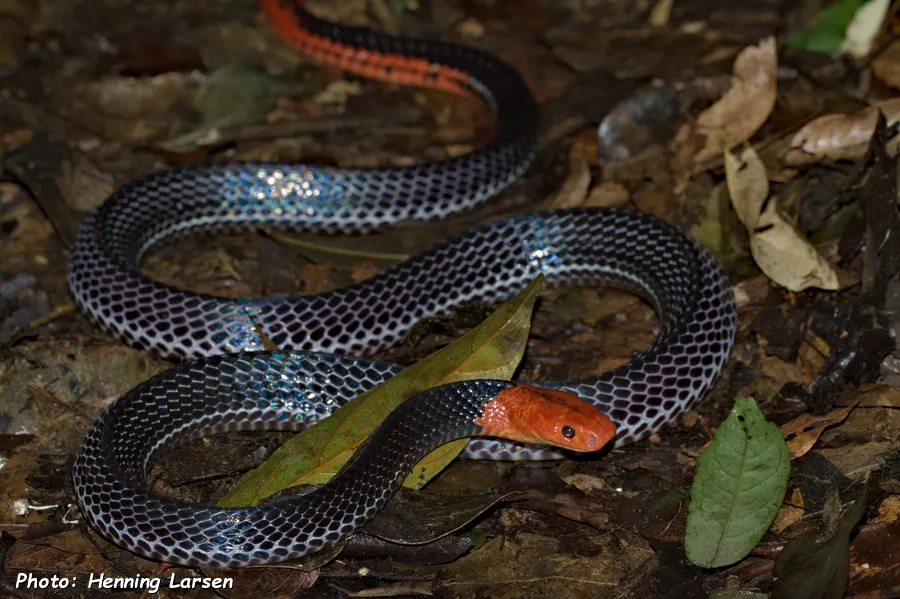
The red-headed krait is a large, highly venomous snake with a striking look: a bright red head and tail and a glossy black body. It lives in lowland rain forests across Southeast Asia, including on some islands, and it is uncommon. It is a night-time hunter, and people rarely meet it.1



 Ako ho spoznať
- A bright red head and tail1
- A black body with a narrow bluish white stripe along the side1
- Large, smooth, glossy scales1
- Adults can reach 2.1 metres, with an average of 1.2 to 1.5 metres1
Často sa zamieňa s: It is similar to the blue Malayan coral snake, which is also venomous, and to the nonvenomous red-headed reed snake.1
Sila jedu
Jed vychádza cez jedové zuby, keď hryzie.
Čo robí jeho jed?
Its venom is a neurotoxin, which attacks the nerves. It blocks signals between nerves and muscles, causing paralysis. Victims can stop breathing, which can lead to death by asphyxiation. Between 20 minutes and several hours after a bite, drooping eyelids may appear, along with double vision, difficulty swallowing, vomiting, headache and excess saliva. Symptoms can then worsen as more muscles, including the jaw, become paralysed, and breathing can become difficult.1
Aké nebezpečné je pre ľudí?
Nebezpečenstvo pre ľudí: Veľmi nebezpečnéČloveka, ktorý nedostane liečbu, môže zabiť.Bites are reported rarely, and the venom is little studied for this reason. It is not usually considered high risk to people in the daytime, because it is sluggish and hides. At night it is active and extremely dangerous.1
 Dobrá správa: lekári na to majú liek (protijed) alebo liečbu.1
Čo robí, keď sa bojí?
When disturbed, it presses its head into the ground or hides its head within its flattened or rolled coils. Captives will generally refuse to strike until they have been teased for a long time.1
 Ak uhryzne
- Get to a hospital fast. Neurotoxic symptoms can be treated in hospital with antivenin or with drugs that inactivate acetylcholinesterase, an enzyme that breaks down the chemical messenger between nerves and muscles. Symptoms may also settle on their own.1
- Drž postihnutého v pokoji a bez pohybu, daj dole prstene a všetko tesné a rýchlo sa dostaňte do nemocnice: liečbou je protijed.
Vždy najprv zavolaj na tiesňovú linku (112, 000, 911). Toto sú všeobecné rady prvej pomoci, nie lekárska rada. Základy prvej pomoci
 Buď v bezpečí
- Nikdy sa nedotýkaj divého zvieraťa, nechytaj ho ani ho nedráždi, aj keď je malé a aj keď vyzerá, že spí alebo je mŕtve.
- Nechaj mu priestor. Ak nejaké stretneš, zostaň pokojný, pomaly cúvni a nechaj ho ísť svojou cestou.
- Ak ťa uhryzne: zostaň pokojný, nehýb sa, zavolaj na tiesňovú linku (112, 000, 911) alebo sa rýchlo dostaň do nemocnice. Zapamätaj si, ako vyzeralo, fotka pomôže.
Nejde po tebe. Jed používa na chytanie potravy alebo na obranu a oveľa radšej sa schová. Viac o tom, ako zostať v bezpečí
Aké je veľké?
Aké je dlhé?
 dlhé ako 4 domácich mačiek od nosa po chvost
 dlhé ako 12 banánov za sebou
 by prebehlo 100 metrov za 46 sekúnd (najrýchlejší človek potrebuje 9,6)
Aký veľký je Red-headed krait v porovnaní s TEBOU?
Iba matematika v tvojom prehliadači. Nič sa neukladá ani nikam neposiela.
Aké je rýchle?


Fakty
Its venom contains a novel toxin called κ-flavitoxin, which blocks nicotinic transmission in autonomic ganglia, clusters of nerve cells that control automatic body functions.1
It has short, hollow fangs at the front of its upper jaw, and venom is forced out through a hole near the tip of each fang.1
It is partly aquatic and mainly active at night.1
It was once thought to eat mainly other snakes, but its diet is now known to be much wider.1
Lovec mýtov
Mýtus: It only eats other snakes.
Pravda: Its diet includes skinks, lizards, frogs, caecilians, small mammals and snake eggs, as well as snakes.1
Odkiaľ sú fakty
- Red-headed krait (Wikipedia (CC BY-SA 4.0))
- Bungarus flaviceps (iNaturalist): mená a klasifikácia.
- Venom Wiki: úroveň nebezpečenstva, typická veľkosť a odhad rýchlosti sú naše vlastné. Pozri, ako ich určujeme: Ako hodnotíme nebezpečenstvo.
Každý fakt na tejto stránke má číslo, ktoré ukazuje na jeho zdroj. Ak sme sa v niečom pomýlili, prepáč, sme fanúšikovia zvierat, nie vedecký časopis. Napíš nám na [email protected] a opravíme to.
 Škorpión je hladný! Venom Wiki je projekt jedného človeka: zadarmo, bez reklám a bez sledovania. Malý príspevok pomôže udržať ho online.Nakŕm škorpióna
Viac z tej istej skupiny: Kobry, mamby a bungary
 Indian cobraKobry, mamby a bungarySmrteľne nebezpečné
 King cobraKobry, mamby a bungarySmrteľne nebezpečné
 Caspian cobraKobry, mamby a bungarySmrteľne nebezpečné
 Common kraitKobry, mamby a bungarySmrteľne nebezpečné
 Malayan kraitKobry, mamby a bungarySmrteľne nebezpečné
 Many-banded kraitKobry, mamby a bungarySmrteľne nebezpečné
 Deathstalker
 Indian saw-scaled viper
 Vretenica útočná
 Vretenica Russellova
 Asian giant hornet
 Komodo dragon