
 Afrika
 Aasiya
 Yurub
Yurub Koonfurta Ameerika
 Awstaraaliya iyo Oceania
 Antaarktika
 Badweynta Baasifigga
 Badweynta Atlantik
 Badweynta Hindiya
 Badweynta Arktik
 Badda Dhexe
 Badda Cas
 Badda Karibiyaanka
 Badda Kooraal
 Badda Koonfurta Shiinaha
 Badda Filibiin
 Badda Andaman
 Badda Waqooyi
 Badda Timor iyo Arafura
 Gacanka Bengaal
 Gacanka Kaliforniya
Hundred-pace viper
 Qaniin
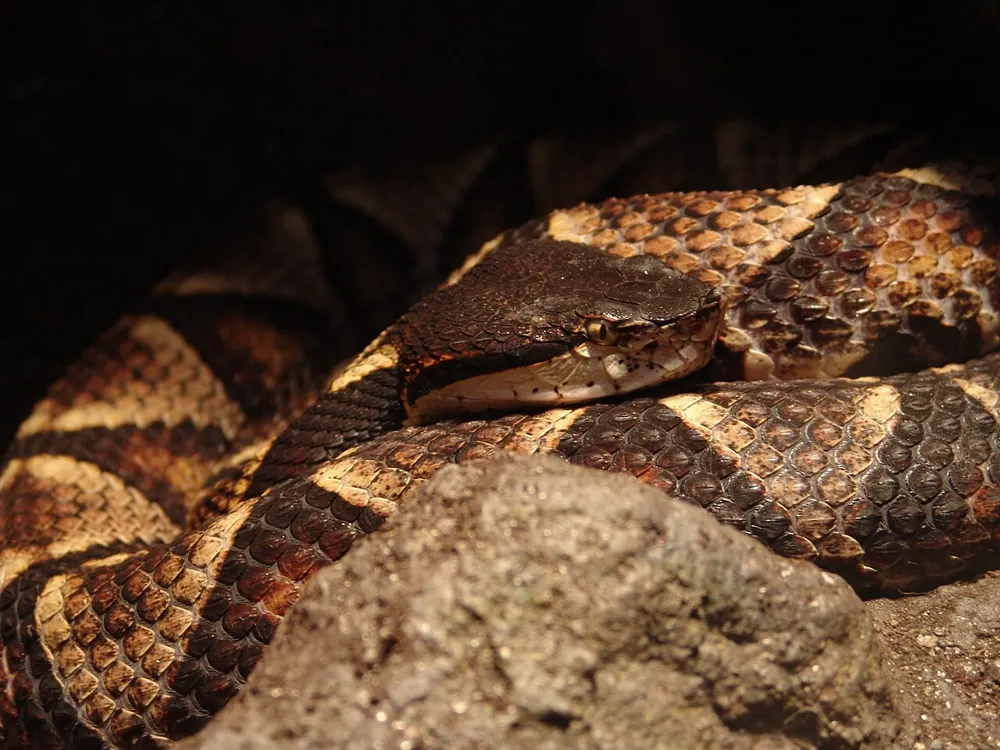
The hundred-pace viper is a pit viper that lives in the mountains and hills of southern China, Taiwan and northern Vietnam. It is venomous, and its bite can be dangerous, so it is important to know what it looks like. Its name comes from a well-known but exaggerated local belief about how far a bite victim can walk.1



 Sida loo aqoonsado
- Light brown or greyish brown, with a series of dark brown triangles along each side1
- About 20 light brown, squarish blotches run along the back1
- Top of the head and upper sides are black, with a black streak from the eye to the corner of the mouth1
- Large, triangular head with an upturned snout, and a very stout body1
- Young snakes are much lighter than adults but have the same pattern1
Awoodda sunta
Suntu waxay ka soo baxdaa ilkihiisa sunta ama ilkihiisa marka uu qaniino.
Maxay samaysaa suntiisa (qaniin ama mudid)?
Its venom is a potent hemotoxin, which damages blood and tissue and is strongly haemorrhagic, meaning it causes bleeding. Bite symptoms include severe pain and bleeding that may begin almost immediately, followed by swelling, blistering, tissue death (necrosis) and ulceration. Heart palpitations may come on suddenly and relatively soon after the bite.1
Intee buu dadka khatar ugu yahay?
Khatarta dadka: Aad u khatar badanWuxuu dili karaa qof aan daaweyn helin.The species is considered dangerous, and deaths are not unusual. Its large, hinged fangs can deliver large amounts of venom.1
 War wanaagsan: dhakhaatiirtu waxay leeyihiin daawo (antivenom) ama daaweyn tan loogu talagalay.1
 Haddii uu qaniino
- Victims should be treated according to the seriousness of the bite. Cutting off or burning a bitten finger or limb is harmful and can cause further complications. An antivenom is produced in Taiwan.1
- Qofka ka dhig mid aan dhaqaaqin oo deggan, xubinta la qaniinay ku hay heerka wadnaha, ka saar faraantiyada iyo waxyaabaha adag, si degdeg ahna u geey isbitaalka.
Marka hore had iyo jeer wac lambarka gurmadka degdegga ah (112, 000, 911). Kani waa hage guud oo gargaar degdeg ah, ma aha talo caafimaad. Aasaaska gargaarka degdegga ah
 Badbaado
- Weligaa ha taaban, ha qaban, hana ku ciyaarin xayawaan duurjoog ah, xitaa mid yar, xitaa haddii uu u muuqdo inuu hurdo ama dhintay.
- Meel u bannee. Haddii aad mid la kulanto, deg, tartiib dib ugu noqo oo u daa inuu jidkiisa maro.
- Haddii mid ku qaniino: deg, ha dhaqaaqin, wac lambarka gurmadka degdegga ah (112, 000, 911) ama si degdeg ah u tag isbitaalka. Xusuuso sida uu u egyahay, sawir ayaa caawiya.
Kuma raadinayo. Suntiisa wuxuu u isticmaalaa inuu cunto ku qabsado ama isku difaaco, wuxuuna aad u door bidaa inuu dhuunto. Wax badan oo ku saabsan badbaadada
Intee buu le'eg yahay?
Intee buu dherer le'eg yahay?
 dhererka 3 bisad guri oo san ilaa dabo isku xiga
 dhererka 9 muus oo isku xiga
 100 mitir wuxuu ku gooyn karaa 95 ilbiriqsi (qofka ugu dheereeya wuxuu u baahan yahay 9.6)
Intee buu Hundred-pace viper le'eg yahay marka ADIGA laguu barbar dhigo?
Xisaab keliya oo browser-kaaga ku jirta. Waxba lama keydiyo, meelna looma diro.
Intee buu u dheereeyaa?


Xaqiiqooyin
Its popular name, hundred-pacer, is said to come from a belief that a bitten victim can walk only 100 steps before dying.1
A protein from its venom, called ACTX-6, has been shown to cause cell death in isolated cancer cells.1
Its venom is widely used in research. In mice, it attacks the kidneys and the mice die.1
It is one of the few pit vipers that lays eggs. It can keep eggs inside during early incubation, which shortens the time they need to develop after being laid.1
The venom has been used in traditional Chinese medicine for centuries to make antivenin for treating snakebites.1
For the Paiwan people of Taiwan, the viper is the parent of their hero Aljis, and the viper symbol is used on their homes to show power.1
Beeniye-jabiye
Khuraafaad: A person bitten by a hundred-pace viper can only walk 100 steps before dying.
Run: This belief is an exaggeration. The species is still dangerous, and deaths are not unusual. Believing the myth has led people to amputate or burn bitten fingers or limbs, which causes further harm.1
Meesha xaqiiqooyinku ka yimaadaan
- Deinagkistrodon (Wikipedia (CC BY-SA 4.0))
- Deinagkistrodon acutus (iNaturalist): magacyada iyo kala soocidda.
- Venom Wiki: heerka khatarta, cabbirka caadiga ah iyo qiyaasta xawaaraha annaga ayaa sameeyay. Eeg sida aan u xisaabinno: Sida aan u qiimeyno khatarta.
Xaqiiq kasta oo boggan ku jirta waxay leedahay lambar tilmaamaya ilaha laga keenay. Haddii aan wax khaldanno, raalli ahaw, waxaan nahay dad xayawaanka jecel, ma aha joornaal saynis. Nagu soo sheeg [email protected] waana saxaynaynaa.
 Dabaqalloocu waa gaajaysan yahay! Venom Wiki waa mashruuc hal qof leeyahay: waa bilaash, xayaysiis iyo raadraac midna ma leh. Deeq yar ayaa caawisa inuu internetka ku sii jiro.Quudi dabaqallooca
Wax kale oo isla kooxda ah: Fiibarka godadka leh (pit viper)
 Brown spotted pit viperFiibarka godadka leh (pit viper)Wuu dili karaa
 HabuFiibarka godadka leh (pit viper)Wuu dili karaa
 Hump-nosed viperFiibarka godadka leh (pit viper)Wuu dili karaa
 Malayan pit viperFiibarka godadka leh (pit viper)Wuu dili karaa
 MamushiFiibarka godadka leh (pit viper)Wuu dili karaa
 Mangshan pit viperFiibarka godadka leh (pit viper)Wuu dili karaa
 Deathstalker
 Indian cobra
 Indian saw-scaled viper
 King cobra
 Puff adder
 Abeesada Russell