
 Afrika
 Aasiya
 Yurub
Yurub Koonfurta Ameerika
 Awstaraaliya iyo Oceania
 Antaarktika
 Badweynta Baasifigga
 Badweynta Atlantik
 Badweynta Hindiya
 Badweynta Arktik
 Badda Dhexe
 Badda Cas
 Badda Karibiyaanka
 Badda Kooraal
 Badda Koonfurta Shiinaha
 Badda Filibiin
 Badda Andaman
 Badda Waqooyi
 Badda Timor iyo Arafura
 Gacanka Bengaal
 Gacanka Kaliforniya
Stephens' banded snake
 Qaniin
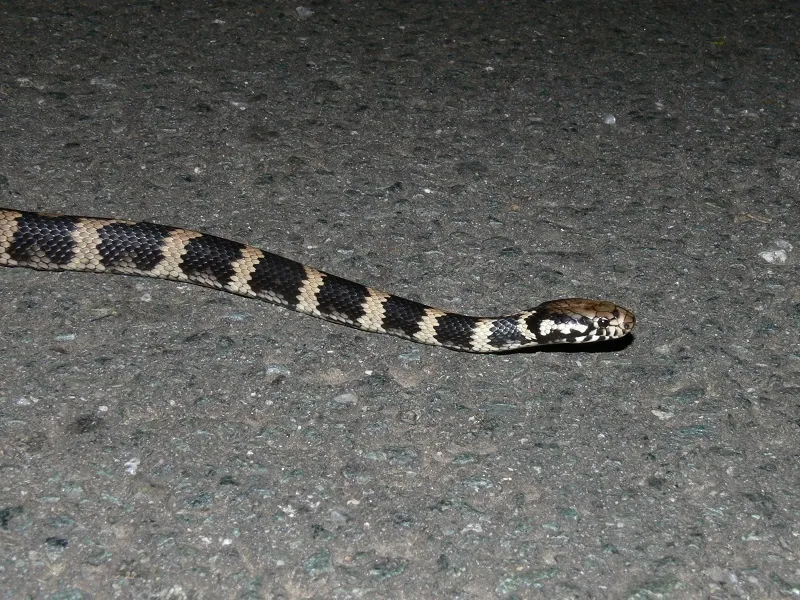
Stephens' banded snake is a tree-dwelling snake that lives only on the east coast of Australia. It is highly venomous, and its venom affects the blood, so it is one of the snakes that people should give plenty of space. It spends most of its life high in the trees of forests.1



 Sida loo aqoonsado
- Alternating bands of grey or black and dirty-white along the back, with over 40 of each colour from the back of the head to the tip of the tail1
- A flat, mostly dirty-white belly, with occasional grey splotches towards the head and tail1
- A dark brown top of the head, with pale blotches or bars along the lips1
- A slender body with a broadened, arrow-shaped head1
- Mostly active at night, and often found in tree hollows high in the canopy1
Inta badan lagu khaldaa: Its closest relatives are the broad-headed snake, which shares its coastal range, and the pale-headed snake, which lives further inland. All three are tree-dwelling snakes in the same genus.1
Awoodda sunta
Suntu waxay ka soo baxdaa ilkihiisa sunta ama ilkihiisa marka uu qaniino.
Maxay samaysaa suntiisa (qaniin ama mudid)?
Its venom is procoagulant, meaning it makes blood clot. It contains prothrombinase, which triggers the production of thrombin in the blood, causing tiny clots throughout the body. Symptoms include nausea, headache, abdominal pain, vomiting, diarrhoea and sweating. If left untreated, the clotting leads to excessive bleeding as blood vessels rupture.1
Intee buu dadka khatar ugu yahay?
Khatarta dadka: HalisQaniinyo waxay u baahan tahay dhakhtar. Dhimashadu aad bay u yar tahay.It is described as a ready biter, and its envenoming is potentially fatal. Only one death has been recorded: an elderly man in his 60s in Kalang, New South Wales, whose rescue was delayed by torrential rain and floods.1
 War wanaagsan: dhakhaatiirtu waxay leeyihiin daawo (antivenom) ama daaweyn tan loogu talagalay.1
Muxuu sameeyaa marka uu baqo?
It is described as nervous and defensive towards other animals, and it is a ready biter when threatened.1
 Haddii uu qaniino
- Victims have been successfully treated with up to four doses of 3,000 unit tiger snake antivenom. The wounded person must be transported to hospital for medical treatment.1
- Xirid cadaadis iyo dhaqdhaqaaq la'aan: faashad laastik ah oo adag ku duub meesha la qaniinay, kadib xubinta oo dhan kor u duub, ku xir lox adag (splint), oo qofka si buuxda uga dhig mid aan dhaqaaqin ilaa caawimaaddu ka timaaddo.
- Ha dhaqin meesha la qaniinay: isbitaallada waxay baari karaan sunta maqaarka ku hartay si ay u doortaan daawada sunta (antivenom) ee saxda ah.
Marka hore had iyo jeer wac lambarka gurmadka degdegga ah (112, 000, 911). Kani waa hage guud oo gargaar degdeg ah, ma aha talo caafimaad. Aasaaska gargaarka degdegga ah
 Badbaado
- Weligaa ha taaban, ha qaban, hana ku ciyaarin xayawaan duurjoog ah, xitaa mid yar, xitaa haddii uu u muuqdo inuu hurdo ama dhintay.
- Meel u bannee. Haddii aad mid la kulanto, deg, tartiib dib ugu noqo oo u daa inuu jidkiisa maro.
- Haddii mid ku qaniino: deg, ha dhaqaaqin, wac lambarka gurmadka degdegga ah (112, 000, 911) ama si degdeg ah u tag isbitaalka. Xusuuso sida uu u egyahay, sawir ayaa caawiya.
Kuma raadinayo. Suntiisa wuxuu u isticmaalaa inuu cunto ku qabsado ama isku difaaco, wuxuuna aad u door bidaa inuu dhuunto. Wax badan oo ku saabsan badbaadada
Intee buu le'eg yahay?
Intee buu dherer le'eg yahay?
Intee buu culus yahay?
 dhererka 2.5 bisad guri oo san ilaa dabo isku xiga
 dhererka 7 muus oo isku xiga
 100 mitir wuxuu ku gooyn karaa 55 ilbiriqsi (qofka ugu dheereeya wuxuu u baahan yahay 9.6)
Intee buu Stephens' banded snake le'eg yahay marka ADIGA laguu barbar dhigo?
Xisaab keliya oo browser-kaaga ku jirta. Waxba lama keydiyo, meelna looma diro.
Intee buu u dheereeyaa?


Xaqiiqooyin
It is one of the few mainly tree-dwelling elapid snakes in Australia.1
A single individual may use up to 30 different trees within its range.1
It hibernates, or brumates, for up to five months through winter inside a tree hollow.1
Males may use home ranges averaging 20.2 hectares, while females average 5.4 hectares.1
It is the largest species in the genus Hoplocephalus, and females are usually larger than males.1
It is slow to mature, with males reaching sexual maturity at three years and females at four years.1
Khubarada sunta
- Magaca sayniska
- Hoplocephalus stephensii
- Koox
- Masaska Awstaraaliya
- Qoys
- Elapidae2
- Kala horreynta
- Squamata
- Qaaradaha
- Awstaraaliya iyo Oceania
- Carruurta yaryar
- It gives birth to live young, with between one and nine offspring per litter. Females are only pregnant every two years.1
- Sida uu ugu nool yahay duurka
- Near Threatened (IUCN Red List)1
- Khatarta dadka
- 3 / 5: Halis3
Meesha xaqiiqooyinku ka yimaadaan
- Stephens's banded snake (Wikipedia (CC BY-SA 4.0))
- Hoplocephalus stephensii (iNaturalist): magacyada iyo kala soocidda.
- Venom Wiki: heerka khatarta, cabbirka caadiga ah iyo qiyaasta xawaaraha annaga ayaa sameeyay. Eeg sida aan u xisaabinno: Sida aan u qiimeyno khatarta.
Xaqiiq kasta oo boggan ku jirta waxay leedahay lambar tilmaamaya ilaha laga keenay. Haddii aan wax khaldanno, raalli ahaw, waxaan nahay dad xayawaanka jecel, ma aha joornaal saynis. Nagu soo sheeg [email protected] waana saxaynaynaa.
 Dabaqalloocu waa gaajaysan yahay! Venom Wiki waa mashruuc hal qof leeyahay: waa bilaash, xayaysiis iyo raadraac midna ma leh. Deeq yar ayaa caawisa inuu internetka ku sii jiro.Quudi dabaqallooca
Wax kale oo isla kooxda ah: Masaska Awstaraaliya
 Coastal taipan
 Common death adder
 Eastern brown snake
 Abeesada taibaanka gudaha
 Abeesada shabeelka
 Collett's snake
Sidoo kale wuxuu ku nool yahay: Awstaraaliya iyo Oceania
 Sydney funnel-web spiderTarantula iyo funnel-webDila
 Redback spiderCaarooyinWuxuu u baahan yahay dhakhtar
 Brown tree snakeMasaska ilkaha dambe lehWuu xanuunjiyaa oo keliya
 Hooded pitohuiXayawaanno kale oo sun leh (taabasho ama cunid)Wuu xanuunjiyaa oo keliyaHa taaban
 PlatypusNaasleyda sun lehWuu xanuunjiyaa oo keliya
 Northern tree-dwelling funnel-web spiderTarantula iyo funnel-webDila