
 Африка
 Азија
Азија Европа
 Јужна Америка
 Аустралија и Океанија
 Антарктик
 Тихи океан
 Атлантски океан
 Индијски океан
 Северни ледени океан
 Средоземно море
 Црвено море
 Карипско море
 Корално море
 Јужнокинеско море
 Филипинско море
 Андаманско море
 Северно море
 Тиморско и Арафурско море
 Бенгалски залив
 Калифорнијски залив
Brown-tail moth
 Длачице које жаре
The brown-tail moth is a moth whose caterpillars are covered in tiny irritating hairs. It is native to Europe, neighbouring parts of Asia and the north coast of Africa. Its hairs can cause a very itchy rash, so it matters to anyone who works or plays near trees it feeds on.1

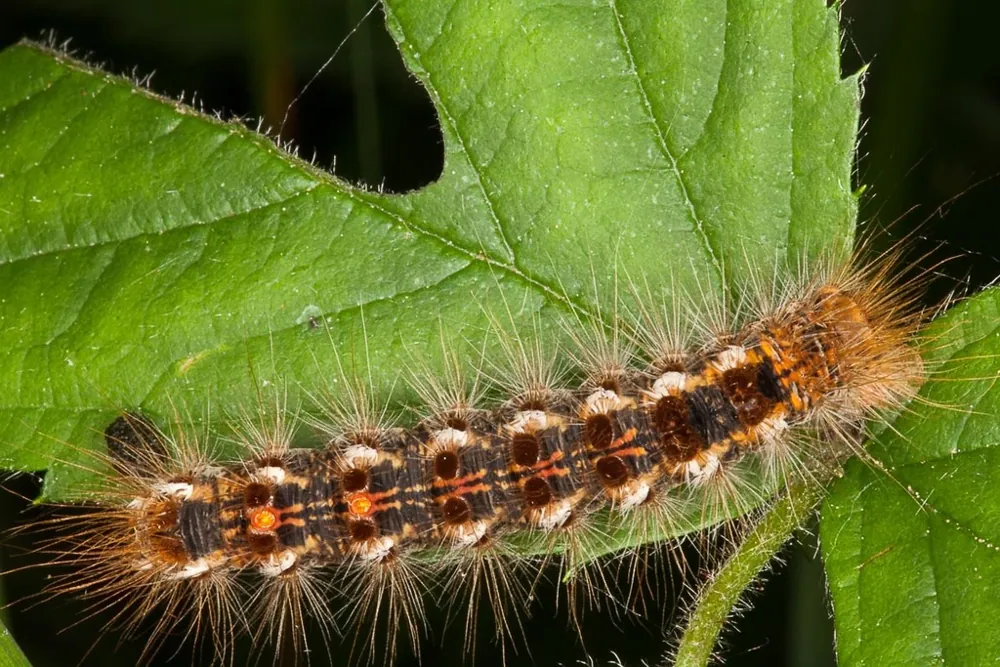
 Како да је препознаш
- Adults have pure white upper wings and a hairy white body with a tuft of brown hair at the tip of the tail end.1
- Adults have a wingspan of 36 to 42 millimetres.1
- Caterpillars are very hairy, brown with white markings, and have two prominent red spots toward the tail end.1
- In late autumn and winter, silken tents hang on branch tips, which are a sign that the caterpillars are present.1
Често је мешају са: Euproctis similis, also native to Europe, is similar as an adult but the female has a yellow tail tuft. Hyphantria cunea, native to North America, is similar too, but it lacks the coloured tail tuft.1
Моћ отрова
Сићушне длачице или чекиње се одломе у кожи и жаре.
Шта ради њен отров кад угризе или убоде?
The hairs are not venom injected by a bite or sting. They are toxic and irritating to skin. Barbed hairs lodge in the skin and cause physical irritation, and chemicals in the hairs also irritate it. If inhaled, the hairs can cause breathing difficulties similar to asthma. The toxins stay active for up to three years after the hairs are shed.1
Колико је опасна за људе?
Опасност за људе: БолноМоже баш да боли, али скоро никад није озбиљно.Contact with the hairs causes a very itchy rash that can last for weeks. Doctors reported rashes worse than poison ivy rash in the early 1900s. Breathing difficulties can occur if the hairs are inhaled.1
Шта ради кад се уплаши?
Its hairs protect the caterpillars from predators, and the caterpillars use some hairs in their cocoons.1
 Ако додирнеш њене длачице
- Код длачица гусенице које жаре: скини их селотејпом, па опери кожу. Не трљај.
- Код уједа: опери и расхлади. Потражи медицинску помоћ ако се особа не осећа добро или лако крвари.
Увек прво позови број за хитне случајеве (112, 000, 911). Ово су општа упутства за прву помоћ, а не медицински савет. Основе прве помоћи
 Буди безбедан
- Никад не дирај, не хватај и не задиркуј дивљу животињу, чак ни малу, и чак ни ако изгледа као да спава или је мртва.
- Држи се на одстојању. Ако је сретнеш, остани миран, полако се повуци и пусти је да оде својим путем.
- Ако додирнеш њене длачице: остани миран, не мрдај, позови број за хитне случајеве (112, 000, 911) или брзо стигни до болнице. Запамти како је изгледала, слика помаже.
Она не јури тебе. Отров користи да ухвати храну или да се заштити, и много радије би се сакрила. Још о безбедности
Колико је велика?
Колико је дугачка?
 краће од твог малог прста
 спорије од баштенског пужа
Brown-tail moth и ТИ: ко је већи?
Само математика у твом прегледачу. Ништа се не чува и никуд не шаље.
Колико је брза?

Чињенице
The hairs of the caterpillars can cause a rash even when no one touches a caterpillar, because shed hairs can blow in the wind.1
Brown-tail moths were described in outbreaks in Paris, London and Berlin as far back as the 1500s, when they stripped trees of leaves.1
The species spends about nine months of its year as caterpillars, which is unusually long for a moth.1
Caterpillars spend the winter together in silken tents built at branch tips, rather than spreading out.1
A parasitic fly introduced to North America in 1906 to control spongy moths also strongly affected brown-tail moths.1
Рушилац митова
Мит: You can only get the rash by touching the caterpillars.
Истина: Hairs are shed and can become windblown, and they can be carried indoors on clothing and shoes, so a rash can occur without direct contact with the caterpillars.1
Одакле потичу чињенице
- Brown-tail moth (Wikipedia (CC BY-SA 4.0))
- Euproctis chrysorrhoea (iNaturalist): имена и класификација.
- Venom Wiki: ниво опасности, типична величина и процена брзине су наши. Погледај како их рачунамо: Како оцењујемо опасност.
Свака чињеница на овој страници има број који води до њеног извора. Ако смо нешто погрешили, извини, ми смо љубитељи животиња, а не научни часопис. Јави нам на [email protected] и исправићемо.
 Шкорпион је гладан! Venom Wiki је пројекат једног човека: бесплатан, без реклама и без трекера. Мала напојница помаже да остане на мрежи.Нахрани шкорпиона
Још из исте групе: Гусенице и бубице
 Oak processionary
 Pine processionary
 Common bombardier beetle
 Asian giant water bug
 Blue-striped nettle grub
 Masked hunter
Живи и у: Европа
 Common European adderЉутице и шаркеТреба лекар
 Spanish flyДруге животиње отровне на додир или за јелоТреба лекарНе дирај
 Common waspПчеле, осе и стршљениСамо боли
 European hornetПчеле, осе и стршљениСамо боли
 Fire salamanderОтровне жабе, крастаче и мрмољциСамо болиНе дирај
 Western honey beeПчеле, осе и стршљениСамо боли