
 Afrika
 Asia
Asia Yuropa
 Amerika Borwa
 Australia le Oceania
 Antarctica
 Lewatle la Pacific
 Lewatle la Atlantic
 Lewatle la India
 Lewatle la Arctic
 Lewatle la Mediterranean
 Lewatle le Lefubedu
 Lewatle la Caribbean
 Lewatle la Coral
 Lewatle la China Borwa
 Lewatle la Philippine
 Lewatle la Andaman
 Lewatle la Leboya
 Lewatle la Timor le Arafura
 Kgwohlo ya Bengal
 Kgwohlo ya California
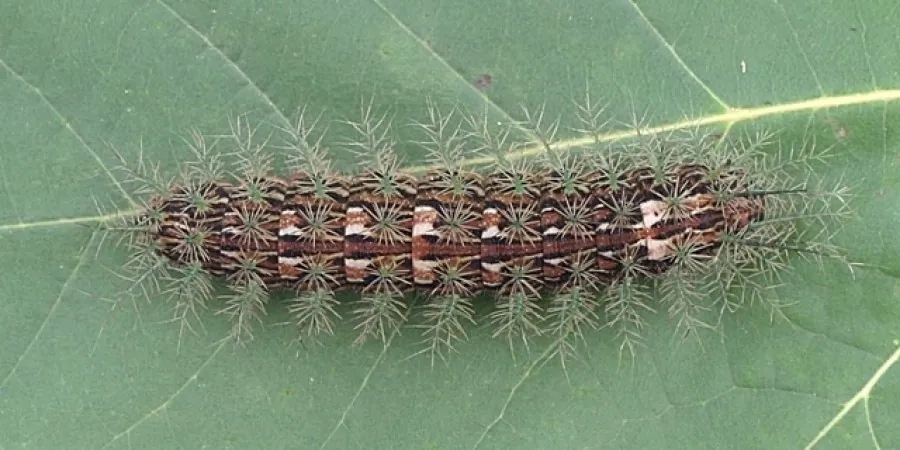
Giant silkworm moth caterpillar
 Boya bo hlabang
This is the caterpillar of a large moth from South America, the giant silk moth. The caterpillar is famous for its venom, which is one of the most dangerous of any caterpillar. It lives in southern Brazil and nearby countries, and it has caused many deaths.1
 Ho e tseba jwang
Matla a chefo
Boya bo bonyenyane kapa ditlhaka di robehela letlalong mme di a hlaba.
Chefo ya yona (eo e e kenyang ka ho loma kapa ho hlaba) e etsang?
The venom is held in sacs at the base of each spine and flows through the hollow spines into the wound. It causes disseminated intravascular coagulation, which stops the blood from clotting and leads to bleeding into the tissues and internal organs. After an initial phase of headache, fever, vomiting and malaise, a severe bleeding disorder can develop after about 24 hours.1
E kotsi hakae ho batho?
Kotsi ho batho: E kotsi haholoE ka bolaya motho ya sa fumaneng kalafo.The caterpillar has been responsible for at least 500 deaths. In Brazil, 42,264 accidents were recorded between 2007 and 2017, of which 248 were severe and five were fatal. The reported death rate is 2.5%. Most victims were male (63%), and 45% were between 0 and 21 years old.1
 Ditaba tse monate: dingaka di na le moriana (antivenom) kapa kalafo bakeng sa sena.1
E etsang ha e tshohile?
Its body is covered in hairs and spines that break off easily and inject venom into anything that touches them.1
 Haeba o ama boya ba yona
- A study by Dr Robert Norris states that stings and abrasions should be treated with antifibrinolytics. If blood products are needed, they must be given with care so they do not worsen the bleeding. An antiserum made by the Butantan Institute in São Paulo reverses the clotting problems, and patients treated with it recover quickly.1
- Bakeng sa boya bo hlabang ba diboko: bo tlose ka theipi e kgomarelang, ebe o hlatswa letlalo. O se ke wa hohla.
- Bakeng sa ho longwa: hlatswa mme o pholise. Fumana thuso ya bongaka haeba motho a ikutlwa a kula kapa a tswa madi habonolo.
Kamehla letsetsa nomoro ya tshohanyetso pele (112, 000, 911). Ena ke tataiso e akaretsang ya thuso ya pele, hase keletso ya bongaka. Metheo ya thuso ya pele
 Dula o bolokehile
- O se ke wa ama, wa tshwara kapa wa tena phoofolo ya naheng, leha e le e nyenyane, le leha e shebahala e robetse kapa e shwele.
- E fe sebaka. Ha o kopana le yona, dula o kgutsitse, kgutlela morao butle mme o e tlohele e tsamaye ka tsela ya yona.
- Haeba o ama boya ba yona: dula o kgutsitse, o se ke wa sisinyeha, letsetsa nomoro ya tshohanyetso (112, 000, 911) kapa o ye sepetlele kapele. Hopola hore e ne e shebahala jwang, foto e a thusa.
Ha e o batle. E sebedisa chefo ya yona ho tshwara dijo kapa ho itshireletsa, mme e kgetha ho ipata. Ho eketsehileng ka ho dula o bolokehile
Hokae lefatsheng?
E kgolo hakae?
E telele hakae?
 e telele jwaloka diboloko tsa ho bapala tse 2 moleng
 e dieha ho feta kgofu ya serapeng
Giant silkworm moth caterpillar e kgolo hakae ha e bapiswa le WENA?
Ke dipalo feela ka hara sebatli sa hao. Ha ho letho le bolokwang kapa le romelwang kae kapa kae.
E potlaka hakae?

Dintlha
Guinness World Records lists it as the most venomous caterpillar in the world.1
Before studies of Lonomia caterpillars, it was not known that caterpillars could produce enough toxin to kill a person.1
Its venom contains anti-clotting agents that have been studied for possible medical uses, including a component called Lopap.1
The first known epidemic happened in an farming community in Rio Grande do Sul, where victims had only handled leafy branches before their symptoms began.1
Only two of the 26 Lonomia species found in the Americas, L. obliqua and L. achelous, have caused severe reactions.1
Ho senya ditshomo
Tshomo: Caterpillars cannot produce toxins strong enough to kill a person.
Nnete: This caterpillar's venom can kill. At least 500 deaths have been linked to it.1
Moo dintlha di tswang teng
- Lonomia obliqua (Wikipedia (CC BY-SA 4.0))
- Lonomia obliqua (iNaturalist): mabitso le tlhophiso.
- Venom Wiki: boemo ba kotsi, boholo bo tlwaelehileng le kakanyo ya lebelo ke tsa rona. Bona kamoo re di balang ka teng: Kamoo re lekanyang kotsi ka teng.
Taba e nngwe le e nngwe leqepheng lena e na le nomoro e bontshang mohlodi wa yona. Haeba re entse phoso, re kopa tshwarelo, re barati ba diphoofolo, hase makasine wa saense. Re bolelle ho [email protected] mme re tla e lokisa.
 Phepheng e lapile! Venom Wiki ke projeke ya motho a le mong: ke mahala, ha e na dipapatso ebile ha e na di-tracker. Thuso e nyenyane ya tjhelete e e boloka e ntse e le inthaneteng.Fepa phepheng
Tse ding tsa sehlopha se le seng: Diboko le dikokoanyana
 Vinchuca kissing bugDiboko le dikokoanyanaE hloka ngaka
 Venezuelan fire caterpillarDiboko le dikokoanyanaE ka bolayaO se ke wa ama
 Pararama caterpillarDiboko le dikokoanyanaE hloka ngakaO se ke wa ama
 Rhodnius kissing bugDiboko le dikokoanyanaE hloka ngaka
 Yellowtail moth of the mangrovesDiboko le dikokoanyanaE utlwisa bohloko feelaO se ke wa ama
 Milkweed assassin bugDiboko le dikokoanyanaHa e na kotsi
 Golden poison frog
 Terciopelo
 Brazilian wandering spider
 Eyelash viper
 Golden lancehead
 South American bushmaster