
 Afrika
 Asia
Asia Ulaya
Ulaya Amerika Kusini
 Australia na Oceania
 Antaktika
 Bahari ya Pasifiki
 Bahari ya Atlantiki
 Bahari ya Hindi
 Bahari ya Aktiki
 Bahari ya Mediterania
 Bahari ya Shamu
 Bahari ya Karibi
 Bahari ya Matumbawe
 Bahari ya Kusini ya China
 Bahari ya Ufilipino
 Bahari ya Andaman
 Bahari ya Kaskazini
 Bahari ya Timor na Arafura
 Ghuba ya Bengal
 Ghuba ya California
Boomslang
 Kuumwa
The boomslang is a highly venomous tree snake from Sub-Saharan Africa. It spends most of its time in trees and bushes, though it also hunts and shelters on the ground. Its venom works slowly, so a bite can look harmless at first and still be life-threatening.1



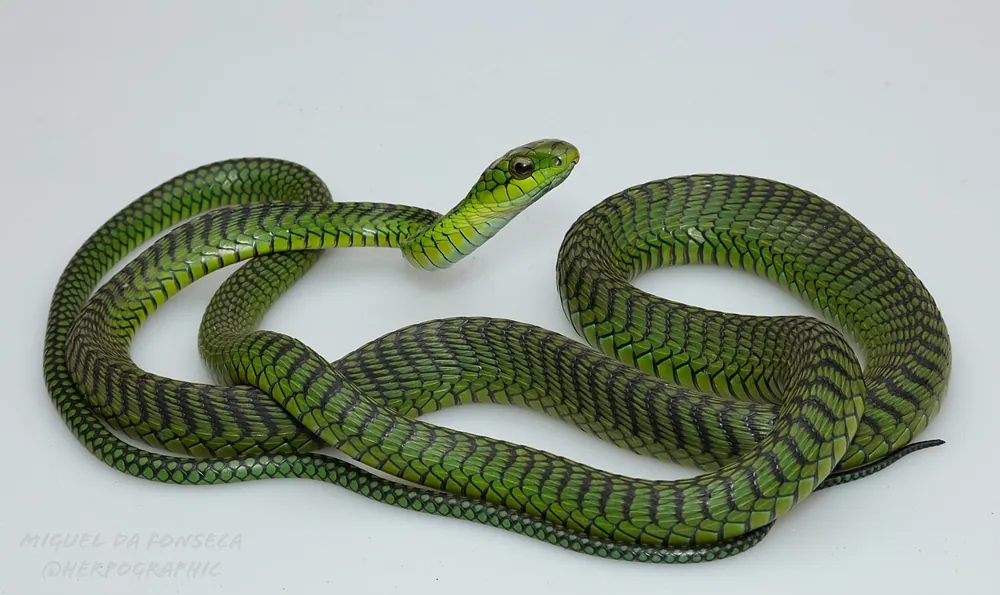
 Jinsi ya kumtambua
Nguvu ya sumu
Sumu hutoka kupitia meno yake ya sumu au meno anapouma.
Sumu yake hufanya nini?
Its venom is mainly a haemotoxin, a type of venom that disrupts blood clotting. Many tiny clots form in the blood, causing bleeding in tissues such as muscle and the brain, while the small blood vessels become clogged. Symptoms include headache, nausea, sleepiness and confusion, and can lead to cardiac arrest and unconsciousness. Because the venom is slow-acting, symptoms may not appear until many hours after a bite.1
Ana hatari gani kwa watu?
Hatari kwa watu: Hatari sanaAnaweza kumuua mtu asiyepata matibabu.Bites can be fatal. Of eight serious envenomations reported between 1919 and 1962, two were lethal. In 1957, a herpetologist died after being bitten by a juvenile. Hatchlings about 45 cm long are already dangerously venomous. Delayed symptoms can lead victims to wrongly believe a bite was a harmless dry bite.1
 Habari njema: madaktari wana dawa (ya kuzuia sumu) au matibabu ya hili.1
Hufanya nini akiogopa?
It is timid and usually bites only when people try to handle, catch, chase or kill it. When cornered, it inflates its neck and takes an S-shaped striking pose.1
 Akiuma
- Antivenom is available and treatment is needed after a bite. Complete blood transfusions may also be required, especially if more than 24 to 48 hours pass without antivenom. Do not assume a bite is harmless just because no symptoms have appeared.1
- Osha jeraha, mweke mtu mtulivu na utafute msaada wa kitabibu. Baadhi ya spishi (kama boomslang) zinaweza kuua saa kadhaa baadaye.
Daima piga namba ya dharura kwanza (112, 000, 911). Huu ni mwongozo wa jumla wa huduma ya kwanza, si ushauri wa kitabibu. Misingi ya huduma ya kwanza
 Kaa salama
- Kamwe usimguse, kumkamata wala kumchokoza mnyama wa porini, hata akiwa mdogo, na hata akionekana amelala au amekufa.
- Mpe nafasi. Ukikutana naye, tulia, rudi nyuma polepole na umwache aende zake.
- Akikuuma: tulia, usitikisike, piga namba yako ya dharura (112, 000, 911) au nenda hospitali haraka. Kumbuka alivyoonekana, picha husaidia.
Hakuwindi wewe. Hutumia sumu yake kukamata chakula au kujilinda, na hupendelea zaidi kujificha. Zaidi kuhusu kukaa salama
Ana ukubwa gani?
Ana urefu gani?
Ana uzito gani?
 urefu sawa na paka wa nyumbani 4 kutoka pua hadi mkia
 urefu sawa na ndizi 10 zilizopangwa mstari
 angeweza kukimbia mita 100 kwa sekunde 60 (binadamu mwenye kasi zaidi anahitaji 9.6)
Boomslang ana ukubwa gani ukilinganisha na WEWE?
Ni hesabu tu kwenye kivinjari chako. Hakuna kinachohifadhiwa wala kutumwa popote.
Ana kasi gani?


Ukweli
An adult has only 1.6 to 8 mg of venom, but it is thought that 2 to 3 mg could be enough to kill a healthy adult human.1
It can open its jaws up to 170 degrees when biting.1
Its head is distinctly egg-shaped, and its eyes are exceptionally large.1
It often moves its head from side to side to get a better view of objects directly in front of it.1
When it is pursued by something too large to eat, it escapes by moving from branch to branch.1
Kuvunja dhana potofu
Dhana potofu: Rear-fanged snakes cannot produce a lethal bite.
Ukweli: For a long time many herpetologists believed this, but boomslang bites have caused deaths.1
Kwa wataalamu wa sumu
Ukweli unatoka wapi
- Boomslang (Wikipedia (CC BY-SA 4.0))
- Dispholidus typus (iNaturalist): majina na uainishaji.
- Venom Wiki: kiwango cha hatari, ukubwa wa kawaida na makadirio ya kasi ni yetu wenyewe. Ona jinsi tunavyovipata: Jinsi tunavyopima hatari.
Kila ukweli kwenye ukurasa huu una namba inayoonyesha chanzo chake. Kama tumekosea kitu, samahani, sisi ni wapenzi wa wanyama, si jarida la kisayansi. Tuambie kupitia [email protected] nasi tutarekebisha.
 Nge ana njaa! Venom Wiki ni mradi wa mtu mmoja: bure, bila matangazo na bila vifuatiliaji. Mchango mdogo husaidia kuiweka hewani.Mlishe nge
Zaidi kutoka kundi hilohilo: Nyoka wenye meno ya sumu nyuma
 Cape twig snakeNyoka wenye meno ya sumu nyumaAnaweza kuua
 Forest twig snakeNyoka wenye meno ya sumu nyumaAnaweza kuua
 Bibron's stiletto snakeNyoka wenye meno ya sumu nyumaAnahitaji daktari
 Madagascar leaf-nosed snakeNyoka wenye meno ya sumu nyumaInauma tu
 Montpellier snakeNyoka wenye meno ya sumu nyumaInauma tu
 Eastern twig snakeNyoka wenye meno ya sumu nyumaAnaweza kuua
 Koboko
 Deathstalker
 Swila wa Misri
 Kifutu
 Fat-tailed scorpion
 Gaboon viper