
 Afrika
 Asia
Asia Ulaya
Ulaya Amerika Kusini
 Australia na Oceania
 Antaktika
 Bahari ya Pasifiki
 Bahari ya Atlantiki
 Bahari ya Hindi
 Bahari ya Aktiki
 Bahari ya Mediterania
 Bahari ya Shamu
 Bahari ya Karibi
 Bahari ya Matumbawe
 Bahari ya Kusini ya China
 Bahari ya Ufilipino
 Bahari ya Andaman
 Bahari ya Kaskazini
 Bahari ya Timor na Arafura
 Ghuba ya Bengal
 Ghuba ya California
Pygmy slow loris
 Kuumwa
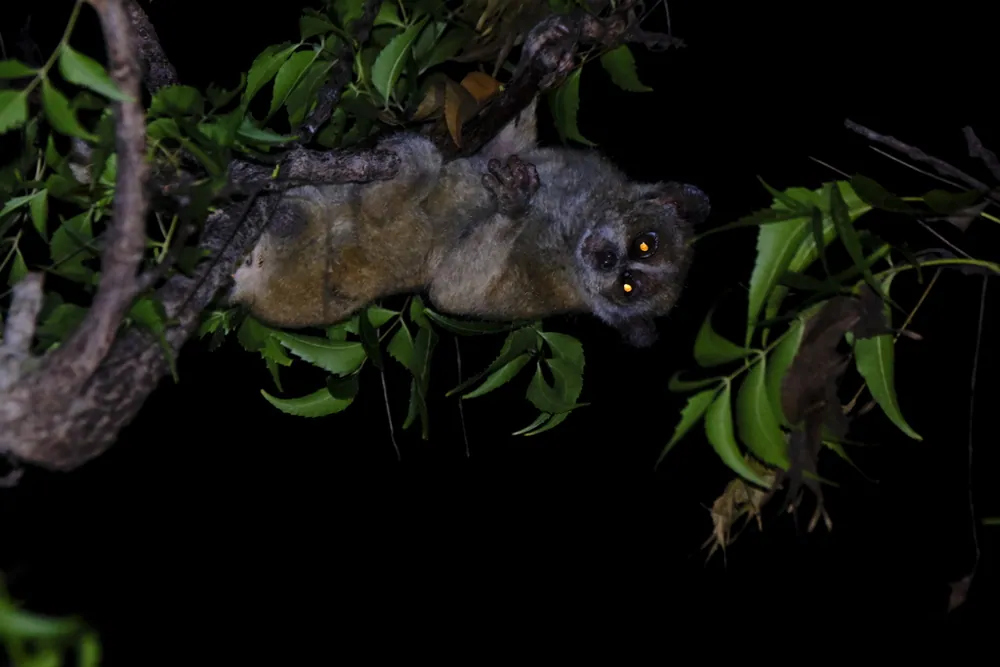
The pygmy slow loris is a small, nocturnal primate that moves slowly through forest trees at night. It lives in parts of Vietnam, Laos, Cambodia and China. It is one of the few primates that can produce a toxic bite, which makes it special and very rare.1



 Jinsi ya kumtambua
- Rings around the eyes that are seal brown in adults and darker in young animals1
- A white stripe running from the nose up to the forehead1
- Small black ears, about 23 mm long, with no fur on the tips1
- A rufous to brownish-black stripe along the back, from the nape to the middle of the lower back1
- Silvery white hands and feet with yellowish-white nails1
Mara nyingi huchanganywa na: The Bengal slow loris (N. bengalensis) lives in some of the same areas, near the border of southern China and Vietnam. The two can be told apart by differences in their chromosomes, not by appearance alone.1
Nguvu ya sumu
Sumu hutoka kupitia meno yake ya sumu au meno anapouma.
Sumu yake hufanya nini?
The bite is toxic. The animal licks a clear, oily secretion from glands on the inside of its elbows and mixes it with its saliva, which creates a noxious toxin. The secretion contains over 200 chemical components, and one of them is a protein similar to an allergen found in cat dander. In people who are sensitive to it, this can cause anaphylaxis, a severe allergic reaction.1
Ana hatari gani kwa watu?
Hatari kwa watu: InaumaInaweza kuuma sana, lakini karibu kamwe si jambo zito.The main risk is anaphylaxis, which can affect people who are sensitive to the protein in its secretion.1
Hufanya nini akiogopa?
When startled, it licks the secretion from its elbow glands and spreads it over its head.1
 Akiuma
- Osha jeraha vizuri na utafute msaada wa kitabibu.
Daima piga namba ya dharura kwanza (112, 000, 911). Huu ni mwongozo wa jumla wa huduma ya kwanza, si ushauri wa kitabibu. Misingi ya huduma ya kwanza
 Kaa salama
- Kamwe usimguse, kumkamata wala kumchokoza mnyama wa porini, hata akiwa mdogo, na hata akionekana amelala au amekufa.
- Mpe nafasi. Ukikutana naye, tulia, rudi nyuma polepole na umwache aende zake.
- Akikuuma: tulia, usitikisike, piga namba yako ya dharura (112, 000, 911) au nenda hospitali haraka. Kumbuka alivyoonekana, picha husaidia.
Hakuwindi wewe. Hutumia sumu yake kukamata chakula au kujilinda, na hupendelea zaidi kujificha. Zaidi kuhusu kukaa salama
Ana ukubwa gani?
Ana urefu gani?
Ana uzito gani?

 urefu sawa na matofali 7 ya kuchezea yaliyopangwa mstari
 angeweza kukimbia mita 100 kwa sekunde 180 (binadamu mwenye kasi zaidi anahitaji 9.6)
Pygmy slow loris ana ukubwa gani ukilinganisha na WEWE?
Ni hesabu tu kwenye kivinjari chako. Hakuna kinachohifadhiwa wala kutumwa popote.
Ana kasi gani?


Ukweli
Its lower teeth form a comb-like toothcomb, which it uses for grooming and for scraping resin from tree bark.1
Its weight changes with the seasons. Adults can be about 50 percent heavier in winter than in summer, and individuals up to 700 grams have been recorded.1
Unlike most other primates, it does not leap. It moves by crawling slowly along branches.1
Males mark their territories with scent, and females prefer males whose scent is familiar.1
Females are only fertile for a short time each year, so mating opportunities are rare.1
Kuvunja dhana potofu
Dhana potofu: Animals found near Hòa Bình in Vietnam were a separate species, N. intermedius.
Ukweli: DNA analysis showed these were adults of the pygmy slow loris. Differences in dorsal stripes and silvery hairs are seasonal variation.1
Kwa wataalamu wa sumu
- Jina la kisayansi
- Xanthonycticebus pygmaeus
- Kundi
- Mamalia wenye sumu
- Familia
- Lorisidae2
- Mpangilio
- Primates
- Mabara
- Asia
- Watoto
- It usually has one or two offspring after a gestation of about six months, and the young cling to their mother's belly for the first few days.1
- Muda wa maisha
- takriban miaka 201
- Hali yake porini
- Endangered1
- Hatari kwa watu
- 2 / 5: Inauma3
Ukweli unatoka wapi
- Pygmy slow loris (Wikipedia (CC BY-SA 4.0))
- Xanthonycticebus pygmaeus (iNaturalist): majina na uainishaji.
- Venom Wiki: kiwango cha hatari, ukubwa wa kawaida na makadirio ya kasi ni yetu wenyewe. Ona jinsi tunavyovipata: Jinsi tunavyopima hatari.
Kila ukweli kwenye ukurasa huu una namba inayoonyesha chanzo chake. Kama tumekosea kitu, samahani, sisi ni wapenzi wa wanyama, si jarida la kisayansi. Tuambie kupitia [email protected] nasi tutarekebisha.
 Nge ana njaa! Venom Wiki ni mradi wa mtu mmoja: bure, bila matangazo na bila vifuatiliaji. Mchango mdogo husaidia kuiweka hewani.Mlishe nge
 Bengal slow loris
 Javan slow loris
 Sunda slow loris
 Kayan River slow loris
 Philippine slow loris
 Eurasian water shrew
 Deathstalker
 Swila wa India
 Indian saw-scaled viper
 Koboko mfalme
 Kifutu
 Kifutu wa Russell