
 แอฟริกา
 เอเชีย
 ยุโรป
ยุโรป อเมริกาใต้
 ออสเตรเลียและโอเชียเนีย
 แอนตาร์กติกา
 มหาสมุทรแปซิฟิก
 มหาสมุทรแอตแลนติก
 มหาสมุทรอินเดีย
 มหาสมุทรอาร์กติก
 ทะเลเมดิเตอร์เรเนียน
 ทะเลแดง
 ทะเลแคริบเบียน
 ทะเลคอรัล
 ทะเลจีนใต้
 ทะเลฟิลิปปิน
 ทะเลอันดามัน
 ทะเลเหนือ
 ทะเลติมอร์และอาราฟูรา
 อ่าวเบงกอล
 อ่าวแคลิฟอร์เนีย
By-the-wind sailor
 หนวดที่ต่อยได้
The by-the-wind sailor is a small, deep blue animal that floats on the surface of the open ocean. It is not a single creature but a colony of tiny linked animals, and it moves by catching the wind with a small stiff sail. Its stinging tentacles are generally harmless to people, but they can irritate the skin.1

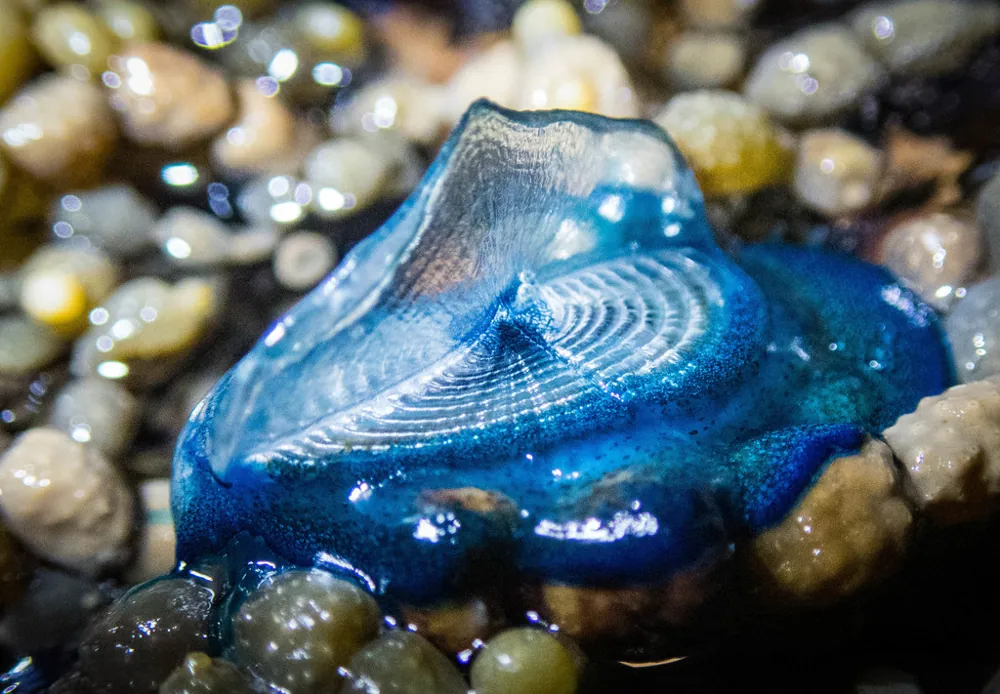
 วิธีสังเกต
พลังพิษ
เซลล์เข็มพิษจิ๋วนับพันจะยิงออกมาเมื่อมีอะไรแตะ
พิษของมันทำอะไร?
Its nematocysts contain toxins that are effective against its prey, which are mostly plankton. The nematocysts are relatively benign to humans, but each person may respond differently to the toxin. Contact may cause irritation to exposed skin.1
อันตรายต่อคนแค่ไหน?
อันตรายต่อคน: เล็กน้อยเหมือนผึ้งต่อยหรือน้อยกว่า แทบไม่มีอันตรายต่อคนIt is relatively harmless to humans. Its main effect is possible skin irritation after contact. Mass strandings can leave large numbers of dying and rotting animals on beaches.1
 ถ้ามันต่อย
- ขึ้นจากน้ำและดึงหนวดที่ติดอยู่ออก (ใส่ถุงมือหรือใช้ผ้า)
- แมงกะพรุนกล่องเขตร้อน: ราดน้ำส้มสายชูบนแผลอย่างน้อย 30 วินาที เรียกความช่วยเหลือ และเตรียมทำ CPR แมงกะพรุนขวดเขียวและชนิดอื่นส่วนใหญ่: ล้างด้วยน้ำทะเล แล้วแช่น้ำร้อนบรรเทาปวด
โทรหาเบอร์ฉุกเฉินก่อนเสมอ (112, 000, 911) นี่คือคำแนะนำการปฐมพยาบาลทั่วไป ไม่ใช่คำแนะนำทางการแพทย์ พื้นฐานการปฐมพยาบาล
 ปลอดภัยไว้
- อย่าจับ อย่าไล่จับ อย่าแหย่สัตว์ป่าเด็ดขาด แม้ตัวเล็ก และแม้ดูเหมือนหลับหรือตายแล้ว
- เว้นระยะให้มัน ถ้าเจอ ใจเย็น ๆ ค่อย ๆ ถอยออกมา แล้วปล่อยให้มันไปตามทางของมัน
- ถ้ามันต่อยเธอ: ใจเย็น อยู่นิ่ง ๆ โทรเบอร์ฉุกเฉิน (112, 000, 911) หรือรีบไปโรงพยาบาล จำว่ามันหน้าตาเป็นอย่างไร มีรูปจะช่วยได้มาก
มันไม่ได้ตั้งใจมาทำร้ายเธอ มันใช้พิษเพื่อจับอาหารหรือป้องกันตัว และชอบหลบซ่อนมากกว่า เพิ่มเติมเรื่องความปลอดภัย
อยู่ที่ไหนในโลก?
ตัวใหญ่แค่ไหน?
มันยาวแค่ไหน?
 ยาวเท่าตัวต่อของเล่น 2 ชิ้นเรียงกัน
 ว่ายความยาวสระใหญ่ (50 ม.) ได้ใน 180 วินาที
By-the-wind sailorตัวใหญ่แค่ไหนเมื่อเทียบกับเธอ?
แค่คำนวณในเบราว์เซอร์ของเธอ ไม่มีอะไรถูกบันทึกหรือส่งไปที่ไหน
มันเร็วแค่ไหน?

ข้อเท็จจริง
Its floating colonies are mirror images of each other, either 'left-handed' or 'right-handed', and this affects where they drift. In the northern Pacific, one form tends to drift to North America and the other to eastern Asia, such as Japan.1
Each blue 'animal' with a sail is really a colony of linked polyps that share food through a canal system.1
Each colony is either all male or all female.1
Its sail is not a fin. It works like a sail, so the animal tends to drift downwind at a small angle to the wind.1
Its tiny jellyfish carry zooxanthellae, single-celled organisms that use sunlight to provide energy, a feature also found in corals.1
It has no means of moving other than its sail, so it depends on prevailing winds, and mass strandings on beaches happen in many parts of the world.1
ไขความเชื่อผิด ๆ
ความเชื่อ: Each blue sail is a single, simple animal.
ความจริง: Each apparent individual is a colony of many connected polyps that share food and divide the work between feeding, reproductive and protective polyps.1
สำหรับผู้เชี่ยวชาญเรื่องพิษ
- ชื่อวิทยาศาสตร์
- Velella velella
- กลุ่ม
- แมงกะพรุนและสัตว์ทะเลที่ต่อย
- ครอบครัว
- Porpitidae2
- ลำดับ
- Anthoathecata
- ทวีป
- มหาสมุทรแปซิฟิก, มหาสมุทรแอตแลนติก, มหาสมุทรอินเดีย, ทะเลเมดิเตอร์เรเนียน, มหาสมุทรใต้, แอนตาร์กติกา, มหาสมุทร
- ลูก
- Each colony's feeding polyps (gonozooids) bud off thousands of tiny jellyfish, each about 1 mm wide, over several weeks. These develop into a free-swimming larva called a conaria, which grows into a new floating colony.1
- อันตรายต่อคน
- 1 / 5: เล็กน้อย3
ข้อมูลมาจากไหน
- Velella (Wikipedia (CC BY-SA 4.0))
- Velella velella (iNaturalist): ชื่อและการจำแนก
- Venom Wiki: ระดับอันตราย ขนาดทั่วไป และความเร็วโดยประมาณเป็นของเราเอง ดูวิธีที่เราคิดได้: เราประเมินอันตรายอย่างไร.
ข้อมูลทุกข้อในหน้านี้มีตัวเลขบอกแหล่งที่มา ถ้าเราผิดพลาด ขอโทษนะ เราเป็นคนรักสัตว์ ไม่ใช่วารสารวิทยาศาสตร์ บอกเราที่ [email protected] แล้วเราจะแก้ไข
 แมงป่องหิวแล้ว! Venom Wiki เป็นโปรเจกต์ของคนคนเดียว: ฟรี ไม่มีโฆษณา ไม่มีตัวติดตาม ทิปเล็ก ๆ ช่วยให้เว็บยังออนไลน์อยู่ให้อาหารแมงป่อง
เพิ่มเติมจากกลุ่มเดียวกัน: แมงกะพรุนและสัตว์ทะเลที่ต่อย
 แมงกะพรุนกล่องออสเตรเลียแมงกะพรุนและสัตว์ทะเลที่ต่อยถึงตายห้ามแตะ
 Irukandji jellyfishแมงกะพรุนและสัตว์ทะเลที่ต่อยฆ่าได้ห้ามแตะ
 Portuguese man o' warแมงกะพรุนและสัตว์ทะเลที่ต่อยต้องไปหาหมอห้ามแตะ
 Lion's mane jellyfishแมงกะพรุนและสัตว์ทะเลที่ต่อยแค่เจ็บห้ามแตะ
 Moon jellyfishแมงกะพรุนและสัตว์ทะเลที่ต่อยไม่มีอันตราย
 Common kingslayerแมงกะพรุนและสัตว์ทะเลที่ต่อยฆ่าได้ห้ามแตะ
 หอยเต้าปูนลายแผนที่
 หมึกสายวงน้ำเงินใหญ่
 ปลาปักเป้าเสือ
 หมึกสายวงน้ำเงินใต้
 Hawksbill sea turtle
 Reef stonefish