
 Aprika
 Asya
Asya Europa
 Timog Amerika
 Australia at Oceania
 Antarctica
 Karagatang Pasipiko
 Karagatang Atlantiko
 Karagatang Indiyano
 Karagatang Artiko
 Dagat Mediteraneo
 Dagat Pula
 Dagat Caribe
 Dagat Coral
 Dagat Timog Tsina
 Dagat Pilipinas
 Dagat Andaman
 Dagat Hilaga
 Dagat Timor at Arafura
 Look ng Bengal
 Golpo ng California
Black-footed yellow sac spider
 Mga kagat
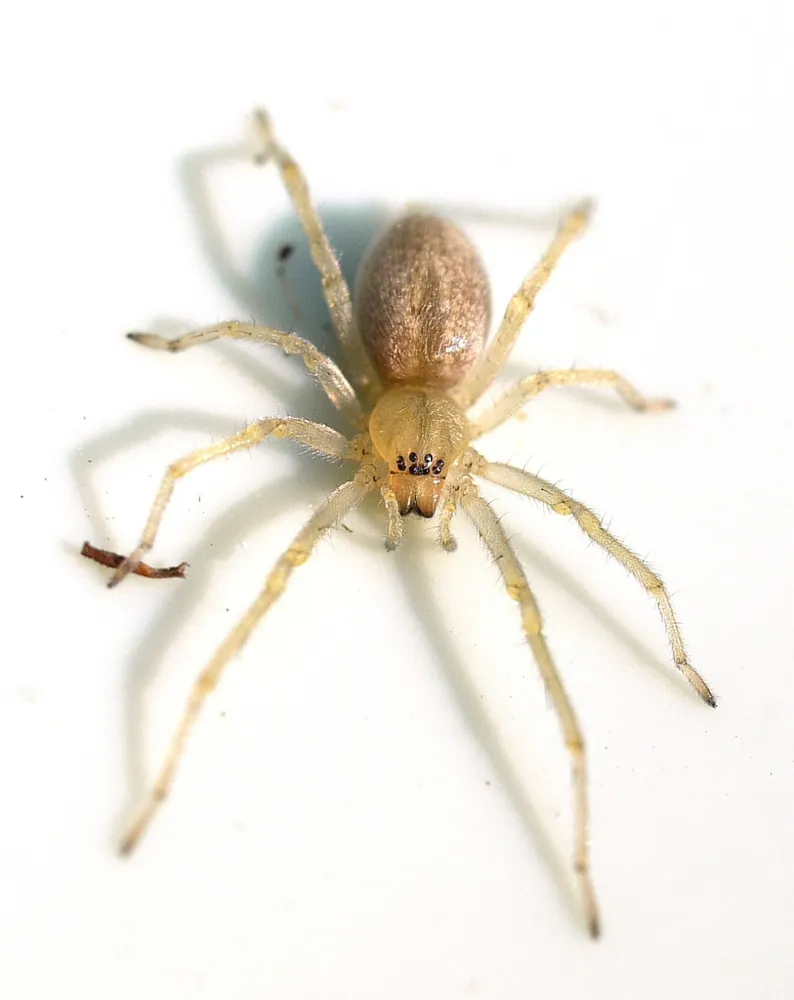
The black-footed yellow sac spider is a small, pale yellow spider native to the Americas. It hunts at night and does not spin webs to catch food. It sometimes lives in homes, but its bites rarely cause more than local symptoms.1

 Paano ito makikilala
- Pale yellow-beige body colour.1
- Dark brown markings on the palps, jaws (chelicerae) and the ends of the feet (tarsi).1
- Often an orange-brown stripe running down the top-centre of the abdomen.1
- Eight similar-sized eyes in two parallel horizontal rows.1
- Females measure 5 to 9 mm in body length and males 4 to 8 mm. The leg span can reach 2.5 cm, and the front pair of legs is longer than the other three pairs.1
Madalas mapagkamalang: Cheiracanthium mildei, an introduced species from Europe, is similar in appearance and natural history. It can also be found in North American homes.1
Lakas ng kamandag
Lumalabas ang kamandag sa pangil o ngipin nito kapag nangangagat ito.
Ano ang epekto ng kamandag nito?
A bite begins with moderate pain, followed by itching. Symptoms usually clear within 7 to 10 days. The venom rarely causes more than local symptoms.1
Gaano ito kapanganib sa tao?
Panganib sa tao: MasakitTalagang masakit, pero halos hindi kailanman malala.Bites are rare. Females bite more often than wandering males. The venom rarely causes more than local symptoms.1
 Kung kumagat ito
- Hugasan ang kagat at lagyan ng ice pack para sa sakit. Kumuha ng tulong medikal kung matindi ang sakit, kumakalat, o masama ang pakiramdam ng tao.
Laging tawagan muna ang numero pang-emergency (112, 000, 911). Ito ay pangkalahatang gabay sa pangunang lunas, hindi payong medikal. Mga batayan ng pangunang lunas
 Mag-ingat
- Huwag kailanman hawakan, hulihin o asarin ang ligaw na hayop, kahit maliit, at kahit mukha itong tulog o patay.
- Bigyan ito ng espasyo. Kung makasalubong ka ng isa, manatiling kalmado, dahan-dahang umatras at hayaan itong umalis.
- Kung kagatin ka ng isa: manatiling kalmado, huwag gumalaw, tawagan ang numero pang-emergency (112, 000, 911) o pumunta agad sa ospital. Tandaan ang itsura nito, makakatulong ang litrato.
Hindi ka nito hinahabol. Ginagamit nito ang kamandag para manghuli ng pagkain o ipagtanggol ang sarili, at mas gusto pa nitong magtago. Higit pa tungkol sa pag-iingat
Gaano ito kalaki?
Gaano ito kahaba?
 halos kasinghaba ng paper clip
Gaano kalaki si Black-footed yellow sac spider kumpara sa IYO?
Math lang sa browser mo. Walang sine-save o ipinapadala kahit saan.
Gaano ito kabilis?


Mga fact
It hunts at night and builds a new small silk nest every day, in under 10 minutes.1
It can spread to new trees and shrubs by releasing a long silk thread that the wind carries, or by ballooning through the air on a silk line.1
It does not spin a web to catch prey. It hunts actively instead.1
Females mate only once and produce their first egg mass about 14 days after mating.1
Myth buster
Mito: Cheiracanthium bites cause necrosis, the death of skin and tissue.
Totoo: Bites cause only localised swelling.1
Para sa mga eksperto sa kamandag
- Pangalang siyentipiko
- Cheiracanthium inclusum
- Grupo
- Mga gagamba
- Pamilya
- Cheiracanthiidae2
- Ayos
- Araneae
- Mga kontinente
- Hilagang Amerika, Timog Amerika
- Mga sanggol
- Females usually lay two egg masses, though they may lay from one to five. Each mass holds 17 to 85 eggs, and up to 112 have been reported. The female guards the eggs and then the young for about 17 days.1
- Panganib sa tao
- 2 / 5: Masakit3
Saan galing ang mga fact
- Cheiracanthium inclusum (Wikipedia (CC BY-SA 4.0))
- Cheiracanthium inclusum (iNaturalist): mga pangalan at klasipikasyon.
- Venom Wiki: sarili naming tantiya ang antas ng panganib, karaniwang laki at hula sa bilis. Tingnan kung paano namin ito kinukuwenta: Paano namin sinusukat ang panganib.
Bawat fact sa pahinang ito ay may numerong tumuturo sa pinagmulan nito. Kung may mali kami, pasensya na, mahilig lang kami sa hayop, hindi kami science journal. Sabihin sa amin sa [email protected] at aayusin namin.
 Gutom ang alakdan! Ang Venom Wiki ay proyekto ng iisang tao: libre, walang ads at walang trackers. Nakatutulong ang maliit na tip para manatili itong online.Pakainin ang alakdan
 Brazilian wandering spider
 Brown recluse
 Southern black widow
 Amazon wandering spider
 Chilean recluse
 Northern black widow
 Terciopelo
 Eastern coral snake
 Eastern diamondback rattlesnake
 Eyelash viper
 Timber rattlesnake
 Western diamondback rattlesnake