
 Aprika
 Asya
Asya Europa
 Timog Amerika
 Australia at Oceania
 Antarctica
 Karagatang Pasipiko
 Karagatang Atlantiko
 Karagatang Indiyano
 Karagatang Artiko
 Dagat Mediteraneo
 Dagat Pula
 Dagat Caribe
 Dagat Coral
 Dagat Timog Tsina
 Dagat Pilipinas
 Dagat Andaman
 Dagat Hilaga
 Dagat Timor at Arafura
 Look ng Bengal
 Golpo ng California
Cobalt blue tarantula
 Mga kagat
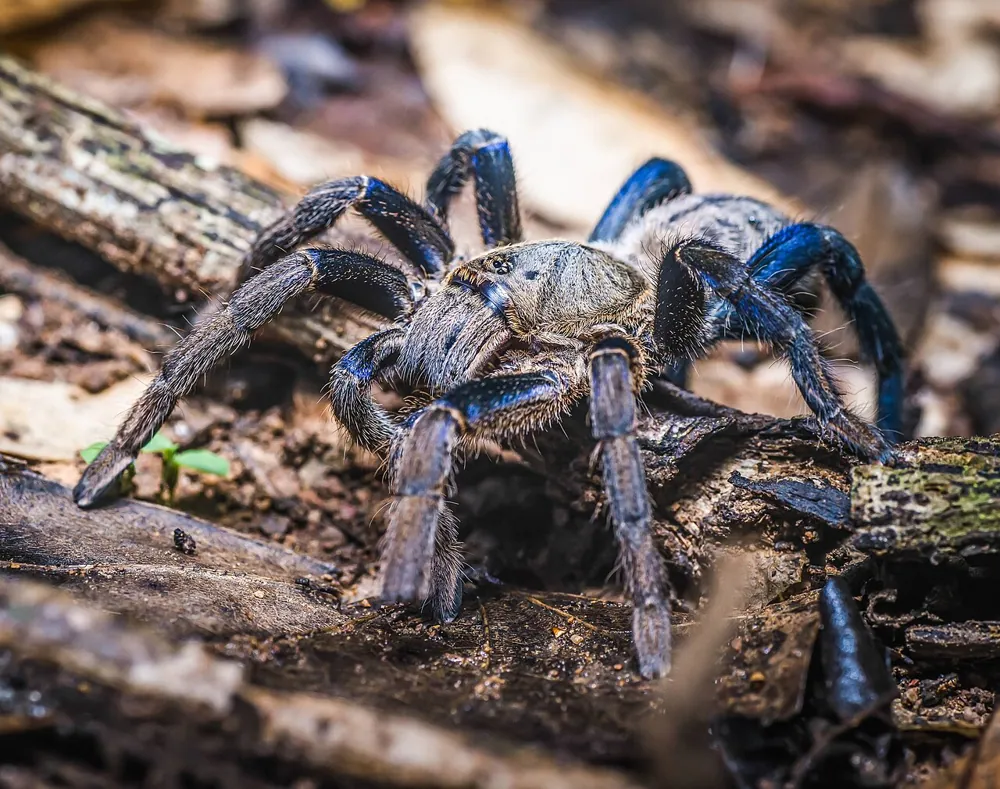
The cobalt blue tarantula is a medium-sized spider with bright blue legs. It lives in tropical rainforests in Myanmar and Thailand, mostly underground. It is popular in the pet trade, so people sometimes meet it in homes.1
 Paano ito makikilala
- Medium-sized, with a leg span of around 13 cm.1
- Iridescent blue legs.1
- Light grey body, which may have darker grey chevron markings on the abdomen.1
- Adult males turn light tan or bronze and look longer-legged after their final moult. They also gain mating hooks and a palpal bulb on the pedipalps.1
- Females look the same as males until the males' final moult, and they grow larger than males.1
Lakas ng kamandag
Lumalabas ang kamandag sa pangil o ngipin nito kapag nangangagat ito.
Ano ang epekto ng kamandag nito?
Its venom is not enough to kill a human, but bites can be extremely painful. In a 2001 case from Japan, two people bitten by a pet reported severe pain and inflammation, which faded after several hours. One person had stiffness for a few weeks. Bites can also cause severe muscle cramps.1
Gaano ito kapanganib sa tao?
Panganib sa tao: MasakitTalagang masakit, pero halos hindi kailanman malala.The venom is not enough to kill a person, but bites are very painful and can cause inflammation and severe muscle cramps. The species is described as having potent venom, so bites should still be taken seriously.1
Ano ang ginagawa nito kapag natatakot?
It is described as a fast and defensive tarantula.1
 Kung kumagat ito
- Hugasan ang kagat at palamigin ito. Kumuha ng tulong medikal kung matindi ang sakit o masama ang pakiramdam ng tao.
Laging tawagan muna ang numero pang-emergency (112, 000, 911). Ito ay pangkalahatang gabay sa pangunang lunas, hindi payong medikal. Mga batayan ng pangunang lunas
 Mag-ingat
- Huwag kailanman hawakan, hulihin o asarin ang ligaw na hayop, kahit maliit, at kahit mukha itong tulog o patay.
- Bigyan ito ng espasyo. Kung makasalubong ka ng isa, manatiling kalmado, dahan-dahang umatras at hayaan itong umalis.
- Kung kagatin ka ng isa: manatiling kalmado, huwag gumalaw, tawagan ang numero pang-emergency (112, 000, 911) o pumunta agad sa ospital. Tandaan ang itsura nito, makakatulong ang litrato.
Hindi ka nito hinahabol. Ginagamit nito ang kamandag para manghuli ng pagkain o ipagtanggol ang sarili, at mas gusto pa nitong magtago. Higit pa tungkol sa pag-iingat
Gaano ito kalaki?
Gaano ito kahaba?
 kasinghaba ng 4 laruang building brick na magkakasunod
 kayang tapusin ang 100 metro sa loob ng 220 segundo (9.6 ang kailangan ng pinakamabilis na tao)
Gaano kalaki si Cobalt blue tarantula kumpara sa IYO?
Math lang sa browser mo. Walang sine-save o ipinapadala kahit saan.
Gaano ito kabilis?


Mga fact
Its blue colour comes from iridescent legs, which shimmer in light.1
Adult males change colour after their final moult, turning light tan or bronze.1
Despite its potent venom, it is a mainstay of the pet trade.1
It is a fossorial species, meaning it spends nearly all its time in deep burrows that it digs itself.1
Females grow larger than males and live for years longer.1
Myth buster
Mito: Tarantula venom is deadly to people.
Totoo: The venom of this tarantula is not enough to kill a human, but its bites can be extremely painful.1
Saan galing ang mga fact
- Cobalt blue tarantula (Wikipedia (CC BY-SA 4.0))
- Cyriopagopus lividus (iNaturalist): mga pangalan at klasipikasyon.
- Venom Wiki: sarili naming tantiya ang antas ng panganib, karaniwang laki at hula sa bilis. Tingnan kung paano namin ito kinukuwenta: Paano namin sinusukat ang panganib.
Bawat fact sa pahinang ito ay may numerong tumuturo sa pinagmulan nito. Kung may mali kami, pasensya na, mahilig lang kami sa hayop, hindi kami science journal. Sabihin sa amin sa [email protected] at aayusin namin.
 Gutom ang alakdan! Ang Venom Wiki ay proyekto ng iisang tao: libre, walang ads at walang trackers. Nakatutulong ang maliit na tip para manatili itong online.Pakainin ang alakdan
Higit pa mula sa parehong grupo: Mga tarantula at funnel-web
 Gooty sapphire tarantulaMga tarantula at funnel-webKailangan ng doktor
 Indian ornamental tarantulaMga tarantula at funnel-webKailangan ng doktor
 Chinese bird spiderMga tarantula at funnel-webKailangan ng doktor
 Chinese black earth tiger tarantulaMga tarantula at funnel-webKailangan ng doktor
 Fringed ornamental tarantulaMga tarantula at funnel-webKailangan ng doktor
 Japanese funnel-web spiderMga tarantula at funnel-webKailangan ng doktor
 Alakdang deathstalker
 Kobrang Indiyano
 Indian saw-scaled viper
 King cobra
 Puff adder
 Ulupong ni Russell