
 Aprika
 Asya
Asya Europa
 Timog Amerika
 Australia at Oceania
 Antarctica
 Karagatang Pasipiko
 Karagatang Atlantiko
 Karagatang Indiyano
 Karagatang Artiko
 Dagat Mediteraneo
 Dagat Pula
 Dagat Caribe
 Dagat Coral
 Dagat Timog Tsina
 Dagat Pilipinas
 Dagat Andaman
 Dagat Hilaga
 Dagat Timor at Arafura
 Look ng Bengal
 Golpo ng California
Moses sole
 May lason sa balat nito
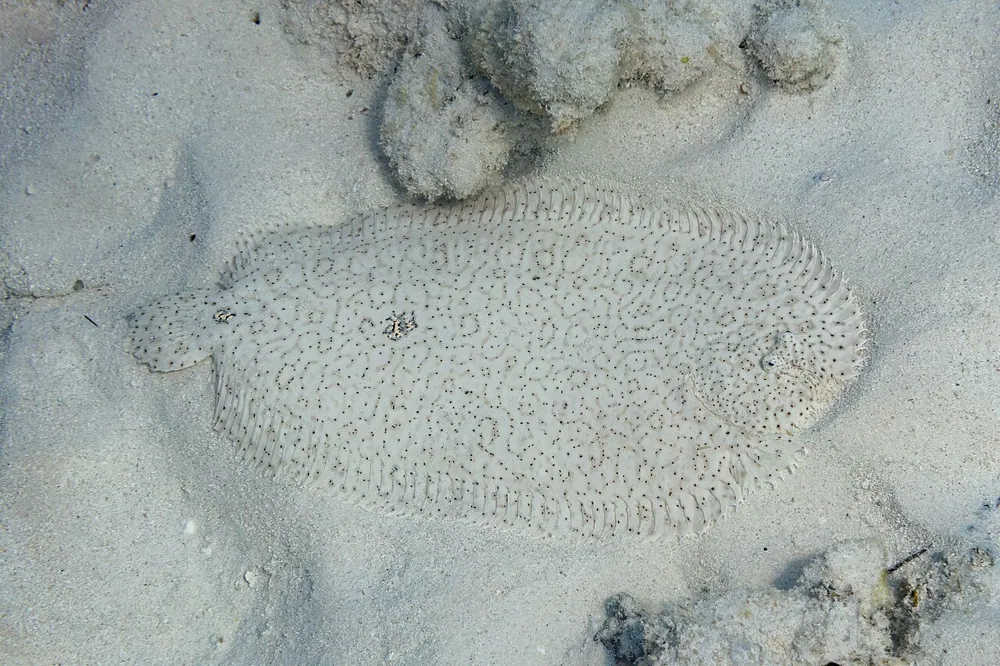
The Moses sole is a flatfish that lives in shallow coastal waters of the western Indian Ocean, from the Red Sea to Sri Lanka and along the east coast of Africa. It hides on the seabed and gives off a milky toxin from its fins to deter predators, including sharks.1
 Paano ito makikilala
- Colour is variable, often whitish, pale brown or pale grey, with irregular dark brown ring-shaped markings1
- Many dark brown spots cover the head, body and fins1
- Normally two brown dots containing yellow flecks sit along the lateral line1
- Adults have a highly compressed, flat-sided body, with both eyes on the right side of the head1
- The rounded tail fin is not joined to the dorsal or cloacal fin1
Madalas mapagkamalang: Mimic octopuses copy the finless sole by adapting their shape, colour and texture. They can also mimic venomous sea snakes and fish.1
Lakas ng lason
Nakalalason ang balat nito. Delikado itong hawakan, dilaan o kainin.
Ano ang epekto ng lason nito?
The finless sole releases a milky toxin called an ichthyotoxin from the base of its dorsal and cloacal fins. The main toxin, pardaxin, damages cell membranes so that cells leak their contents. It irritates the sensitive gills of predator fish.1
Gaano ito kapanganib sa tao?
Panganib sa tao: BanayadParang kagat ng bubuyog o mas mahina. Halos hindi nakapipinsala sa tao.It is caught for food and sold fresh, even though its skin secretion is poisonous.1
Ano ang ginagawa nito kapag natatakot?
When threatened, it releases its toxic milky secretion from its fins, and its colour helps it blend in with sandy or pebbled seabeds.1
 Kung may humawak o kumain nito
- Kung may kumain nito o may sintomas pagkatapos itong kainin: tawagan agad ang numero pang-emergency o ang poison control center.
Laging tawagan muna ang numero pang-emergency (112, 000, 911). Ito ay pangkalahatang gabay sa pangunang lunas, hindi payong medikal. Mga batayan ng pangunang lunas
 Mag-ingat
- Huwag kailanman hawakan, hulihin o asarin ang ligaw na hayop, kahit maliit, at kahit mukha itong tulog o patay.
- Bigyan ito ng espasyo. Kung makasalubong ka ng isa, manatiling kalmado, dahan-dahang umatras at hayaan itong umalis.
- Kung nahawakan o nakain mo ito: huwag kuskusin ang mata o bibig mo, hugasan ang mga kamay mo at kumuha ng tulong medikal.
Hindi ka nito hinahabol. Ang lason nito ay para lang walang kumain dito. Higit pa tungkol sa pag-iingat
Saan sa mundo?
Gaano ito kalaki?
Gaano ito kahaba?
 kasinghaba ng 6 laruang building brick na magkakasunod
Gaano kalaki si Moses sole kumpara sa IYO?
Math lang sa browser mo. Walang sine-save o ipinapadala kahit saan.
Gaano ito kabilis?


,_Zanz%C3%ADbar,_Tanzania,_2024-05-31,_DD_32.jpg)
Mga fact
One of its toxins, pardaxin-1, is 5 to 10 times more toxic than pardaxin-2 and has unusual shark-repelling properties.1
Its toxin, pardaxin, is used by the fish as a defence against sharks.1
Mimic octopuses copy its shape, colour and texture, and can also copy venomous sea snakes and fish.1
Juveniles have one eye on each side of the head, but as they mature the left eye moves to the right side.1
Eugenie Clark carried out much of the early research on this species.1
Saan galing ang mga fact
- Pardachirus marmoratus (Wikipedia (CC BY-SA 4.0))
- Pardachirus marmoratus (iNaturalist): mga pangalan at klasipikasyon.
- Venom Wiki: sarili naming tantiya ang antas ng panganib, karaniwang laki at hula sa bilis. Tingnan kung paano namin ito kinukuwenta: Paano namin sinusukat ang panganib.
Bawat fact sa pahinang ito ay may numerong tumuturo sa pinagmulan nito. Kung may mali kami, pasensya na, mahilig lang kami sa hayop, hindi kami science journal. Sabihin sa amin sa [email protected] at aayusin namin.
 Gutom ang alakdan! Ang Venom Wiki ay proyekto ng iisang tao: libre, walang ads at walang trackers. Nakatutulong ang maliit na tip para manatili itong online.Pakainin ang alakdan
Higit pa mula sa parehong grupo: Iba pang nakalalasong hayop
 Japanese pufferfishIba pang nakalalasong hayopNakamamatay
 Hawksbill sea turtleIba pang nakalalasong hayopPuwedeng pumatay
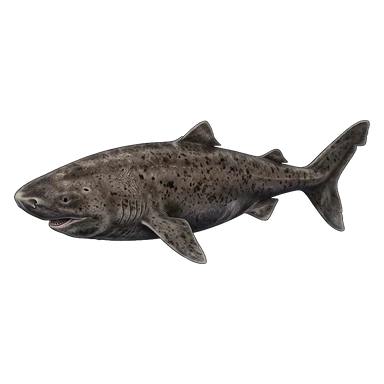 Greenland sharkIba pang nakalalasong hayopMasakit lang
 Silver-cheeked toadfishIba pang nakalalasong hayopNakamamatay
 Blackspotted pufferIba pang nakalalasong hayopPuwedeng pumatay
 White-spotted pufferIba pang nakalalasong hayopPuwedeng pumatay
Nakatira rin sa: Karagatang Pasipiko
 Australian box jellyfishMga dikya at nanunusok sa dagatNakamamatayHuwag hawakan
 Geography coneMga cone snail at pugitaNakamamatay
 Greater blue-ringed octopusMga cone snail at pugitaNakamamatay
 Southern blue-ringed octopusMga cone snail at pugitaNakamamatay
 Irukandji jellyfishMga dikya at nanunusok sa dagatPuwedeng pumatayHuwag hawakan
 Reef stonefishMga makamandag na isdaPuwedeng pumatayHuwag hawakan