
 Aprika
 Asya
Asya Europa
 Timog Amerika
 Australia at Oceania
 Antarctica
 Karagatang Pasipiko
 Karagatang Atlantiko
 Karagatang Indiyano
 Karagatang Artiko
 Dagat Mediteraneo
 Dagat Pula
 Dagat Caribe
 Dagat Coral
 Dagat Timog Tsina
 Dagat Pilipinas
 Dagat Andaman
 Dagat Hilaga
 Dagat Timor at Arafura
 Look ng Bengal
 Golpo ng California
Tarantula hawk
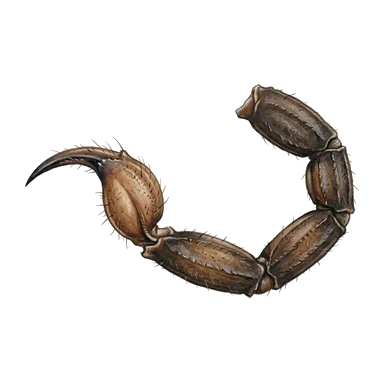 Mga tusok
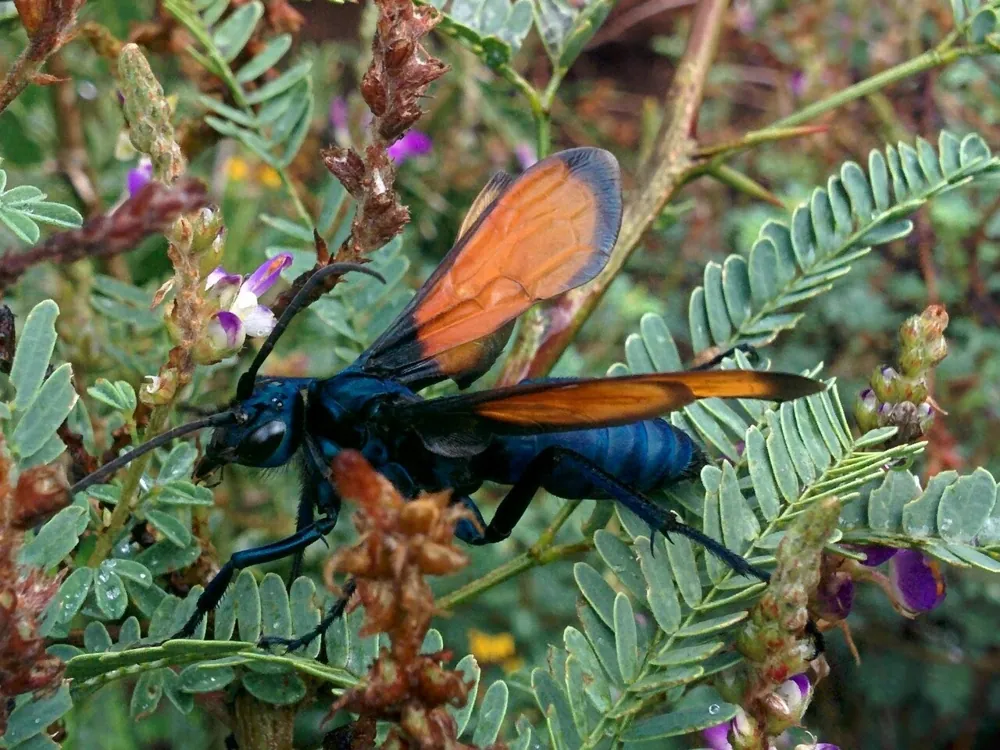
The tarantula hawk is a very large wasp that hunts tarantulas, which are big hairy spiders. It lives from the southern United States through Mexico and Central America to northern South America, and also on the Caribbean islands. Its sting is among the most painful of any insect.1
 Paano ito makikilala
- Black and orange colours, with several colour forms: an orange-winged form, a black-winged form, and in northern South America a form with a dark wing base, dark amber patches and a pale wing tip1
- Females are 30–51 mm long; males are 24–40 mm long1
- Jerky movements and a strong odour1
- Males have 12 antennal segments, which separates them from other Pepsis species, which have 131
Madalas mapagkamalang: The black-winged form is hard to tell apart from Pepsis mexicana, but that species is always noticeably smaller. The robber fly Wyliea mydas copies the tarantula hawk's black body and bright orange wings, and makes stinging movements, but it cannot sting.1
Lakas ng kamandag
Lumalabas ang kamandag sa pamamagitan ng pantusok.
Ano ang epekto ng kamandag nito?
Tarantula hawks produce large amounts of venom. A sting causes immediate, intense pain that is short-lived, and it is among the greatest pain recorded for any stinging insect. The venom itself is not very toxic, so its defence works almost entirely through pain.1
Gaano ito kapanganib sa tao?
Panganib sa tao: MasakitTalagang masakit, pero halos hindi kailanman malala.Only females can sting. The sting is considered the second most painful of any insect sting, scoring 4.0 on the Schmidt sting pain index, compared with 4.0+ for the bullet ant.1
Ano ang ginagawa nito kapag natatakot?
Its black and orange colours, jerky behaviour and strong odour warn predators that it can sting.1
 Kung tumusok ito
- Kayurin palabas ang naiwang pantusok ng bubuyog at palamigin ang lugar.
- Kung nahihirapang huminga ang tao, namamaga ang mukha o lalamunan, o parang hihimatayin, ito ay emergency sa allergy: tawagan ang numero pang-emergency at gamitin ang adrenaline pen niya kung mayroon siya.
Laging tawagan muna ang numero pang-emergency (112, 000, 911). Ito ay pangkalahatang gabay sa pangunang lunas, hindi payong medikal. Mga batayan ng pangunang lunas
 Mag-ingat
- Huwag kailanman hawakan, hulihin o asarin ang ligaw na hayop, kahit maliit, at kahit mukha itong tulog o patay.
- Bigyan ito ng espasyo. Kung makasalubong ka ng isa, manatiling kalmado, dahan-dahang umatras at hayaan itong umalis.
- Kung tusukin ka ng isa: manatiling kalmado, huwag gumalaw, tawagan ang numero pang-emergency (112, 000, 911) o pumunta agad sa ospital. Tandaan ang itsura nito, makakatulong ang litrato.
Hindi ka nito hinahabol. Ginagamit nito ang kamandag para manghuli ng pagkain o ipagtanggol ang sarili, at mas gusto pa nitong magtago. Higit pa tungkol sa pag-iingat
Gaano ito kalaki?
Gaano ito kahaba?
 mas maikli kaysa sa hinliliit mo
 kayang lumipad sa buong football field sa loob ng 8.4 segundo
Gaano kalaki si Tarantula hawk kumpara sa IYO?
Math lang sa browser mo. Walang sine-save o ipinapadala kahit saan.
Gaano ito kabilis?


Mga fact
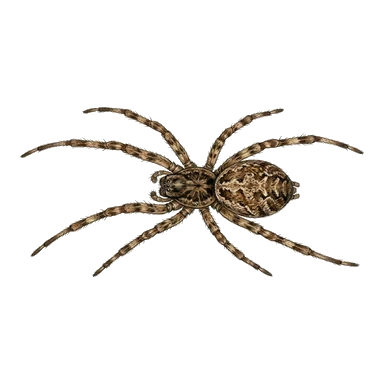
The female chooses the spider's size and sex for her eggs. Fertilised eggs go on large spiders and become females, and unfertilised eggs go on male spiders and become males.1
Roadrunners sometimes steal the tarantula from a wasp and leave the wasp unharmed. Others beat the wasp against the ground before eating it.1
The tarantula hawk is the state insect of New Mexico. Almost 10,000 schoolchildren voted for it, and it was made official by a law signed in 1989.1
Wasps of the genus Pepsis are important pollinators of milkweeds, which are poisonous to grazing livestock.1
Myth buster
Mito: The tarantula hawk's sting is dangerous mainly because its venom is strongly poisonous.
Totoo: The venom itself is not very toxic. Its main defence is the intense pain of the sting.1
Para sa mga eksperto sa kamandag
Saan galing ang mga fact
- Pepsis grossa (Wikipedia (CC BY-SA 4.0))
- Pepsis grossa (iNaturalist): mga pangalan at klasipikasyon.
- Venom Wiki: sarili naming tantiya ang antas ng panganib, karaniwang laki at hula sa bilis. Tingnan kung paano namin ito kinukuwenta: Paano namin sinusukat ang panganib.
Bawat fact sa pahinang ito ay may numerong tumuturo sa pinagmulan nito. Kung may mali kami, pasensya na, mahilig lang kami sa hayop, hindi kami science journal. Sabihin sa amin sa [email protected] at aayusin namin.
 Gutom ang alakdan! Ang Venom Wiki ay proyekto ng iisang tao: libre, walang ads at walang trackers. Nakatutulong ang maliit na tip para manatili itong online.Pakainin ang alakdan
Higit pa mula sa parehong grupo: Mga bubuyog, putakti at hornet
 Executioner waspMga bubuyog, putakti at hornetKailangan ng doktor
 Warrior waspMga bubuyog, putakti at hornetKailangan ng doktor
 Bald-faced hornetMga bubuyog, putakti at hornetMasakit lang
 Cow killer velvet antMga bubuyog, putakti at hornetMasakit lang
 Eastern cicada killerMga bubuyog, putakti at hornetHindi nakapipinsala
 Armadillo waspMga bubuyog, putakti at hornetKailangan ng doktor
 Terciopelo
 Eastern coral snake
 Eastern diamondback rattlesnake
 Eyelash viper
 Timber rattlesnake
 Western diamondback rattlesnake
.jpg)