
 Aforika
 Asia
Asia Yuropa
 Amerika Borwa
 Australia le Oceania
 Antarctica
 Lewatle la Pacific
 Lewatle la Atlantic
 Lewatle la India
 Lewatle la Arctic
 Lewatle la Mediterranean
 Lewatle le Lehibidu
 Lewatle la Caribbean
 Lewatle la Coral
 Lewatle la China Borwa
 Lewatle la Philippines
 Lewatle la Andaman
 Lewatle la Bokone
 Lewatle la Timor le la Arafura
 Kou ya Bengal
 Gulf ya California
Curlyhair tarantula
 Go loma
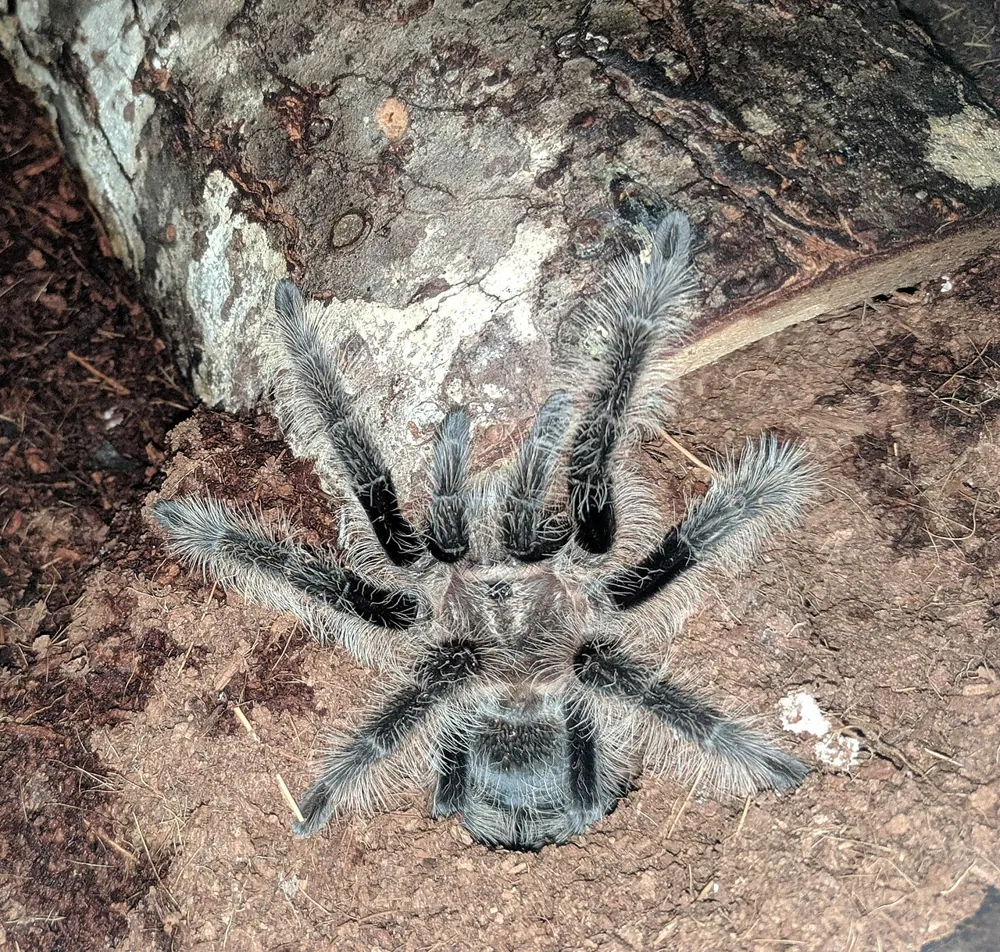
The curlyhair tarantula is a plump, hairy spider whose bristles curl, which gives it a unique look. It lives in tropical scrubland in Costa Rica, often burrowing near large trees, rivers or patches of cleared rainforest. It is a popular pet and is widely bred in captivity.1

 Tsela ya go e lemoga
- A plump-bodied spider covered in dark brown to black bristles.1
- Its bristles start light as a juvenile and darken as it ages.1
- Longer gold bristles give it a golden-bronze sheen, especially dense on the hind legs.1
- The bristles have a distinctive curl.1
- Males are often a lighter bronze colour than females.1
Maatla a botlhole
Botlhole bo tswa ka meno a yone fa e loma.
Botlhole jo e bo tsenyang bo dira eng?
Its venom is delivered through two hollow fangs and has two purposes. It paralyses the prey and begins digesting it. The spider then sucks up the proteins and fats, leaving only a small ball of undigested body parts.1
E kotsi go le kae go batho?
Kotsi go batho: Kotsi e nnyeJaaka go tlhabiwa ke notshe kgotsa go le kwa tlase. Ga e na kotsi go batho.This tarantula is usually docile. When threatened, it kicks hairs off its abdomen, which can cause a rash on the skin, and if they hit a predator's eyes they can cause blindness.1
E dira eng fa e tshogile?
When threatened, it kicks hairs off its abdomen with its hind legs.1
 Fa e loma
- Tlhatswa fa go lomilweng mme o go tsidifatse. Batla thuso ya bongaka fa botlhoko bo le bogolo kgotsa motho a ikutlwa a sa siama.
Ka gale leletsa nomoro ya gago ya tshoganyetso pele (112, 000, 911). Se ke kaelo e e akaretsang ya thuso ya ntlha, ga se kgakololo ya bongaka. Motheo wa thuso ya ntlha
 Nna o babalesegile
- O se ka wa ama, wa tshwara kgotsa wa tshwenya phologolo ya naga, le fa e le e nnye, le fa e lebega e robetse kgotsa e sule.
- E fe sebaka. Fa o kopana le yone, ritibala, boela morago ka bonya mme o e tlogele e tsamaye ka tsela ya yone.
- Fa e nngwe e go loma: ritibala, o se ka wa tshikinyega, leletsa nomoro ya gago ya tshoganyetso (112, 000, 911) kgotsa o ye bookelong ka bonako. Gopola gore e ne e lebega jang, setshwantsho se a thusa.
Ga e go batle. E dirisa botlhole jwa yone go tshwara dijo kgotsa go itshireletsa, mme e rata go iphitlha go feta. Go le gontsi ka go nna o babalesegile
Kae mo lefatsheng?
E kgolo go le kae?
E telele go le kae?
 boleele jo bo lekanang le diboloko tsa go aga tsa ditshamekisi di le 5 mo moleng
 e ka taboga dimetara di le 100 ka metsotswana e le 210 (motho yo o bonako go gaisa o tlhoka 9,6)
Curlyhair tarantula e kgolo go le kae fa e bapisiwa le WENA?
Ke dipalo fela mo sefetleng sa gago (browser). Ga go sepe se se bolokwang kgotsa se se romelwang gope.
E bonako go le kae?


Dintlha
Its venom starts digestion before the spider even eats the prey.1
Females may attack and try to eat males that approach them when they are not ready to mate.1
In captivity, females have been reported to live up to 20 years, while males live only about 5 years.1
Captive specimens have grown to a leg span of just over 6 inches (15 cm).1
Once captured in large numbers for the pet trade, it is now mostly bred in captivity and rarely caught in the wild.1
Ya baitseanape ba botlhole
- Leina la saense
- Tliltocatl albopilosus
- Setlhopha
- Ditarantula le di-funnel-web
- Lelapa
- Theraphosidae2
- Lekoko
- Araneae
- Dikontinente
- Amerika Bokone
- Masea
- After mating, a female lays 300 to 500 eggs in an egg sac several weeks later. The egg sac is incubated for about seven to eight weeks, and pale young then emerge and cluster together before dispersing.1
- Dingwaga tsa botshelo
- e ka nna dingwaga di le 201
- Seemo sa yone kwa nageng
- Listed on CITES Appendix II, meaning international trade is controlled by quotas and trade permits1
- Kotsi go batho
- 1 / 5: Kotsi e nnye3
Kwa dintlha di tswang teng
- Tliltocatl albopilosus (Wikipedia (CC BY-SA 4.0))
- Tliltocatl albopilosus (iNaturalist): maina le thulaganyo ya mefuta.
- Venom Wiki: seelo sa kotsi, bogolo jo bo tlwaelegileng le kakanyo ya lebelo ke tsa rona. Bona kafa re di balang ka teng: Kafa re lekanyang kotsi ka teng.
Ntlha nngwe le nngwe mo tsebeng e e na le nomoro e e supang motswedi wa yone. Fa re dirile phoso, maitshwarelo, re barati ba diphologolo, e seng kgatiso ya saense. Re bolelele kwa [email protected] mme re tla e baakanya.
 Phepheng e tshwerwe ke tlala! Venom Wiki ke porojeke ya motho a le mongwe: ke mahala, ga e na dipapatso le ditraka. Mpho e nnye e thusa go e tshegetsa mo inthaneteng.Fepa phepheng
Tse dingwe tsa setlhopha se se tshwanang: Ditarantula le di-funnel-web
 Mexican redknee tarantulaDitarantula le di-funnel-webGa e na kotsi
 Arizona blond tarantulaDitarantula le di-funnel-webGa e na kotsi
 Ravine trapdoor spiderDitarantula le di-funnel-webGa e na kotsi
 Trinidad chevron tarantulaDitarantula le di-funnel-webE utlwisa botlhoko fela
 Antilles pinktoe tarantulaDitarantula le di-funnel-webGa e na kotsi
 California trapdoor spiderDitarantula le di-funnel-webGa e na kotsi
E tshela gape kwa: Amerika Bokone
 TerciopeloDivaepara tsa mesima (pit vipers)E a bolaya
 Eastern coral snakeDinoga tsa khoraleE ka bolaya
 Eastern diamondback rattlesnakeDinoga tsa ratheleE ka bolaya
 Eyelash viperDivaepara tsa mesima (pit vipers)E ka bolaya
 Timber rattlesnakeDinoga tsa ratheleE ka bolaya
 Western diamondback rattlesnakeDinoga tsa ratheleE ka bolaya