
 Afrika
 Asië
Asië Europa
 Suid-Amerika
 Australië & Oseanië
 Antarktika
 Stille Oseaan
 Atlantiese Oseaan
 Indiese Oseaan
 Arktiese Oseaan
 Middellandse See
 Rooi See
 Karibiese See
 Koraalsee
 Suid-Chinese See
 Filippynse See
 Andamansee
 Noordsee
 Timorsee & Arafurasee
 Baai van Bengale
 Golf van Kalifornië
Curlyhair tarantula
 Byte
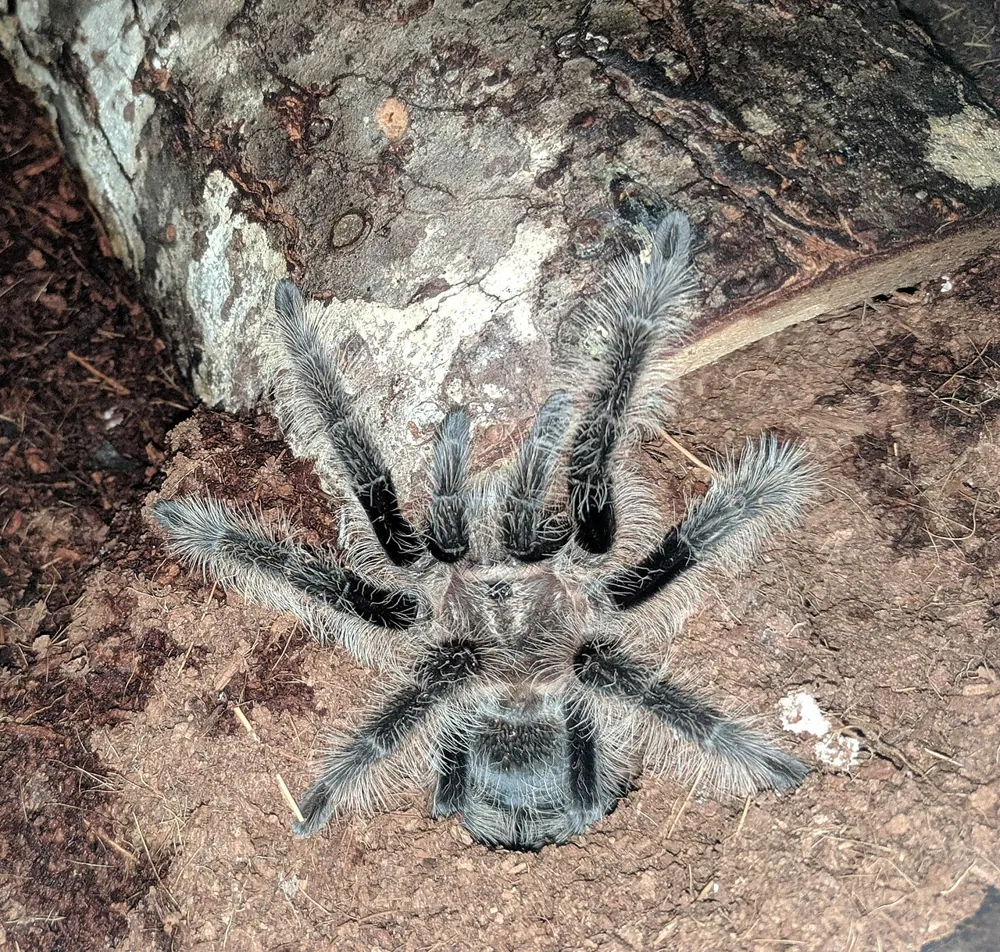
ByteThe curlyhair tarantula is a plump, hairy spider whose bristles curl, which gives it a unique look. It lives in tropical scrubland in Costa Rica, often burrowing near large trees, rivers or patches of cleared rainforest. It is a popular pet and is widely bred in captivity.1

 Hoe om dit te herken
- A plump-bodied spider covered in dark brown to black bristles.1
- Its bristles start light as a juvenile and darken as it ages.1
- Longer gold bristles give it a golden-bronze sheen, especially dense on the hind legs.1
- The bristles have a distinctive curl.1
- Males are often a lighter bronze colour than females.1
Gifkrag
Gif kom deur sy giftande of tande uit wanneer dit byt.
Wat doen sy gif as dit byt of steek?
Its venom is delivered through two hollow fangs and has two purposes. It paralyses the prey and begins digesting it. The spider then sucks up the proteins and fats, leaving only a small ball of undigested body parts.1
Hoe gevaarlik is dit vir mense?
Gevaar vir mense: LigSoos 'n bysteek of minder. Basies onskadelik vir mense.This tarantula is usually docile. When threatened, it kicks hairs off its abdomen, which can cause a rash on the skin, and if they hit a predator's eyes they can cause blindness.1
Wat doen dit as dit bang is?
When threatened, it kicks hairs off its abdomen with its hind legs.1
 As dit byt
- Was die byt en koel dit af. Kry mediese hulp as die pyn erg is of die persoon sleg voel.
Bel altyd eers jou noodnommer (112, 000, 911). Dit is algemene noodhulpraad, nie mediese advies nie. Noodhulp-basiese beginsels
 Bly veilig
- Moet nooit aan 'n wilde dier raak, dit vang of terg nie, selfs nie 'n kleintjie nie, en selfs nie as dit lyk of dit slaap of dood is nie.
- Gee dit spasie. As jy een raakloop, bly kalm, stap stadig terug en laat dit sy eie pad gaan.
- As een jou byt: bly kalm, bly stil, bel jou noodnommer (112, 000, 911) of kom vinnig by 'n hospitaal uit. Onthou hoe dit gelyk het, 'n foto help.
Dit is nie uit om jou te kry nie. Dit gebruik sy gif om kos te vang of om homself te beskerm, en kruip baie eerder weg. Meer oor veilig bly
Waar in die wêreld?
Hoe groot is dit?
Hoe lank is dit?
 so lank soos 5 speelgoed-boublokke in 'n ry
 kan 100 meter in 210 sekondes aflê (die vinnigste mens het 9,6 nodig)
Hoe groot is Curlyhair tarantula in vergelyking met JOU?
Net wiskunde in jou blaaier. Niks word gestoor of enige plek heen gestuur nie.
Hoe vinnig is dit?


Feite
Its venom starts digestion before the spider even eats the prey.1
Females may attack and try to eat males that approach them when they are not ready to mate.1
In captivity, females have been reported to live up to 20 years, while males live only about 5 years.1
Captive specimens have grown to a leg span of just over 6 inches (15 cm).1
Once captured in large numbers for the pet trade, it is now mostly bred in captivity and rarely caught in the wild.1
Vir gifkenners
- Wetenskaplike naam
- Tliltocatl albopilosus
- Groep
- Tarantulas & tregterwebspinnekoppe
- Familie
- Theraphosidae2
- Orde
- Araneae
- Kontinente
- Noord-Amerika
- Babas
- After mating, a female lays 300 to 500 eggs in an egg sac several weeks later. The egg sac is incubated for about seven to eight weeks, and pale young then emerge and cluster together before dispersing.1
- Lewensduur
- omtrent 20 jaar1
- Hoe dit in die natuur gaan
- Listed on CITES Appendix II, meaning international trade is controlled by quotas and trade permits1
- Gevaar vir mense
- 1 / 5: Lig3
Waar die feite vandaan kom
- Tliltocatl albopilosus (Wikipedia (CC BY-SA 4.0))
- Tliltocatl albopilosus (iNaturalist): name en klassifikasie.
- Venom Wiki: die gevaarvlak, die tipiese grootte en die spoedskatting is ons eie. Kyk hoe ons dit uitwerk: Hoe ons gevaar gradeer.
Elke feit op hierdie bladsy het 'n nommer wat na sy bron wys. As ons iets verkeerd het, jammer, ons is dierfanatici, nie 'n wetenskaplike joernaal nie. Laat weet ons by [email protected] en ons maak dit reg.
 Die skerpioen is honger! Venom Wiki is 'n eenmanprojek: gratis, sonder advertensies en sonder spoorsnyers. 'n Klein fooitjie help om dit aanlyn te hou.Voer die skerpioen
Meer uit dieselfde groep: Tarantulas & tregterwebspinnekoppe
 Mexican redknee tarantulaTarantulas & tregterwebspinnekoppeOnskadelik
 Arizona blond tarantulaTarantulas & tregterwebspinnekoppeOnskadelik
 Ravine trapdoor spiderTarantulas & tregterwebspinnekoppeOnskadelik
 Trinidad chevron tarantulaTarantulas & tregterwebspinnekoppeMaak net seer
 Antilles pinktoe tarantulaTarantulas & tregterwebspinnekoppeOnskadelik
 California trapdoor spiderTarantulas & tregterwebspinnekoppeOnskadelik
 Terciopelo
 Eastern coral snake
 Eastern diamondback rattlesnake
 Eyelash viper
 Timber rattlesnake
 Western diamondback rattlesnake