
 Abibirem
 Asia
Asia Yuropu
 Amerika Anaafoɔ
 Australia ne Oceania
 Antarctica
 Pacific Po
 Atlantic Po
 India Po
 Arctic Po
 Mediterranean Po
 Po Kɔkɔɔ
 Caribbean Po
 Coral Po
 China Anaafoɔ Po
 Philippine Po
 Andaman Po
 Atifi Po
 Timor ne Arafura Po
 Bengal Ɛpo Ano
 California Ɛpo Ano
Amazon wandering spider
 Ka
KaPhoneutria fera is a spider with medically significant venom, which means its bite can make people seriously ill. It lives in northern South America, mainly in the Amazon region. It matters because bites are recorded in medical records from its range.1
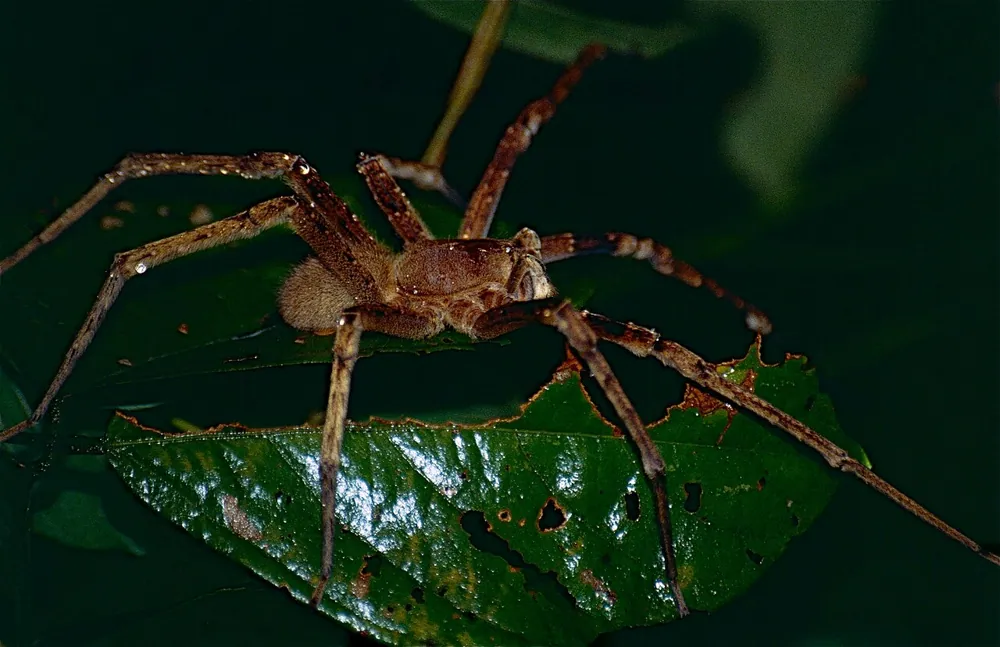
 Sɛdeɛ wobɛhunu no
- Young spiders spend more time in plants and vegetation.1
- Larger spiders spend more time on the ground.1
- Females are usually larger than males, and they are more often seen on the ground.1
Wɔtaa fa no sɛ: The names Brazilian wandering spider and banana spider are also used for other species in the genus Phoneutria, particularly P. nigriventer. A common name alone does not confirm which species a spider is.1
Bɔre ahoɔden
Bɔre fi ne se mu ba bere a ɔka.
Ne bɔre yɛ dɛn?
The venom is medically significant. Bites can cause moderate to severe systemic reactions, meaning effects that spread through the whole body.1
Ne asiane ma nnipa te sɛn?
Asiane ma nnipa: Asiane kɛseɛ womƐtumi kum onipa a wɔnhwɛ no yareɛ.Medical records from within the species' range show bites, which are likely from this species or its close relative P. reidyi. These bites have the potential to cause moderate to severe systemic reactions in humans.1
 Sɛ ɛka a
- Hohoro baabi a ɛkaa no na fa ice pack hyɛ so ma yaw no. Hwehwɛ dɔkota mmoa sɛ yaw no mu yɛ den, ɛtrɛtrɛw anaa onipa no ho ntɔ no a.
Di kan frɛ wo ahohiahia nɔma (112, 000, 911). Yei yɛ mmoa a ɛdi kan ho akwankyerɛ, ɛnyɛ dɔkota afotuo. Mmoa a ɛdi kan ho nsɛm titiriw
 Hwɛ wo ho so
- Mfa wo nsa nka wiram aboa biara, nkyere no na mfa no nni agorɔ, sɛ ɔyɛ ketewa mpo, na sɛ ɛte sɛ ɔrededa anaa wawu mpo a.
- Ma no kwan. Sɛ wohyia baako a, ma wo bo nnwo, san w'akyi brɛoo na ma ɔnkɔ ne kwan.
- Sɛ baako ka wo a: ma wo bo nnwo, tena dinn, frɛ wo ahohiahia nɔma (112, 000, 911) anaa kɔ ayaresabea ntɛm. Kae sɛdeɛ na ɛte, mfonini bɛboa.
Ɛnhwehwɛ wo sɛ ɛbɛpira wo. Ɛde ne bɔre kyere aduane anaa ɛbɔ ne ho ban, na ɛpɛ sɛ ɛhinta sene biribiara. Nsɛm pii fa ahobammɔ ho
Wiase mu baabi bɛn?
Ne kɛseɛ te sɛn?
Ne tenten te sɛn?
 ne tenten te sɛ agodeɛ blɔk 4 a wɔde to ntoatoasoɔ mu
 ɛbɛtumi atu mita 100 wɔ anibu 160 mu (onipa a ɔwɔ ntɛm sen biara hia 9.6)
Amazon wandering spider kɛseɛ te sɛn sɛ wode toto WO ho a?
Akontabuo kɛkɛ wɔ wo browser mu. Wɔnkora hwee, na wɔmfa hwee nkɔ baabiara.
Ne ntɛm te sɛn?


Nsɛm
Bites from this species or its close relative P. reidyi appear in medical records from its range.1
Young spiders of this species spend more time in plants, and older spiders spend more time on the ground.1
Females are usually larger than males, which is one reason they spend more time on the ground.1
Atosɛm sɛefoɔ
Atosɛm: Any spider called a banana spider or Brazilian wandering spider is Phoneutria fera.
Nokorɛ: These common names are also applied to other species in the genus Phoneutria, particularly P. nigriventer.1
Baabi a nsɛm no fi
- Phoneutria fera (Wikipedia (CC BY-SA 4.0))
- Phoneutria fera (iNaturalist): din ne nkyekyɛmu.
- Venom Wiki: asiane gyinabea, kɛseɛ a ɛtaa yɛ ne ntɛm susuo no yɛ yɛn ankasa deɛ. Hwɛ sɛdeɛ yɛbu no: Sɛdeɛ yɛkyerɛ asiane gyinabea.
Nsɛm biara a ɛwɔ kratafa yi so wɔ nɔma a ɛkyerɛ ne fibea. Sɛ yɛfom biribi a, kafra, yɛyɛ mmoa ho akɔnnɔfoɔ, ɛnyɛ nyansahu nwoma. Ka kyerɛ yɛn wɔ [email protected] na yɛbɛsiesie.
 Ɔkɔm de akekantwerɛ no! Onipa baako na ɔyɛ Venom Wiki: ɛyɛ kwa, dawurubɔ nni so na biribiara nni so a ɛdi w'akyi. Akyɛdeɛ ketewa bi boa ma ɛkɔ so tena internet so.Ma akekantwere no aduane
 Brazilian wandering spider
 Chilean recluse
 Golden silk orb-weaver
 Keyserling's wandering spider
 Argentine black widow
 Bahia wandering spider
 Golden poison frog
 Terciopelo
 Eyelash viper
 Golden lancehead
 South American bushmaster
 Cane toad
_(10623228224).jpg)