
 Abibirem
 Asia
Asia Yuropu
 Amerika Anaafoɔ
 Australia ne Oceania
 Antarctica
 Pacific Po
 Atlantic Po
 India Po
 Arctic Po
 Mediterranean Po
 Po Kɔkɔɔ
 Caribbean Po
 Coral Po
 China Anaafoɔ Po
 Philippine Po
 Andaman Po
 Atifi Po
 Timor ne Arafura Po
 Bengal Ɛpo Ano
 California Ɛpo Ano
Eyelash viper
 Ka
KaThe eyelash viper is a small, tree-living pitviper that lives mainly in the highlands of Colombia. It is named after the eyelash-like scales above its eyes. Its venom can cause serious harm, so it is important to recognise it and keep well away.1



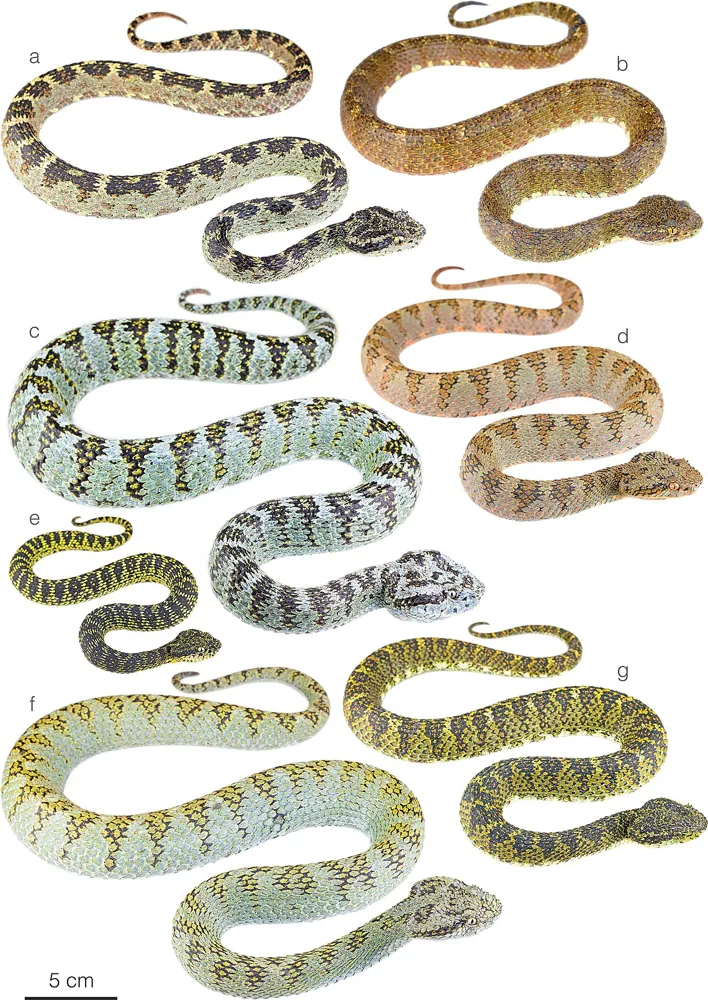
 Sɛdeɛ wobɛhunu no
Bɔre ahoɔden
Bɔre fi ne se mu ba bere a ɔka.
Ne bɔre yɛ dɛn?
Its venom contains several components that damage tissue, cause swelling and disturb blood clotting. A bite typically causes pain, swelling and bruising at the bite site, and sometimes blisters or local tissue death. Some reports describe rapid local tissue damage followed by clotting problems and acute kidney failure.1
Ne asiane ma nnipa te sɛn?
Asiane ma nnipa: Asiane kɛseɛ womƐtumi kum onipa a wɔnhwɛ no yareɛ.The snake is not known to be aggressive towards people and tends to avoid creatures larger than itself, but it will strike if repeatedly harassed. Some studies of venom from northern Colombia reported serious effects, including kidney failure.1
Ɛyɛ dɛn bere a ehu aka no?
It is not known to be aggressive and tends to avoid larger creatures, but it will strike if repeatedly harassed.1
 Sɛ ɛka a
- Ma onipa no ntena dinn na ne bo nnwo, ma nsa anaa nan a ɛkaa no no nna pɛpɛɛpɛ ne ne koma (ɛnkɔ soro, ɛnsiane fam), yi kawa ne nneɛma a ɛkyere no den, na kɔ ayaresabea ntɛm.
Di kan frɛ wo ahohiahia nɔma (112, 000, 911). Yei yɛ mmoa a ɛdi kan ho akwankyerɛ, ɛnyɛ dɔkota afotuo. Mmoa a ɛdi kan ho nsɛm titiriw
 Hwɛ wo ho so
- Mfa wo nsa nka wiram aboa biara, nkyere no na mfa no nni agorɔ, sɛ ɔyɛ ketewa mpo, na sɛ ɛte sɛ ɔrededa anaa wawu mpo a.
- Ma no kwan. Sɛ wohyia baako a, ma wo bo nnwo, san w'akyi brɛoo na ma ɔnkɔ ne kwan.
- Sɛ baako ka wo a: ma wo bo nnwo, tena dinn, frɛ wo ahohiahia nɔma (112, 000, 911) anaa kɔ ayaresabea ntɛm. Kae sɛdeɛ na ɛte, mfonini bɛboa.
Ɛnhwehwɛ wo sɛ ɛbɛpira wo. Ɛde ne bɔre kyere aduane anaa ɛbɔ ne ho ban, na ɛpɛ sɛ ɛhinta sene biribiara. Nsɛm pii fa ahobammɔ ho
Wiase mu baabi bɛn?
Ne kɛseɛ te sɛn?
Ne tenten te sɛn?
 ne tenten te sɛ fie agyinamoa 1,5 a wɔde hwene ne dua to ntoatoasoɔ mu
 ne tenten te sɛ kwadu 5 a wɔde to ntoatoasoɔ mu
 ɛbɛtumi atu mita 100 wɔ anibu 110 mu (onipa a ɔwɔ ntɛm sen biara hia 9.6)
Eyelash viper kɛseɛ te sɛn sɛ wode toto WO ho a?
Akontabuo kɛkɛ wɔ wo browser mu. Wɔnkora hwee, na wɔmfa hwee nkɔ baabiara.
Ne ntɛm te sɛn?


Nsɛm
Males perform a courtship ritual called the 'dance of the adders', in which two males rise up in a cobra-like stance and push against each other until one is pushed away or falls.1
Its strike accuracy improves with practice, according to studies of individuals over time.1
Some individuals return to the same ambush sites each year, timing their visits to the spring bird migration.1
Its eyelash-like scales may help it hide by breaking up its outline among the leaves where it rests.1
Atosɛm sɛefoɔ
Atosɛm: After a bite, the snake winks its eyelashes at the victim, as some local folktales describe.
Nokorɛ: No snake can do this. Snakes have no true eyelids and cannot close their eyes. Most reptiles have a thin, membrane-like eyelid that acts as a shield, mainly when resting.1
Ma bɔre ho animdefoɔ
- Nyansahu din
- Bothriechis schlegelii
- Kuo
- Pit viper
- Abusua
- Viperidae2
- Nhyehyɛeɛ (Order)
- Squamata
- Asaase akɛseɛ
- Amerika Atifi, Amerika Anaafoɔ
- Mmofra nketewa
- It gives birth to live young rather than laying eggs, with females carrying the eggs for around six months. A typical brood has 2 to 20 young, each 15 to 20 cm long.1
- Sɛdeɛ ɔte wɔ kwaem
- Least Concern (IUCN Red List, 2013)1
- Asiane ma nnipa
- 4 / 5: Asiane kɛseɛ wom3
Baabi a nsɛm no fi
- Bothriechis schlegelii (Wikipedia (CC BY-SA 4.0))
- Bothriechis schlegelii (iNaturalist): din ne nkyekyɛmu.
- Venom Wiki: asiane gyinabea, kɛseɛ a ɛtaa yɛ ne ntɛm susuo no yɛ yɛn ankasa deɛ. Hwɛ sɛdeɛ yɛbu no: Sɛdeɛ yɛkyerɛ asiane gyinabea.
Nsɛm biara a ɛwɔ kratafa yi so wɔ nɔma a ɛkyerɛ ne fibea. Sɛ yɛfom biribi a, kafra, yɛyɛ mmoa ho akɔnnɔfoɔ, ɛnyɛ nyansahu nwoma. Ka kyerɛ yɛn wɔ [email protected] na yɛbɛsiesie.
 Ɔkɔm de akekantwerɛ no! Onipa baako na ɔyɛ Venom Wiki: ɛyɛ kwa, dawurubɔ nni so na biribiara nni so a ɛdi w'akyi. Akyɛdeɛ ketewa bi boa ma ɛkɔ so tena internet so.Ma akekantwere no aduane
 Terciopelo
 Golden lancehead
 South American bushmaster
 Cottonmouth
 Eastern copperhead
 Common lancehead
 Eastern coral snake
 Eastern diamondback rattlesnake
 Timber rattlesnake
 Western diamondback rattlesnake
 Arizona bark scorpion
 Brown recluse