
 Abibirem
 Asia
Asia Yuropu
 Amerika Anaafoɔ
 Australia ne Oceania
 Antarctica
 Pacific Po
 Atlantic Po
 India Po
 Arctic Po
 Mediterranean Po
 Po Kɔkɔɔ
 Caribbean Po
 Coral Po
 China Anaafoɔ Po
 Philippine Po
 Andaman Po
 Atifi Po
 Timor ne Arafura Po
 Bengal Ɛpo Ano
 California Ɛpo Ano
Aquatic coral snake
 Ka
KaThe aquatic coral snake is a venomous snake that spends much of its time in water. It is one of the heaviest and sturdiest coral snakes, and it lives in the forests of northern South America. It is special because it swims well and can stay underwater for a long time.1



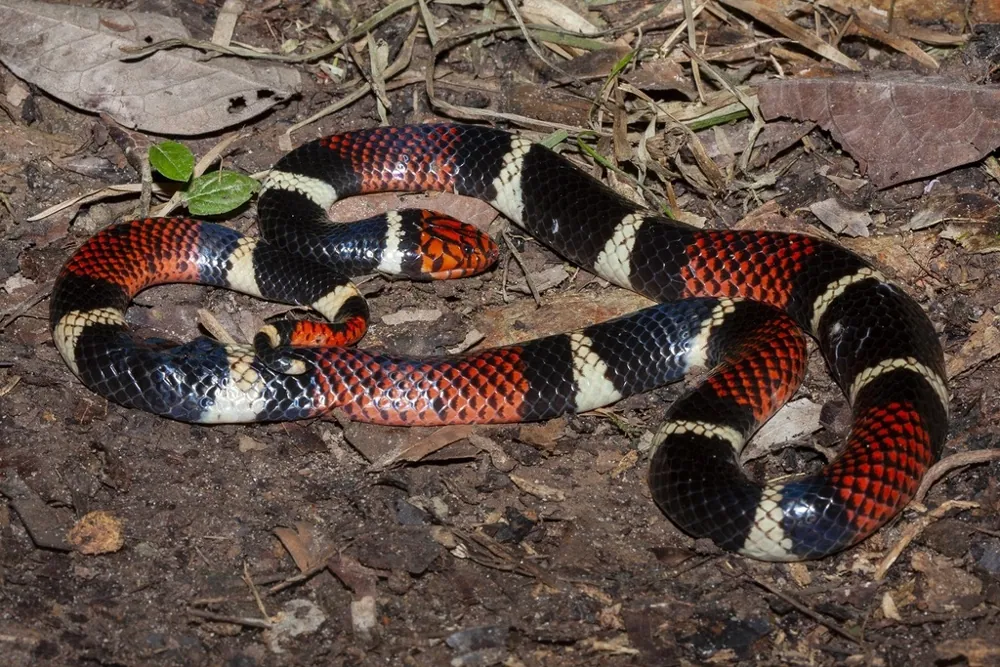
 Sɛdeɛ wobɛhunu no
- The head is mainly red with black edging on the scales.1
- The head is large with a long snout, and the eyes and nostrils sit higher on the head than in other coral snakes.1
- The body has wide red rings separated by groups of three black rings, with narrow cream or yellowish rings between the black bands.1
- The scales are smooth and shiny, and arranged in 15 rows.1
- Adults usually measure 80 to 100 cm, tail included.1
Bɔre ahoɔden
Bɔre fi ne se mu ba bere a ɔka.
Ne bɔre yɛ dɛn?
Its venom is neurotoxic, meaning it attacks the nerves. It blocks signals between nerves and muscles, which causes paralysis. Symptoms can include blurred vision, difficulty speaking, swallowing and walking, and breathing failure. In a well-reported case in the Amazon, the victim reached hospital about 20 minutes after the bite.1
Ne asiane ma nnipa te sɛn?
Asiane ma nnipa: Asiane kɛseɛ womƐtumi kum onipa a wɔnhwɛ no yareɛ.Bites are rare, but the venom can cause paralysis of the cranial nerves and can be fatal. The estimated lethal dose for an adult human is 18–20 mg, which is higher than the 4–7 mg for smaller coral snake species. Because it is a large snake, it can carry a lot of venom, with an average yield of 56 mg and a maximum of 160 mg when milked by scientists.1
 Asɛmpa: dɔkotafoɔ wɔ aduro (antivenom) anaa ayaresa ma yei.1
Ɛyɛ dɛn bere a ehu aka no?
When threatened, it flattens its body and raises its tail.1
 Sɛ ɛka a
- A bite needs hospital care. In a recorded case, the victim needed mechanical ventilation because paralysis of the breathing muscles made it hard to breathe, and was given specific Micrurus antivenom.1
- Ma onipa no ntena dinn na ne bo nnwo, na kɔ ayaresabea ntɛm, sɛ ɛka no te sɛ ketewa mpo a: nsɛnkyerɛnne betumi afi aseɛ nnɔnhwerew pii akyi.
Di kan frɛ wo ahohiahia nɔma (112, 000, 911). Yei yɛ mmoa a ɛdi kan ho akwankyerɛ, ɛnyɛ dɔkota afotuo. Mmoa a ɛdi kan ho nsɛm titiriw
 Hwɛ wo ho so
- Mfa wo nsa nka wiram aboa biara, nkyere no na mfa no nni agorɔ, sɛ ɔyɛ ketewa mpo, na sɛ ɛte sɛ ɔrededa anaa wawu mpo a.
- Ma no kwan. Sɛ wohyia baako a, ma wo bo nnwo, san w'akyi brɛoo na ma ɔnkɔ ne kwan.
- Sɛ baako ka wo a: ma wo bo nnwo, tena dinn, frɛ wo ahohiahia nɔma (112, 000, 911) anaa kɔ ayaresabea ntɛm. Kae sɛdeɛ na ɛte, mfonini bɛboa.
Ɛnhwehwɛ wo sɛ ɛbɛpira wo. Ɛde ne bɔre kyere aduane anaa ɛbɔ ne ho ban, na ɛpɛ sɛ ɛhinta sene biribiara. Nsɛm pii fa ahobammɔ ho
Wiase mu baabi bɛn?
Ne kɛseɛ te sɛn?
Ne tenten te sɛn?
 ne tenten te sɛ fie agyinamoa 2,5 a wɔde hwene ne dua to ntoatoasoɔ mu
 ne tenten te sɛ kwadu 8 a wɔde to ntoatoasoɔ mu
 ɛbɛtumi atu mita 100 wɔ anibu 68 mu (onipa a ɔwɔ ntɛm sen biara hia 9.6)
Aquatic coral snake kɛseɛ te sɛn sɛ wode toto WO ho a?
Akontabuo kɛkɛ wɔ wo browser mu. Wɔnkora hwee, na wɔmfa hwee nkɔ baabiara.
Ne ntɛm te sɛn?


Nsɛm
It swims very well and can stay submerged for a long period.1
Although its venom is weaker than that of smaller members of its genus, it can carry a large amount of venom because of its size.1
It is one of the heaviest and most robust coral snakes.1
It is mainly active at night, though it can also be active during the day.1
It is not aggressive towards humans.1
Baabi a nsɛm no fi
- Aquatic coral snake (Wikipedia (CC BY-SA 4.0))
- Micrurus surinamensis (iNaturalist): din ne nkyekyɛmu.
- Venom Wiki: asiane gyinabea, kɛseɛ a ɛtaa yɛ ne ntɛm susuo no yɛ yɛn ankasa deɛ. Hwɛ sɛdeɛ yɛbu no: Sɛdeɛ yɛkyerɛ asiane gyinabea.
Nsɛm biara a ɛwɔ kratafa yi so wɔ nɔma a ɛkyerɛ ne fibea. Sɛ yɛfom biribi a, kafra, yɛyɛ mmoa ho akɔnnɔfoɔ, ɛnyɛ nyansahu nwoma. Ka kyerɛ yɛn wɔ [email protected] na yɛbɛsiesie.
 Ɔkɔm de akekantwerɛ no! Onipa baako na ɔyɛ Venom Wiki: ɛyɛ kwa, dawurubɔ nni so na biribiara nni so a ɛdi w'akyi. Akyɛdeɛ ketewa bi boa ma ɛkɔ so tena internet so.Ma akekantwere no aduane
 Central American coral snake
 Amazonian coral snake
 Argentinian coral snake
 Caatinga coral snake
 Dumeril's coral snake
 Mesopotamian coral snake
 Golden poison frog
 Terciopelo
 Brazilian wandering spider
 Eyelash viper
 Golden lancehead
 South American bushmaster