
 Abibirem
 Asia
Asia Yuropu
 Amerika Anaafoɔ
 Australia ne Oceania
 Antarctica
 Pacific Po
 Atlantic Po
 India Po
 Arctic Po
 Mediterranean Po
 Po Kɔkɔɔ
 Caribbean Po
 Coral Po
 China Anaafoɔ Po
 Philippine Po
 Andaman Po
 Atifi Po
 Timor ne Arafura Po
 Bengal Ɛpo Ano
 California Ɛpo Ano
Baron's green racer
 Ka
KaBaron's green racer is a long, green tree snake that lives in South America. It has rear fangs at the back of its mouth and its venom can harm people, so it should be treated with caution. It is one of the longest snakes in its genus, Philodryas.1



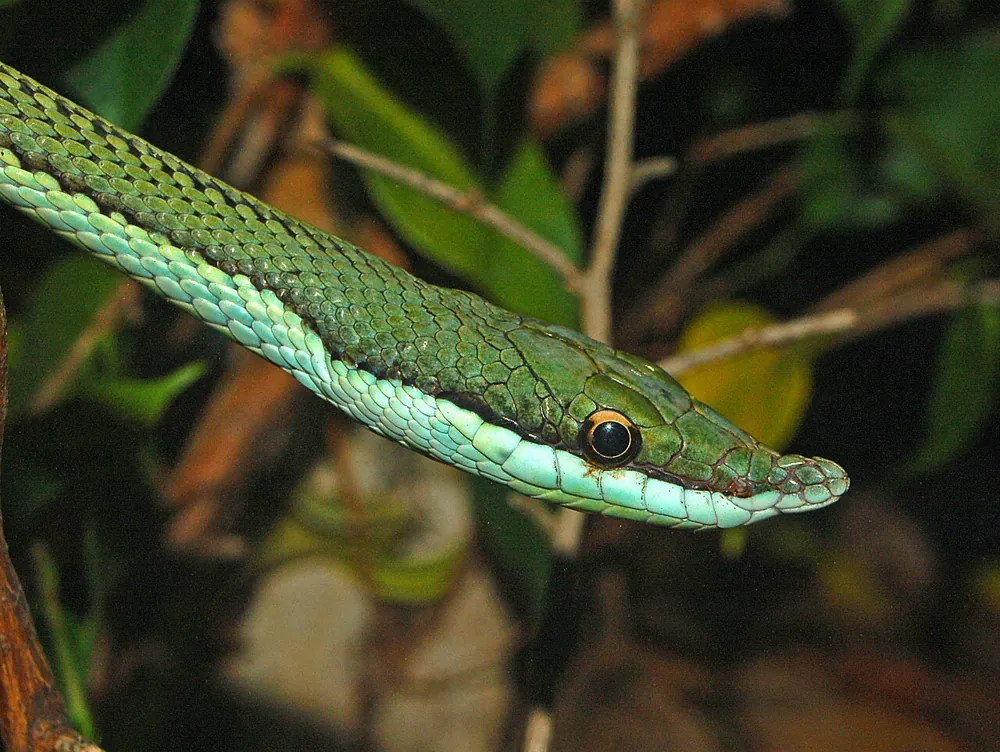
 Sɛdeɛ wobɛhunu no
- Usually green, but some individuals are blue or brown.1
- The body is either plain or has black stripes running along the back and sides, on the front third of the body.1
- The underside under the black side lines is white or yellowish-white, sometimes with green or blue shades.1
- The head is small and elongated, with a small, flexible nasal point that is more developed in males.1
- Adults can reach 150 to 180 cm, and the tail makes up about 30% of the total length.1
Bɔre ahoɔden
Bɔre fi ne se mu ba bere a ɔka.
Ne bɔre yɛ dɛn?
It is rear-fanged, which means its fangs sit at the back of the mouth. Its venom has proteolytic activity, meaning it breaks down proteins, and it can stop blood platelets from clumping together, which affects clotting. Local effects include bleeding, muscle death, swelling and inflammation of the tissue.1
Ne asiane ma nnipa te sɛn?
Asiane ma nnipa: Ɛyɛ yawƐtumi yɛ yaw paa, nanso ɛkame ayɛ sɛ ɛnyɛ asiane kɛseɛ da.It is considered dangerous to humans and should be treated with caution. No bite numbers or deaths are recorded.1
Ɛyɛ dɛn bere a ehu aka no?
When frightened, it releases a foul-smelling substance from its cloaca, which is the common opening for its digestive, urinary and reproductive systems. It is generally non-aggressive.1
 Sɛ ɛka a
- Hohoro baabi a ɛkaa no, ma onipa no bo nnwo na hwehwɛ dɔkota mmoa. Awɔ bi (te sɛ boomslang) betumi akum nnɔnhwerew pii akyi.
Di kan frɛ wo ahohiahia nɔma (112, 000, 911). Yei yɛ mmoa a ɛdi kan ho akwankyerɛ, ɛnyɛ dɔkota afotuo. Mmoa a ɛdi kan ho nsɛm titiriw
 Hwɛ wo ho so
- Mfa wo nsa nka wiram aboa biara, nkyere no na mfa no nni agorɔ, sɛ ɔyɛ ketewa mpo, na sɛ ɛte sɛ ɔrededa anaa wawu mpo a.
- Ma no kwan. Sɛ wohyia baako a, ma wo bo nnwo, san w'akyi brɛoo na ma ɔnkɔ ne kwan.
- Sɛ baako ka wo a: ma wo bo nnwo, tena dinn, frɛ wo ahohiahia nɔma (112, 000, 911) anaa kɔ ayaresabea ntɛm. Kae sɛdeɛ na ɛte, mfonini bɛboa.
Ɛnhwehwɛ wo sɛ ɛbɛpira wo. Ɛde ne bɔre kyere aduane anaa ɛbɔ ne ho ban, na ɛpɛ sɛ ɛhinta sene biribiara. Nsɛm pii fa ahobammɔ ho
Wiase mu baabi bɛn?
Ne kɛseɛ te sɛn?
Ne tenten te sɛn?
 ne tenten te sɛ fie agyinamoa 4 a wɔde hwene ne dua to ntoatoasoɔ mu
 ne tenten te sɛ kwadu 10 a wɔde to ntoatoasoɔ mu
 ɛbɛtumi atu mita 100 wɔ anibu 60 mu (onipa a ɔwɔ ntɛm sen biara hia 9.6)
Baron's green racer kɛseɛ te sɛn sɛ wode toto WO ho a?
Akontabuo kɛkɛ wɔ wo browser mu. Wɔnkora hwee, na wɔmfa hwee nkɔ baabiara.
Ne ntɛm te sɛn?


Nsɛm
When frightened, it gives off a foul-smelling liquid from its cloaca.1
Larger members of its species have been reported eating immature individuals.1
Its colour varies, with green being most common but blue and brown individuals also found.1
It is the longest known species in the genus Philodryas.1
Its tail makes up about 30% of its total body length.1
Baabi a nsɛm no fi
- Philodryas baroni (Wikipedia (CC BY-SA 4.0))
- Philodryas baroni (iNaturalist): din ne nkyekyɛmu.
- Venom Wiki: asiane gyinabea, kɛseɛ a ɛtaa yɛ ne ntɛm susuo no yɛ yɛn ankasa deɛ. Hwɛ sɛdeɛ yɛbu no: Sɛdeɛ yɛkyerɛ asiane gyinabea.
Nsɛm biara a ɛwɔ kratafa yi so wɔ nɔma a ɛkyerɛ ne fibea. Sɛ yɛfom biribi a, kafra, yɛyɛ mmoa ho akɔnnɔfoɔ, ɛnyɛ nyansahu nwoma. Ka kyerɛ yɛn wɔ [email protected] na yɛbɛsiesie.
 Ɔkɔm de akekantwerɛ no! Onipa baako na ɔyɛ Venom Wiki: ɛyɛ kwa, dawurubɔ nni so na biribiara nni so a ɛdi w'akyi. Akyɛdeɛ ketewa bi boa ma ɛkɔ so tena internet so.Ma akekantwere no aduane
Pii fi kuo korɔ no mu: Awɔ a wɔn bɔre se wɔ akyi
 False water cobraAwɔ a wɔn bɔre se wɔ akyiƐyɛ yaw kɛkɛ
 Brown vine snakeAwɔ a wɔn bɔre se wɔ akyiƐnni asiane
 Green vine snakeAwɔ a wɔn bɔre se wɔ akyiƐnni asiane
 Lichtenstein's green racerAwɔ a wɔn bɔre se wɔ akyiƐhia dɔkota
 Peruvian slender snakeAwɔ a wɔn bɔre se wɔ akyiƐhia dɔkota
 Chilean green racerAwɔ a wɔn bɔre se wɔ akyiƐyɛ yaw kɛkɛ
 Golden poison frog
 Terciopelo
 Brazilian wandering spider
 Eyelash viper
 Golden lancehead
 South American bushmaster