
 Àfrica
 Àsia
Àsia Europa
 Amèrica del Sud
 Austràlia i Oceania
 Antàrtida
 Oceà Pacífic
 Oceà Atlàntic
 Oceà Índic
 Oceà Àrtic
 Mar Mediterrània
 Mar Roja
 Mar Carib
 Mar del Corall
 Mar de la Xina Meridional
 Mar de les Filipines
 Mar d'Andaman
 Mar del Nord
 Mar de Timor i d'Arafura
 Golf de Bengala
 Golf de Califòrnia
Common lancehead
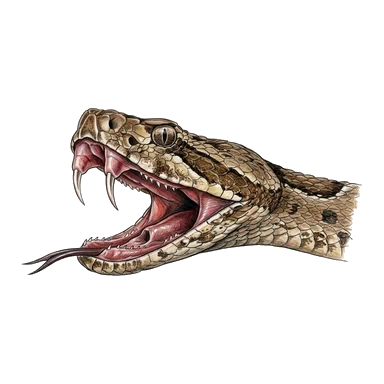 Mossegades
The common lancehead is a highly venomous pit viper that lives in the tropical lowlands of northern South America and on the Caribbean island of Trinidad. It is one of the most common pit vipers in its range and is not endangered. Its venom disrupts blood clotting, which makes its bite especially serious.1
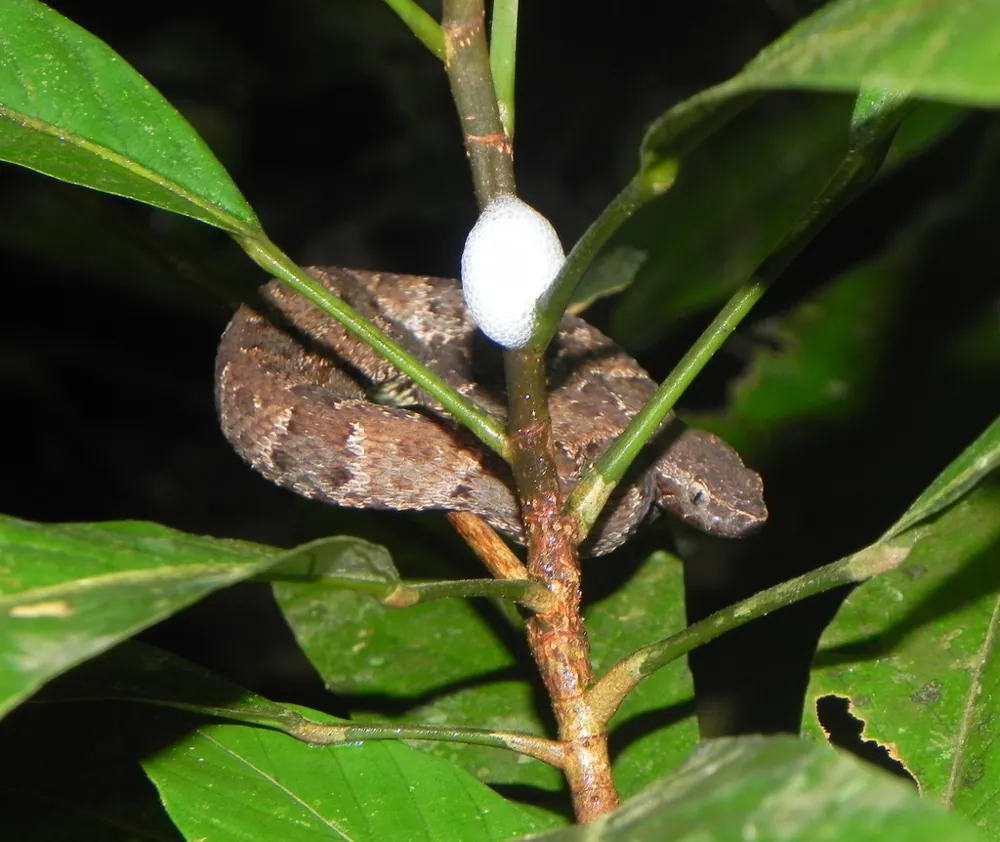
 Com reconèixer-lo
- Ground colour is olive, brown, tan, grey or yellow, and rarely rusty.1
- The body pattern is a series of blotches that often fuse into bands. The markings are X-like, which is why some local names refer to the letter X.1
- The chin is pale yellow, and a dark stripe runs from behind the eye to the corner of the mouth.1
- The irises are gold or bronze, and the tongue is black.1
- Adults usually measure 75 to 125 cm in total length and are moderately heavy-bodied.1
Sovint es confon amb: It is often confused with Bothrops asper, which was once included in this species. Most authorities now consider B. asper to be a separate species. This confusion also makes reports of its maximum size unclear.1
Poder del verí
El verí surt pels ullals o les dents quan mossega.
Què fa el seu verí?
Its venom is haemorrhagic, meaning it damages the lining of blood vessels and uses up the substances that allow blood to clot. Symptoms can include severe bleeding, kidney failure, abnormal clotting, blisters and necrosis (death of body tissue). Bleeding in the brain can also occur. Recovery from the clotting problem has been seen 14 to 30 hours after a bite.1
Com de perillós és per a les persones?
Perill per a les persones: MortalUn dels animals més perillosos del món.The bite is serious and can be fatal. Plantation workers are often bitten. Juvenile snakes have more lethal venom that kills more quickly, and people bitten by young snakes are more likely to develop the clotting problem. In a case reported in the Brazilian Amazon, the patient died of a stroke even after antivenom was given. A Mexican polyvalent antivenom tested against it had no effect on the clotting problem.1
Què fa quan té por?
It is easily agitated, and it can lie camouflaged for hours, nearly undetectable, then strike at high speed.1
 Si mossega
- Mantén la persona quieta i tranquil·la, mantén l'extremitat mossegada a l'altura del cor, treu-li anells i coses que estrenyin i porta-la de pressa a un hospital.
Truca sempre primer al número d'emergències (112, 000, 911). Això són pautes generals de primers auxilis, no consells mèdics. Primers auxilis bàsics
 Estigues segur
- No toquis, atrapis ni molestis mai un animal salvatge, encara que sigui petit i encara que sembli adormit o mort.
- Deixa-li espai. Si en trobes un, mantén la calma, recula a poc a poc i deixa que segueixi el seu camí.
- Si te'n mossega un: mantén la calma, no et moguis, truca al número d'emergències (112, 000, 911) o ves de pressa a un hospital. Recorda com era, una foto ajuda.
No va a per tu. Fa servir el verí per caçar o per defensar-se, i prefereix mil vegades amagar-se. Més sobre com estar segur
Que gran és?
Quant fa de llarg?
 fa de llarg com 3 gats de casa del nas a la cua
 fa de llarg com 9 plàtans en fila
 podria recórrer 100 metres en 92 segons (l'humà més ràpid necessita 9,6)
Que gran és Common lancehead comparat amb TU?
Només càlculs al teu navegador. No es desa ni s'envia res enlloc.
Com de ràpid va?


Dades
An enzyme called reptilase, or batroxobin, is taken from its venom and used in modern medical laboratories to measure fibrinogen levels and blood clotting. The enzyme is not affected by heparin.1
Although it is mostly terrestrial, it is an excellent swimmer and will climb trees when needed to reach prey.1
Females with developing embryos move in and out of sunlight to keep themselves and the embryos at a constant temperature.1
Venom yield averages 124 milligrams, but can reach 342 milligrams.1
Despite the large-scale destruction of rainforests, it is among the most numerous and common of pit vipers.1
Per a experts en verins
- Nom científic
- Bothrops atrox
- Grup
- Escurçons de fosseta
- Família
- Viperidae2
- Ordre
- Squamata
- Continents
- Amèrica del Sud
- Cries
- It gives birth to live young, up to 80 at once, with an average of about 60 per litter in equatorial regions after a gestation of three to four months.1
- Com li va a la natura
- Not endangered1
- Perill per a les persones
- 5 / 5: Mortal3
D'on surten les dades
- Bothrops atrox (Wikipedia (CC BY-SA 4.0))
- Bothrops atrox (iNaturalist): noms i classificació.
- Venom Wiki: el nivell de perill, la mida típica i la velocitat estimada són nostres. Mira com els calculem: Com valorem el perill.
Cada dada d'aquesta pàgina té un número que porta a la seva font. Si ens hem equivocat en alguna cosa, perdona, som fans dels animals, no una revista científica. Escriu-nos a [email protected] i ho arreglarem.
 L'escorpí té gana! Venom Wiki és un projecte d'una sola persona: gratuït, sense anuncis i sense rastrejadors. Una petita propina ajuda a mantenir-lo en línia.Dona menjar a l'escorpí
Més del mateix grup: Escurçons de fosseta
 Terciopelo
 Eyelash viper
 Golden lancehead
 South American bushmaster
 Jararaca
 Jararacussu
També viu a: Amèrica del Sud
 Golden poison frogGranotes punta de fletxa, gripaus i tritonsMortalNo ho toquis
 Brazilian wandering spiderAranyesPot matar
 Cane toadGranotes punta de fletxa, gripaus i tritonsCal anar al metgeNo ho toquis
 Peruvian giant centipedeCentpeusCal anar al metge
 Bullet antFormiguesNomés fa mal
 Common vampire batMamífers verinososNomés fa mal