
 Àfrica
 Àsia
Àsia Europa
 Amèrica del Sud
 Austràlia i Oceania
 Antàrtida
 Oceà Pacífic
 Oceà Atlàntic
 Oceà Índic
 Oceà Àrtic
 Mar Mediterrània
 Mar Roja
 Mar Carib
 Mar del Corall
 Mar de la Xina Meridional
 Mar de les Filipines
 Mar d'Andaman
 Mar del Nord
 Mar de Timor i d'Arafura
 Golf de Bengala
 Golf de Califòrnia
Spotted ratfish
 Punxes verinoses
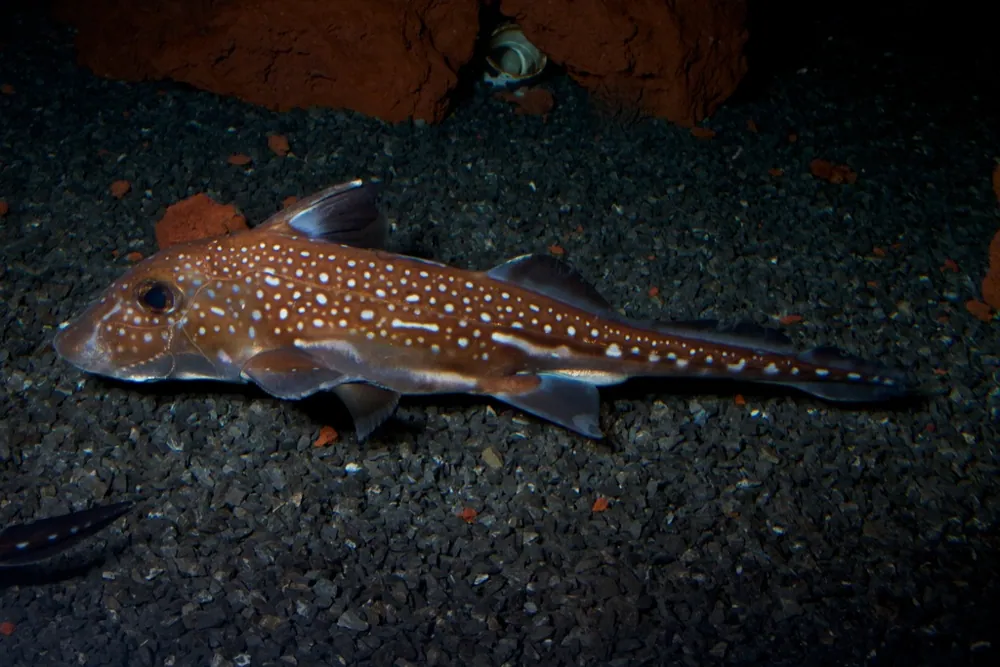
The spotted ratfish is a chimaera, a cartilage fish related to sharks and rays. It lives in the northeastern Pacific Ocean, and divers often see it at night in the Pacific Northwest. It gets its name from its pointed, rat-like tail.1
 Com reconèixer-lo
- Smooth, scaleless skin that is silvery-bronze, often with gold, blue and green shine1
- Speckled white spots along the back1
- Large, triangular pectoral fins that stick straight out from the sides, like airplane wings1
- A pointed, rat-like tail that makes up almost half of its total length1
- Large emerald green eyes and a duckbill-shaped snout1
Poder del verí
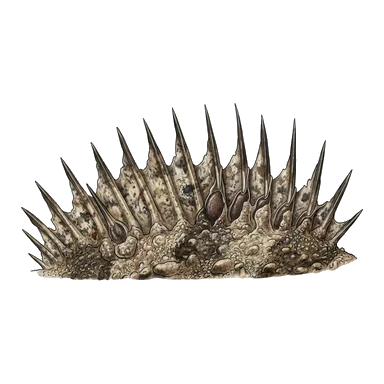
Unes punxes esmolades porten el verí. Trepitjar-lo o agafar-lo fa mal.
Què fa el seu verí?
The spine on the leading edge of its dorsal fin is grooved and connected to a venom gland at its base. The venom is mildly toxic. A sting from the spine causes a painful wound.1
Com de perillós és per a les persones?
Perill per a les persones: DolorósPot fer molt de mal, però gairebé mai no és greu.It does not present a serious danger to humans, but its spines can cause painful wounds. Harbor seals have been known to die after swallowing spotted ratfish, when a spine pierced the stomach or esophagus.1
Què fa quan té por?
It usually keeps a safe distance from divers and is not aggressive, but it will defend its territory with the spine on its dorsal fin if it feels invaded.1
 Si se't claven les seves punxes
- Posa la ferida en aigua calenta, tan calenta com la persona pugui aguantar sense cremar-se (prova-la amb la teva mà), de 30 a 90 minuts. Busca ajuda mèdica, sobretot amb peixos pedra i rajades.
Truca sempre primer al número d'emergències (112, 000, 911). Això són pautes generals de primers auxilis, no consells mèdics. Primers auxilis bàsics
 Estigues segur
- No toquis, atrapis ni molestis mai un animal salvatge, encara que sigui petit i encara que sembli adormit o mort.
- Deixa-li espai. Si en trobes un, mantén la calma, recula a poc a poc i deixa que segueixi el seu camí.
- Si se't claven les seves punxes: mantén la calma, no et moguis, truca al número d'emergències (112, 000, 911) o ves de pressa a un hospital. Recorda com era, una foto ajuda.
No va a per tu. Fa servir el verí per caçar o per defensar-se, i prefereix mil vegades amagar-se. Més sobre com estar segur
On del món?
Que gran és?
Quant fa de llarg?
 fa de llarg com 2 gats de casa del nas a la cua
 fa de llarg com 5 plàtans en fila
 podria nedar la llargada d'una piscina gran (50 m) en 12 segons
Que gran és Spotted ratfish comparat amb TU?
Només càlculs al teu navegador. No es desa ni s'envia res enlloc.
Com de ràpid va?

Dades
Adult males have a club-like cephalic clasper on the head, an organ not found in any other vertebrate, which they use to hold on to females during courtship.1
Its large eyes reflect light, much like the eyes of a cat.1
It swims with its large pectoral fins, and its barrel rolls and corkscrew turns have been described as aquatic flight.1
Its teeth are plate-shaped, mineralised and permanent, unlike the easily replaced teeth of sharks, and they help it grind prey.1
Its ampullary organs on the head detect electric fields, and they are homologous to the ampullae of Lorenzini found in sharks and rays.1
Its meat is not typically eaten by humans and it is not commercially caught.1
Per a experts en verins
- Nom científic
- Hydrolagus colliei
- Grup
- Peixos verinosos
- Família
- Chimaeridae2
- Ordre
- Chimaeriformes
- Continents
- Oceà Pacífic, Golf de Califòrnia, Els oceans
- Cries
- Like some sharks, it lays eggs; the female releases up to two fertilised eggs every 10–14 days in spring to autumn, and development can take up to a year.1
- Perill per a les persones
- 2 / 5: Dolorós3
D'on surten les dades
- Spotted ratfish (Wikipedia (CC BY-SA 4.0))
- Hydrolagus colliei (iNaturalist): noms i classificació.
- Venom Wiki: el nivell de perill, la mida típica i la velocitat estimada són nostres. Mira com els calculem: Com valorem el perill.
Cada dada d'aquesta pàgina té un número que porta a la seva font. Si ens hem equivocat en alguna cosa, perdona, som fans dels animals, no una revista científica. Escriu-nos a [email protected] i ho arreglarem.
 L'escorpí té gana! Venom Wiki és un projecte d'una sola persona: gratuït, sense anuncis i sense rastrejadors. Una petita propina ajuda a mantenir-lo en línia.Dona menjar a l'escorpí
Més del mateix grup: Peixos verinosos
 Reef stonefishPeixos verinososPot matarNo ho toquis
 Red lionfishPeixos verinososCal anar al metgeNo ho toquis
 Estuarine stonefishPeixos verinososPot matarNo ho toquis
 Short-tail stingrayPeixos verinososPot matar
 Striped eel catfishPeixos verinososPot matarNo ho toquis
 Bluespotted ribbontail rayPeixos verinososCal anar al metge
També viu a: Oceà Pacífic
 Australian box jellyfishMeduses i altres urticants marinsMortalNo ho toquis
 Geography coneCargols con i popsMortal
 Greater blue-ringed octopusCargols con i popsMortal
 Japanese pufferfishAltres animals tòxicsMortal
 Southern blue-ringed octopusCargols con i popsMortal
 Hawksbill sea turtleAltres animals tòxicsPot matar