
 Afrika
 Asien
Asien Europa
 Südamerika
 Australien & Ozeanien
 Antarktis
 Pazifischer Ozean
 Atlantischer Ozean
 Indischer Ozean
 Nordpolarmeer
 Mittelmeer
 Rotes Meer
 Karibisches Meer
 Korallenmeer
 Südchinesisches Meer
 Philippinensee
 Andamanensee
 Nordsee
 Timorsee & Arafurasee
 Golf von Bengalen
 Golf von Kalifornien
Blue button
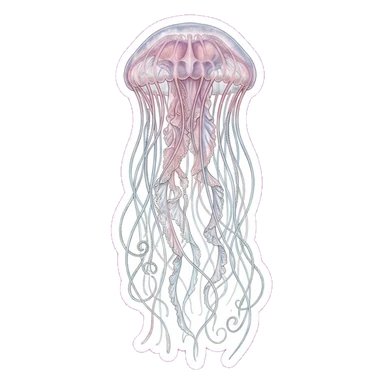 Nesselnde Tentakel
The blue button is a small sea creature that floats on the surface of warm oceans. It looks like a jellyfish, but it is really a colony of tiny animals called polyps. Its sting is not powerful, but it can cause slight skin irritation.1
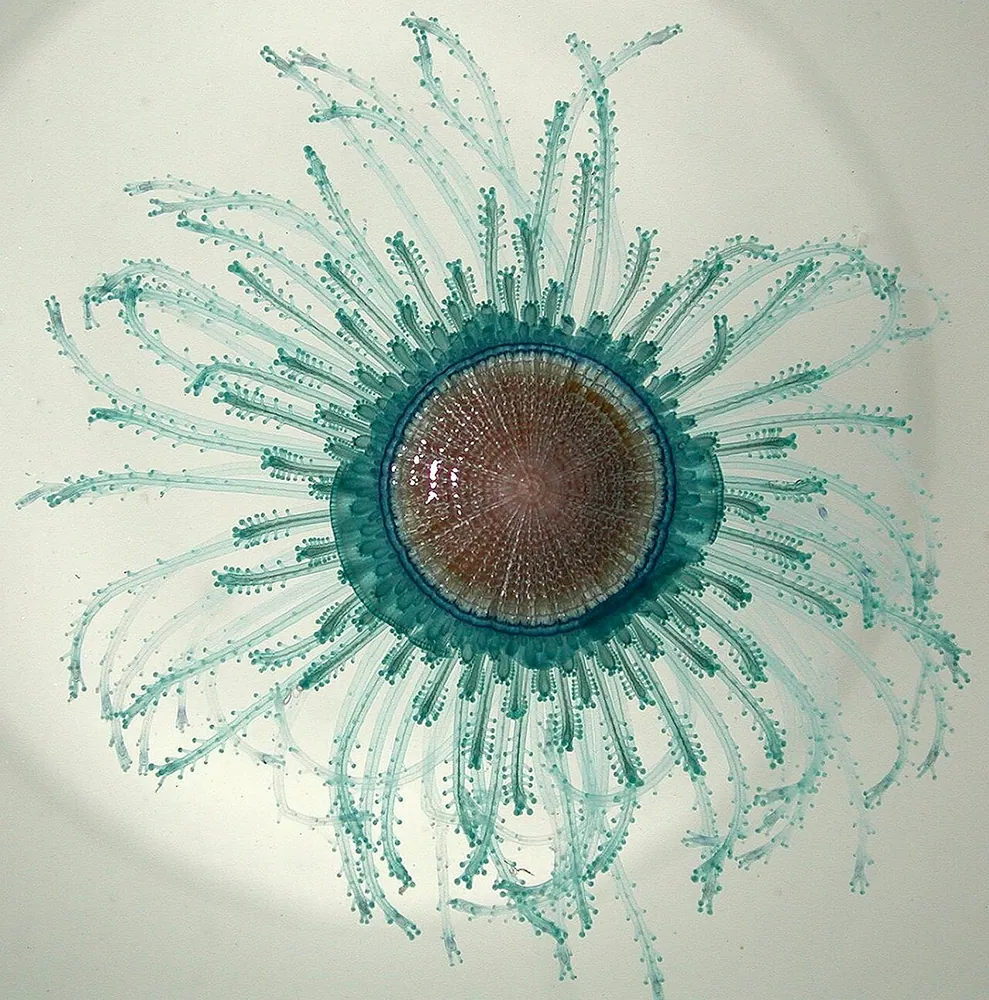
 So erkennst du es
- A round, almost flat, hard golden brown float about one inch (2.5 cm) wide1
- Bright blue turquoise to yellow polyps hanging from the float1
- Blue strands with knobs of stinging cells at the tips1
- Looks similar to a jellyfish, but each 'individual' is a colony of polyps1
Oft verwechselt mit: It looks superficially like a jellyfish. It is related to Velella and to the Portuguese man o' war, which are also colonial animals that float on the surface.1
Giftkraft
Tausende winzige Nesselzellen feuern, wenn etwas sie berührt.
Was macht sein Gift, wenn es beißt oder sticht?
It has stinging cells called nematocysts at the tips of its tentacle-like strands. The sting is not powerful and may cause slight irritation to human skin.1
Wie gefährlich ist es für Menschen?
Gefahr für Menschen: LeichtWie ein Bienenstich oder weniger. Für Menschen praktisch harmlos.The sting is not powerful and may cause slight irritation. In recent years, the first recorded case of contact dermatitis (a skin rash caused by contact) from this species was reported in Japan.1
 Wenn es sticht
- Raus aus dem Wasser und alle Tentakel abnehmen (mit Handschuhen oder einem Tuch).
- Bei tropischen Würfelquallen: Gieß mindestens 30 Sekunden lang Essig auf die Nesselstellen, ruf Hilfe und sei bereit für eine Herz-Lungen-Wiederbelebung. Bei Portugiesischen Galeeren und den meisten anderen: mit Meerwasser abspülen, dann heißes Wasser gegen die Schmerzen.
Ruf immer zuerst deine Notrufnummer an (112, 000, 911). Das sind allgemeine Erste-Hilfe-Hinweise, keine ärztliche Beratung. Erste-Hilfe-Grundlagen
 Bleib sicher
- Fass ein wildes Tier niemals an, fang es nicht und ärgere es nicht, auch kein kleines, und auch nicht, wenn es schlafend aussieht oder tot.
- Halte Abstand. Wenn du einem begegnest, bleib ruhig, geh langsam zurück und lass es seiner Wege gehen.
- Wenn dich eines sticht: Bleib ruhig, halt still, ruf deine Notrufnummer an (112, 000, 911) oder fahr schnell in ein Krankenhaus. Merk dir, wie es aussah, ein Foto hilft.
Es hat es nicht auf dich abgesehen. Es benutzt sein Gift, um Futter zu fangen oder sich zu schützen, und versteckt sich viel lieber. Mehr über Sicherheit
Wo auf der Welt?
Wie groß ist es?
Wie lang ist es?
 etwa so lang wie eine Büroklammer
Wie groß ist Blue button im Vergleich zu DIR?
Nur Rechnen in deinem Browser. Nichts wird gespeichert oder irgendwohin geschickt.
Wie schnell ist es?


Fakten
Each apparent individual is actually a colony of hydrozoan polyps, not a single animal.1
Young Malabar trevally fish shelter under the floats and panic when removed from them.1
Young Malabar trevally fish appear to prefer a particular colony and will return to their own partner when separated and put back in the same tank.1
It is preyed on by sea slugs known as blue dragons and by violet sea-snails of the genus Janthina.1
The blue button has a single mouth under its float, which it uses for both eating and removing waste.1
Mythen-Check
Mythos: A blue button is a single jellyfish-like animal.
Wahrheit: Each blue button is a colony of hydrozoan polyps, which are related to anemones, corals and jellyfish.1
Woher die Fakten kommen
- Porpita porpita (Wikipedia (CC BY-SA 4.0))
- Porpita porpita (iNaturalist): Namen und Klassifikation.
- Venom Wiki: die Gefahrenstufe, die typische Größe und die geschätzte Geschwindigkeit sind von uns. So berechnen wir sie: So bewerten wir die Gefahr.
Jeder Fakt auf dieser Seite hat eine Nummer, die auf seine Quelle zeigt. Wenn wir etwas falsch haben: Entschuldigung, wir sind Tierfans, keine Fachzeitschrift. Schreib uns an [email protected] und wir korrigieren es.
 Der Skorpion hat Hunger! Venom Wiki ist ein Ein-Mann-Projekt: kostenlos, ohne Werbung und ohne Tracker. Ein kleines Trinkgeld hilft, es online zu halten.Füttere den Skorpion
Mehr aus derselben Gruppe: Quallen & Nesseltiere im Meer
 Australian box jellyfishQuallen & Nesseltiere im MeerTödlichNicht anfassen
 Irukandji jellyfishQuallen & Nesseltiere im MeerKann tötenNicht anfassen
 Portuguese man o' warQuallen & Nesseltiere im MeerBraucht einen ArztNicht anfassen
 Lion's mane jellyfishQuallen & Nesseltiere im MeerTut nur wehNicht anfassen
 Moon jellyfishQuallen & Nesseltiere im MeerHarmlos
 Common kingslayerQuallen & Nesseltiere im MeerKann tötenNicht anfassen
Lebt auch in: Pazifischer Ozean
 Geography coneKegelschnecken & KrakenTödlich
 Greater blue-ringed octopusKegelschnecken & KrakenTödlich
 Japanese pufferfishAndere passiv giftige TiereTödlich
 Southern blue-ringed octopusKegelschnecken & KrakenTödlich
 Hawksbill sea turtleAndere passiv giftige TiereKann töten
 Reef stonefishGiftfischeKann tötenNicht anfassen