
 Afrika
 Asien
Asien Europa
 Südamerika
 Australien & Ozeanien
 Antarktis
 Pazifischer Ozean
 Atlantischer Ozean
 Indischer Ozean
 Nordpolarmeer
 Mittelmeer
 Rotes Meer
 Karibisches Meer
 Korallenmeer
 Südchinesisches Meer
 Philippinensee
 Andamanensee
 Nordsee
 Timorsee & Arafurasee
 Golf von Bengalen
 Golf von Kalifornien
Reef stonefish
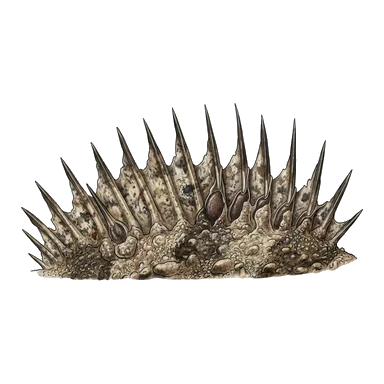 Giftstacheln
The reef stonefish is a fish that hides on coral reefs and looks like a rock or piece of coral. It is the most venomous fish in the world, and its venom can kill people. It lives in shallow warm seas across the Red Sea, the Indian Ocean and the western Pacific.1
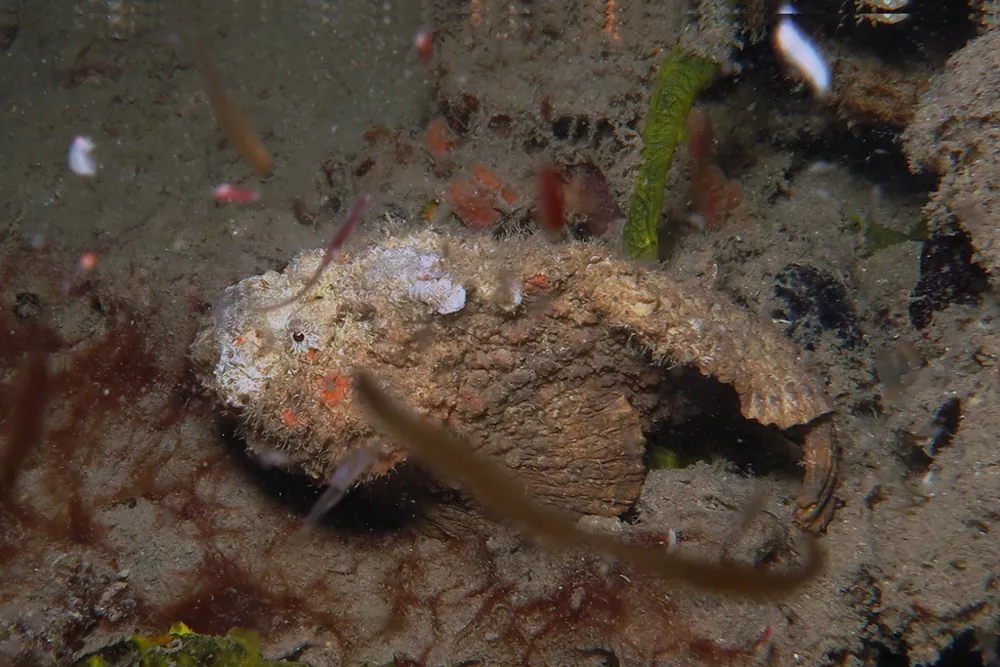
 So erkennst du es
- Usually brown or grey, sometimes with patches of yellow, orange or red.1
- Rough, tough skin covered in warts, with no scales.1
- Wide, flattened head with small eyes that point upwards.1
- Back fin with 12 to 14 spines, all of equal length.1
- Its colour and skin texture help it blend in among rocks and corals.1
Giftkraft
Spitze Stacheln tragen das Gift. Drauftreten oder Anfassen tut weh.
Was macht sein Gift, wenn es beißt oder sticht?
Its venom is a mixture of proteins. Effects include severe pain, shock, paralysis and tissue death. A large dose can be fatal, and the fatal protein in this species is verrucotoxin. Stonefish venom can be fatal at a dose of only 18 mg, which six of its thirteen spines can release.1
Wie gefährlich ist es für Menschen?
Gefahr für Menschen: Sehr gefährlichEs kann einen Menschen töten, der keine Behandlung bekommt.It is the most venomous fish in the world and its venom can kill humans. A large dose can be fatal, and young children, the elderly and people with weakened immune systems are at greatest risk.1
 Gute Nachricht: Ärzte haben dafür ein Medikament (Gegengift) oder eine Behandlung.1
Was macht es, wenn es Angst hat?
It relies on camouflage to stay hidden and, when necessary, on its back spines, each with venom sacs at its base.1
 Wenn dich seine Stacheln stechen
- Immerse the affected limb in hot water, which is thought to help break down the venom proteins. A local anaesthetic can reduce the pain, and medical treatment includes antivenom. A tourniquet or firm constrictive bandage is no longer recommended.1
- Leg die Wunde in heißes Wasser, so heiß, wie die Person es aushält, ohne sich zu verbrühen (prüf es mit deiner eigenen Hand), 30 bis 90 Minuten lang. Hol ärztliche Hilfe, besonders bei Steinfischen und Stachelrochen.
Ruf immer zuerst deine Notrufnummer an (112, 000, 911). Das sind allgemeine Erste-Hilfe-Hinweise, keine ärztliche Beratung. Erste-Hilfe-Grundlagen
 Bleib sicher
- Fass ein wildes Tier niemals an, fang es nicht und ärgere es nicht, auch kein kleines, und auch nicht, wenn es schlafend aussieht oder tot.
- Halte Abstand. Wenn du einem begegnest, bleib ruhig, geh langsam zurück und lass es seiner Wege gehen.
- Wenn dich seine Stacheln stechen: Bleib ruhig, halt still, ruf deine Notrufnummer an (112, 000, 911) oder fahr schnell in ein Krankenhaus. Merk dir, wie es aussah, ein Foto hilft.
Es hat es nicht auf dich abgesehen. Es benutzt sein Gift, um Futter zu fangen oder sich zu schützen, und versteckt sich viel lieber. Mehr über Sicherheit
Wo auf der Welt?
Wie groß ist es?
Wie lang ist es?
 so lang wie 2 Bananen hintereinander
 so lang wie 12 Bausteine in einer Reihe
 könnte die Länge eines großen Schwimmbeckens (50 m) in 90 Sekunden schwimmen
Wie groß ist Reef stonefish im Vergleich zu DIR?
Nur Rechnen in deinem Browser. Nichts wird gespeichert oder irgendwohin geschickt.
Wie schnell ist es?

Fakten
It is the most venomous fish in the world.1
It strikes its prey in as little as 0.015 seconds.1
Its spines are sharp and stiff enough to pierce boot soles.1
Only six of its thirteen spines can release a fatal dose of venom.1
It is sold as an aquarium pet and as meat in some markets in southern China, the Philippines and Japan.1
Mythen-Check
Mythos: Tying a tight tourniquet or bandage above a stonefish sting is the best first aid.
Wahrheit: This is no longer recommended. Hot water on the affected limb and medical treatment with antivenom are the advised steps.1
Für Giftexperten
- Wissenschaftlicher Name
- Synanceia verrucosa
- Gruppe
- Giftfische
- Familie
- Synanceiidae2
- Ordnung
- Perciformes
- Kontinente
- Pazifischer Ozean, Indischer Ozean, Rotes Meer, Andamanensee, Südchinesisches Meer, Philippinensee, Korallenmeer, Arabisches Meer & Persischer Golf, Timorsee & Arafurasee, Golf von Bengalen, Die Ozeane
- Babys
- Females lay large, unfertilised eggs on the reef floor, and a male fertilises them by releasing sperm over the eggs. The young hatch well developed.1
- Gefahr für Menschen
- 4 / 5: Sehr gefährlich3
Woher die Fakten kommen
- Synanceia verrucosa (Wikipedia (CC BY-SA 4.0))
- Synanceia verrucosa (iNaturalist): Namen und Klassifikation.
- Venom Wiki: die Gefahrenstufe, die typische Größe und die geschätzte Geschwindigkeit sind von uns. So berechnen wir sie: So bewerten wir die Gefahr.
Jeder Fakt auf dieser Seite hat eine Nummer, die auf seine Quelle zeigt. Wenn wir etwas falsch haben: Entschuldigung, wir sind Tierfans, keine Fachzeitschrift. Schreib uns an [email protected] und wir korrigieren es.
 Der Skorpion hat Hunger! Venom Wiki ist ein Ein-Mann-Projekt: kostenlos, ohne Werbung und ohne Tracker. Ein kleines Trinkgeld hilft, es online zu halten.Füttere den Skorpion
Mehr aus derselben Gruppe: Giftfische
 Red lionfish
 Estuarine stonefish
 Short-tail stingray
 Striped eel catfish
 Bluespotted ribbontail ray
 Common stingray
Lebt auch in: Pazifischer Ozean
 Australian box jellyfishQuallen & Nesseltiere im MeerTödlichNicht anfassen
 Geography coneKegelschnecken & KrakenTödlich
 Greater blue-ringed octopusKegelschnecken & KrakenTödlich
 Japanese pufferfishAndere passiv giftige TiereTödlich
 Southern blue-ringed octopusKegelschnecken & KrakenTödlich
 Hawksbill sea turtleAndere passiv giftige TiereKann töten