
 Afrika
 Asien
Asien Europa
 Südamerika
 Australien & Ozeanien
 Antarktis
 Pazifischer Ozean
 Atlantischer Ozean
 Indischer Ozean
 Nordpolarmeer
 Mittelmeer
 Rotes Meer
 Karibisches Meer
 Korallenmeer
 Südchinesisches Meer
 Philippinensee
 Andamanensee
 Nordsee
 Timorsee & Arafurasee
 Golf von Bengalen
 Golf von Kalifornien
Brazilian brown spider
 Bisse
BisseThe Brazilian brown recluse spider is a small spider that is highly venomous. It lives in parts of Brazil and Argentina, and it is one of the species linked to deaths from spider bites in South America. Its bite can seem mild at first, so it matters to know what it looks like.1


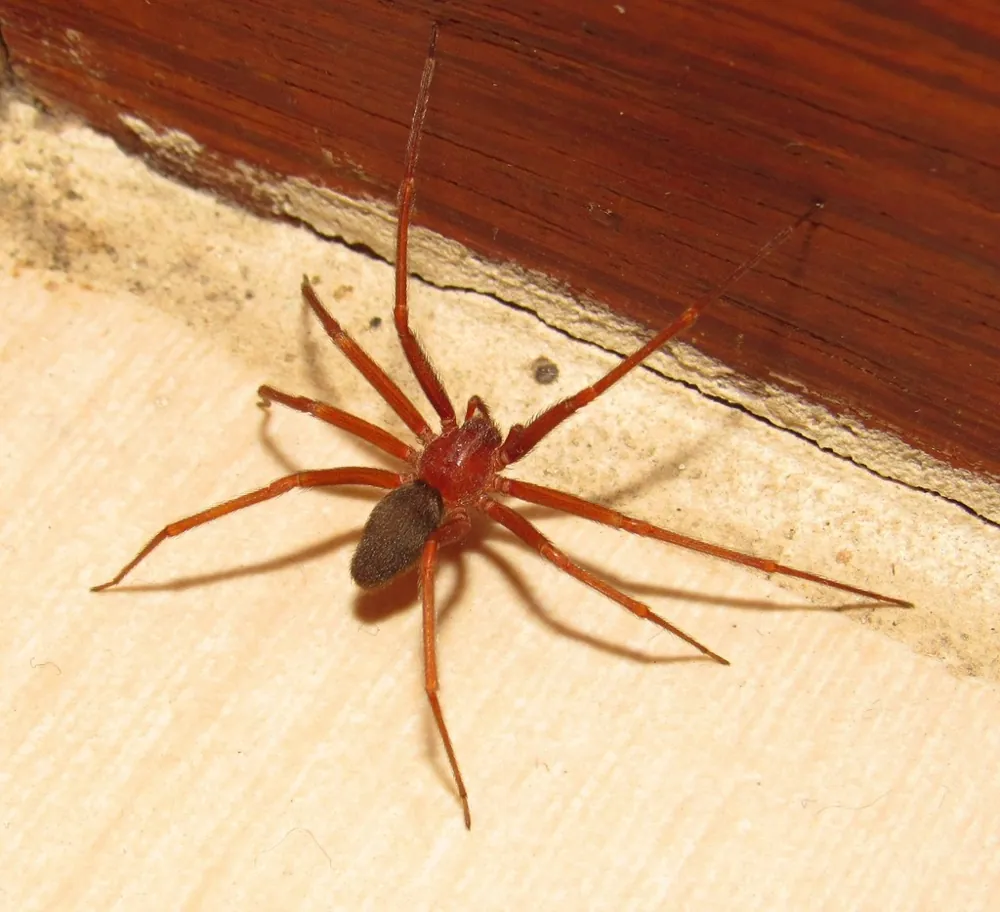
 So erkennst du es
- Carapace (the front body shield) is dull yellow to orange-brown, with a dark, U-shaped marking on the head area that contrasts with the yellowish thorax.1
- Legs are orange-brown to reddish-brown.1
- Abdomen is grey or blackened, and darker on top than underneath.1
- Small spider: the female is about 8.5 mm long, and the male is smaller.1
- Active at night and very shy, usually found in dark places.1
Giftkraft
Das Gift kommt beim Beißen durch die Giftzähne oder Zähne heraus.
Was macht sein Gift, wenn es beißt oder sticht?
Its venom contains a high concentration of the enzyme sphingomyelinase D, which causes both local and whole-body effects. Symptoms usually take hours to appear. The bite starts with severe pain, redness, swelling and blisters, and in more severe cases the skin tissue can die. Whole-body effects can include damage to red blood cells, heart problems, low blood pressure, kidney failure and severe bleeding.1
Wie gefährlich ist es für Menschen?
Gefahr für Menschen: ErnstEin Biss gehört zum Arzt. Todesfälle sind sehr selten.It is one of the main species linked to deaths from spider bites in South America. Whole-body effects occur frequently after its bite. Because symptoms are delayed, a victim may think the bite was mild.1
Was macht es, wenn es Angst hat?
It is a very shy spider that keeps to dark places, so it is rarely seen.1
 Wenn es beißt
- Wasch den Biss und leg gegen die Schmerzen ein Kühlpack darauf. Hol ärztliche Hilfe, wenn die Schmerzen stark sind, sich ausbreiten oder es der Person schlecht geht.
Ruf immer zuerst deine Notrufnummer an (112, 000, 911). Das sind allgemeine Erste-Hilfe-Hinweise, keine ärztliche Beratung. Erste-Hilfe-Grundlagen
 Bleib sicher
- Fass ein wildes Tier niemals an, fang es nicht und ärgere es nicht, auch kein kleines, und auch nicht, wenn es schlafend aussieht oder tot.
- Halte Abstand. Wenn du einem begegnest, bleib ruhig, geh langsam zurück und lass es seiner Wege gehen.
- Wenn dich eines beißt: Bleib ruhig, halt still, ruf deine Notrufnummer an (112, 000, 911) oder fahr schnell in ein Krankenhaus. Merk dir, wie es aussah, ein Foto hilft.
Es hat es nicht auf dich abgesehen. Es benutzt sein Gift, um Futter zu fangen oder sich zu schützen, und versteckt sich viel lieber. Mehr über Sicherheit
Wo auf der Welt?
Wie groß ist es?
Wie lang ist es?
 so klein, dass es auf deinen Fingernagel passt
Wie groß ist Brazilian brown spider im Vergleich zu DIR?
Nur Rechnen in deinem Browser. Nichts wird gespeichert oder irgendwohin geschickt.
Wie schnell ist es?


Fakten
The minimum dose that causes skin tissue death is 2.4 μg per kg of body weight.1
An average bite injects about 40 μg of venom proteins.1
It produces about 5.6 mg of venom, and the male produces less, around 2.43 mg.1
Males have much longer legs than females, although the female has the larger body.1
Its webs are irregular and built under fallen tree trunks and debris, usually in dark places.1
Woher die Fakten kommen
- Loxosceles intermedia (Wikipedia (CC BY-SA 4.0))
- Loxosceles intermedia (iNaturalist): Namen und Klassifikation.
- Venom Wiki: die Gefahrenstufe, die typische Größe und die geschätzte Geschwindigkeit sind von uns. So berechnen wir sie: So bewerten wir die Gefahr.
Jeder Fakt auf dieser Seite hat eine Nummer, die auf seine Quelle zeigt. Wenn wir etwas falsch haben: Entschuldigung, wir sind Tierfans, keine Fachzeitschrift. Schreib uns an [email protected] und wir korrigieren es.
 Der Skorpion hat Hunger! Venom Wiki ist ein Ein-Mann-Projekt: kostenlos, ohne Werbung und ohne Tracker. Ein kleines Trinkgeld hilft, es online zu halten.Füttere den Skorpion
Mehr aus derselben Gruppe: Spinnen
 Brazilian wandering spider
 Amazon wandering spider
 Chilean recluse
 Golden silk orb-weaver
 Keyserling's wandering spider
 Argentine black widow
Lebt auch in: Südamerika
 Schrecklicher PfeilgiftfroschPfeilgiftfrösche, Kröten & MolcheTödlichNicht anfassen
 Terciopelo-LanzenotterGrubenotternTödlich
 Eyelash viperGrubenotternKann töten
 Golden lanceheadGrubenotternKann töten
 South American bushmasterGrubenotternKann töten
 Cane toadPfeilgiftfrösche, Kröten & MolcheBraucht einen ArztNicht anfassen