
 Afrika
 Asien
Asien Europa
 Südamerika
 Australien & Ozeanien
 Antarktis
 Pazifischer Ozean
 Atlantischer Ozean
 Indischer Ozean
 Nordpolarmeer
 Mittelmeer
 Rotes Meer
 Karibisches Meer
 Korallenmeer
 Südchinesisches Meer
 Philippinensee
 Andamanensee
 Nordsee
 Timorsee & Arafurasee
 Golf von Bengalen
 Golf von Kalifornien
Cane toad
 Gift in der HautFrisst: Von allem etwasPassiv giftig, nicht aktiv giftig
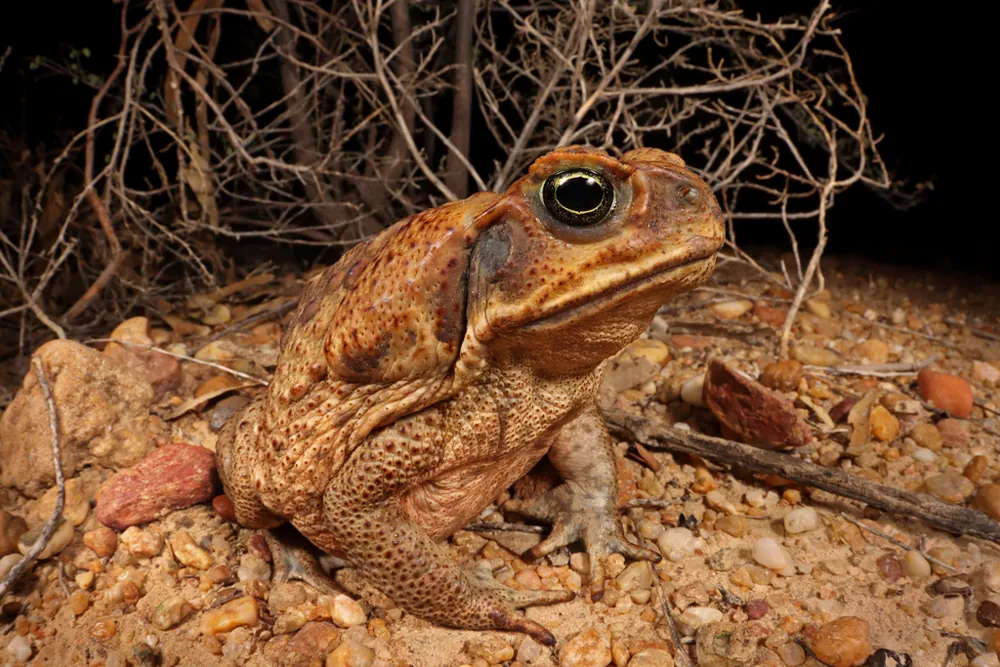
The cane toad is a large toad that is very poisonous to many animals. It is native to South and mainland Central America, but people have moved it to islands in Oceania and the Caribbean and to northern Australia. It matters because it spreads quickly and harms native wildlife and pets.1
 So erkennst du es
- Very large, with adults usually 10 to 15 cm long1
- Dry, warty skin with distinct ridges above the eyes that run down the snout1
- A large parotoid gland (a swollen gland) behind each eye1
- Grey, yellowish, red-brown or olive-brown skin, often with patterns1
- Horizontal pupils and golden irises1
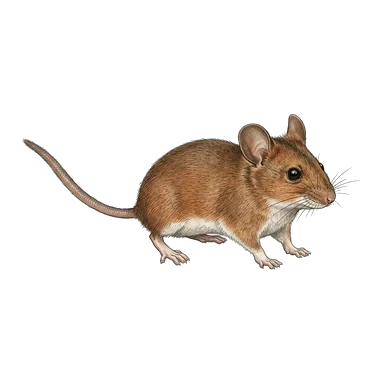
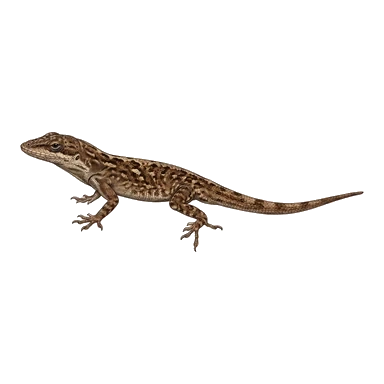
Oft verwechselt mit: In Australia, adults can be confused with large native frogs, but these lack the large parotoid glands and the ridge between the nostril and eye. The giant burrowing frog has vertical pupils and silver-grey irises, while the cane toad has horizontal pupils and golden irises. In the United States, the southern toad has two bulbs in front of the parotoid glands.1
Giftkraft
Seine Haut ist giftig. Es ist gefährlich, es anzufassen, abzulecken oder zu essen.
Was macht sein Gift, wenn man es anfasst oder isst?
The toad's glands secrete a milky-white fluid called bufotoxin when it is threatened. Components of bufotoxin are toxic to many animals. In dogs, signs of poisoning include excessive drooling, extremely red gums, head-shaking, crying and loss of coordination.1
Wie gefährlich ist es für Menschen?
Gefahr für Menschen: ErnstWenn jemand es anfasst oder isst, ab zum Arzt. Todesfälle sind sehr selten.The toxic skin can kill many wild and domestic animals. Dogs are especially at risk from licking or biting the toad. Human deaths have also been recorded after people ate cane toads.1
Was macht es, wenn es Angst hat?
When threatened, it releases bufotoxin from its glands.1
 Wenn jemand es angefasst oder gegessen hat
- Wenn jemand eines angefasst hat: Hände gründlich waschen und nicht an Augen oder Mund fassen. Wenn ein Kind oder Haustier eines abgeleckt oder gegessen hat: Ruf den Giftnotruf oder deine Notrufnummer an.
Ruf immer zuerst deine Notrufnummer an (112, 000, 911). Das sind allgemeine Erste-Hilfe-Hinweise, keine ärztliche Beratung. Erste-Hilfe-Grundlagen
 Bleib sicher
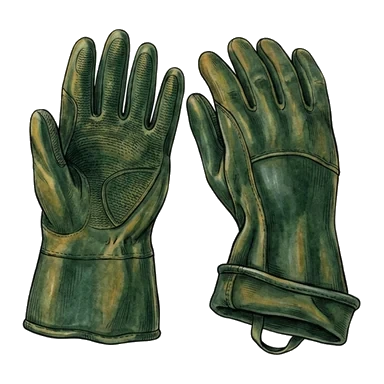
- Fass ein wildes Tier niemals an, fang es nicht und ärgere es nicht, auch kein kleines, und auch nicht, wenn es schlafend aussieht oder tot.
- Halte Abstand. Wenn du einem begegnest, bleib ruhig, geh langsam zurück und lass es seiner Wege gehen.
- Wenn du es angefasst oder gegessen hast: Reib dir nicht die Augen oder den Mund, wasch dir die Hände und hol ärztliche Hilfe.
Es hat es nicht auf dich abgesehen. Sein Gift ist nur dazu da, dass es niemand frisst. Mehr über Sicherheit
Wo auf der Welt?
Wie groß ist es?
Wie lang ist es?
 so lang wie 8 Bausteine in einer Reihe
 könnte 100 Meter in 180 Sekunden schaffen (der schnellste Mensch braucht 9,6)
Wie groß ist Cane toad im Vergleich zu DIR?
Nur Rechnen in deinem Browser. Nichts wird gespeichert oder irgendwohin geschickt.
Wie schnell ist es?


Fakten
Young toads lose the toxicity they had as eggs and tadpoles, and they only develop their poison glands later. Only an estimated 0.5% of cane toads reach adulthood.1
In Australia, tadpoles have evolved to be more likely to eat their siblings than tadpoles in South America.1
A female can lay thousands of eggs in one spawn, in strings up to 20 metres long.1
In the wild, cane toads can live 10 to 15 years, and one captive toad was reported to have lived 35 years.1
The cane toad is considered the largest species in the Bufonidae, the toad family.1
Cane toads eat both living and dead matter, which is unusual among frogs and toads.1
Mythen-Check
Mythos: The name 'marine toad' suggests that cane toads live in the sea.
Wahrheit: Cane toads do not live in the sea. The name came from a mistaken belief by an early naturalist.1
Für Giftexperten
- Wissenschaftlicher Name
- Rhinella marina
- Gruppe
- Pfeilgiftfrösche, Kröten & Molche
- Familie
- Bufonidae2
- Ordnung
- Anura
- Kontinente
- Nordamerika, Südamerika
- Babys
- A female lays 8,000 to 25,000 eggs at once, in long jelly strings that can stretch up to 20 metres.1
- Lebensdauer
- etwa 15 Jahre1
- Gefahr für Menschen
- 3 / 5: Ernst3
Woher die Fakten kommen
- Cane toad (Wikipedia (CC BY-SA 4.0))
- Rhinella marina (iNaturalist): Namen und Klassifikation.
- Venom Wiki: die Gefahrenstufe, die typische Größe und die geschätzte Geschwindigkeit sind von uns. So berechnen wir sie: So bewerten wir die Gefahr.
Jeder Fakt auf dieser Seite hat eine Nummer, die auf seine Quelle zeigt. Wenn wir etwas falsch haben: Entschuldigung, wir sind Tierfans, keine Fachzeitschrift. Schreib uns an [email protected] und wir korrigieren es.
 Der Skorpion hat Hunger! Venom Wiki ist ein Ein-Mann-Projekt: kostenlos, ohne Werbung und ohne Tracker. Ein kleines Trinkgeld hilft, es online zu halten.Füttere den Skorpion
Mehr aus derselben Gruppe: Pfeilgiftfrösche, Kröten & Molche
 Golden poison frogPfeilgiftfrösche, Kröten & MolcheTödlichNicht anfassen
 Dyeing poison dart frogPfeilgiftfrösche, Kröten & MolcheTut nur wehNicht anfassen
 Strawberry poison-dart frogPfeilgiftfrösche, Kröten & MolcheTut nur wehNicht anfassen
 Black-legged poison frogPfeilgiftfrösche, Kröten & MolcheKann tötenNicht anfassen
 California newtPfeilgiftfrösche, Kröten & MolcheKann tötenNicht anfassen
 Rough-skinned newtPfeilgiftfrösche, Kröten & MolcheKann tötenNicht anfassen
 Terciopelo
 Eastern coral snake
 Eastern diamondback rattlesnake
 Eyelash viper
 Timber rattlesnake
 Western diamondback rattlesnake