
 Afrika
 Asien
Asien Europa
 Südamerika
 Australien & Ozeanien
 Antarktis
 Pazifischer Ozean
 Atlantischer Ozean
 Indischer Ozean
 Nordpolarmeer
 Mittelmeer
 Rotes Meer
 Karibisches Meer
 Korallenmeer
 Südchinesisches Meer
 Philippinensee
 Andamanensee
 Nordsee
 Timorsee & Arafurasee
 Golf von Bengalen
 Golf von Kalifornien
Montpellier snake
 Bisse
BisseThe Montpellier snake is a rear-fanged snake found in southern Europe and North Africa. It is mildly venomous, and it is active during the day, mainly hunting lizards. It is one of the most common snakes across its range, even in areas where people live.1

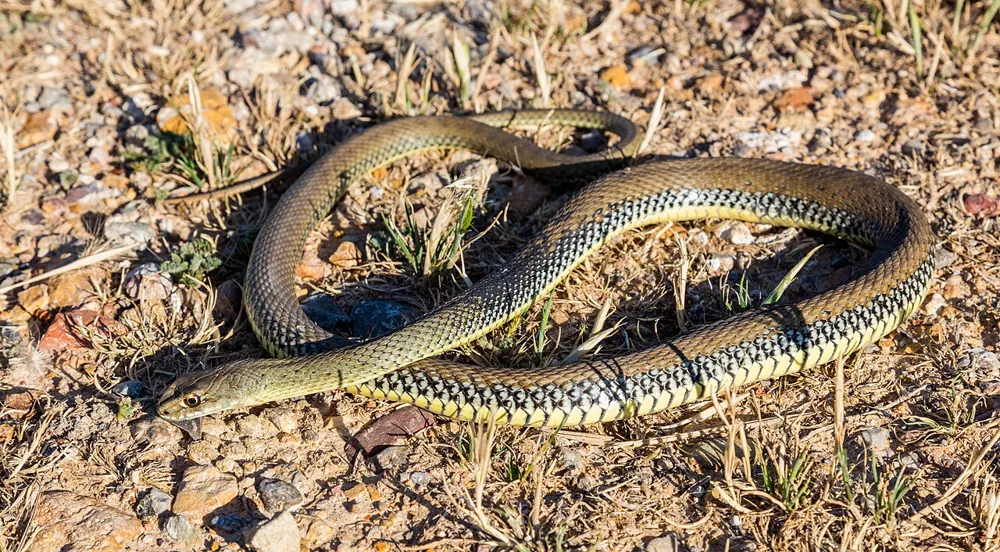
 So erkennst du es
Giftkraft
Das Gift kommt beim Beißen durch die Giftzähne oder Zähne heraus.
Was macht sein Gift, wenn es beißt oder sticht?
It is mildly venomous. Its rear fangs, which sit towards the back of the mouth, make it less likely to inject venom, and the venom is of low toxicity. Venom can still be injected by bites from large individuals.1
Wie gefährlich ist es für Menschen?
Gefahr für Menschen: SchmerzhaftEs kann richtig wehtun, ist aber fast nie gefährlich.The Montpellier snake is not dangerous to humans. Only a few cases of envenomation of people are known, and one of these happened when a finger was put into the snake's mouth. The venom is not very dangerous.1
 Wenn es beißt
- Symptomatic treatment, which means treating the symptoms as they appear, is enough to deal with an envenomation.1
- Wasch den Biss, halte die Person ruhig und hol ärztliche Hilfe. Manche Arten (wie die Boomslang) können noch Stunden später tödlich sein.
Ruf immer zuerst deine Notrufnummer an (112, 000, 911). Das sind allgemeine Erste-Hilfe-Hinweise, keine ärztliche Beratung. Erste-Hilfe-Grundlagen
 Bleib sicher
- Fass ein wildes Tier niemals an, fang es nicht und ärgere es nicht, auch kein kleines, und auch nicht, wenn es schlafend aussieht oder tot.
- Halte Abstand. Wenn du einem begegnest, bleib ruhig, geh langsam zurück und lass es seiner Wege gehen.
- Wenn dich eines beißt: Bleib ruhig, halt still, ruf deine Notrufnummer an (112, 000, 911) oder fahr schnell in ein Krankenhaus. Merk dir, wie es aussah, ein Foto hilft.
Es hat es nicht auf dich abgesehen. Es benutzt sein Gift, um Futter zu fangen oder sich zu schützen, und versteckt sich viel lieber. Mehr über Sicherheit
Wo auf der Welt?
Wie groß ist es?
Wie lang ist es?
Wie schwer ist es?
 so lang wie 2,5 Hunde von Nase bis Schwanz
 so lang wie 14 Bananen hintereinander
 etwa so schwer wie eine Hauskatze
 könnte 100 Meter in 59 Sekunden schaffen (der schnellste Mensch braucht 9,6)
Wie groß ist Montpellier snake im Vergleich zu DIR?
Nur Rechnen in deinem Browser. Nichts wird gespeichert oder irgendwohin geschickt.
Wie schnell ist es?


Fakten
Genetic evidence suggests it originated in the Maghreb and migrated into southwestern Europe between 83,000 and 168,000 years ago.1
It is often killed by cars and farmers, and it is sometimes used by snake charmers and sold as a curio.1
Its common, relatively mild persecution by people has helped it become one of the most common snakes across its range.1
Mythen-Check
Mythos: That the Montpellier snake is a dangerous snake for humans.
Wahrheit: It is not dangerous to humans. Its rear fangs and low-toxicity venom mean serious harm is very unlikely.1
Woher die Fakten kommen
- Malpolon monspessulanus (Wikipedia (CC BY-SA 4.0))
- Malpolon monspessulanus (iNaturalist): Namen und Klassifikation.
- Venom Wiki: die Gefahrenstufe, die typische Größe und die geschätzte Geschwindigkeit sind von uns. So berechnen wir sie: So bewerten wir die Gefahr.
Jeder Fakt auf dieser Seite hat eine Nummer, die auf seine Quelle zeigt. Wenn wir etwas falsch haben: Entschuldigung, wir sind Tierfans, keine Fachzeitschrift. Schreib uns an [email protected] und wir korrigieren es.
 Der Skorpion hat Hunger! Venom Wiki ist ein Ein-Mann-Projekt: kostenlos, ohne Werbung und ohne Tracker. Ein kleines Trinkgeld hilft, es online zu halten.Füttere den Skorpion
Mehr aus derselben Gruppe: Trugnattern
 Boomslang
 Cape twig snake
 Forest twig snake
 Bibron's stiletto snake
 Madagascar leaf-nosed snake
 Eastern twig snake
,_Nig%C3%BCella,_Zaragoza,_Espa%C3%B1a,_2017-05-24,_DD_07.jpg)
Lebt auch in: Europa
 Common European adderVipern & OtternBraucht einen Arzt
 Spanish flyAndere passiv giftige TiereBraucht einen ArztNicht anfassen
 Common waspBienen, Wespen & HornissenTut nur weh
 European hornetBienen, Wespen & HornissenTut nur weh
 Fire salamanderPfeilgiftfrösche, Kröten & MolcheTut nur wehNicht anfassen
 Western honey beeBienen, Wespen & HornissenTut nur weh