
 África
 Asia
Asia Europa
 Sudamérica
 Australia y Oceanía
 Antártida
 Océano Pacífico
 Océano Atlántico
 Océano Índico
 Océano Ártico
 Mar Mediterráneo
 Mar Rojo
 Mar Caribe
 Mar del Coral
 Mar de China Meridional
 Mar de Filipinas
 Mar de Andamán
 Mar del Norte
 Mar de Timor y de Arafura
 Golfo de Bengala
 Golfo de California
Arizona blond tarantula
 Mordeduras
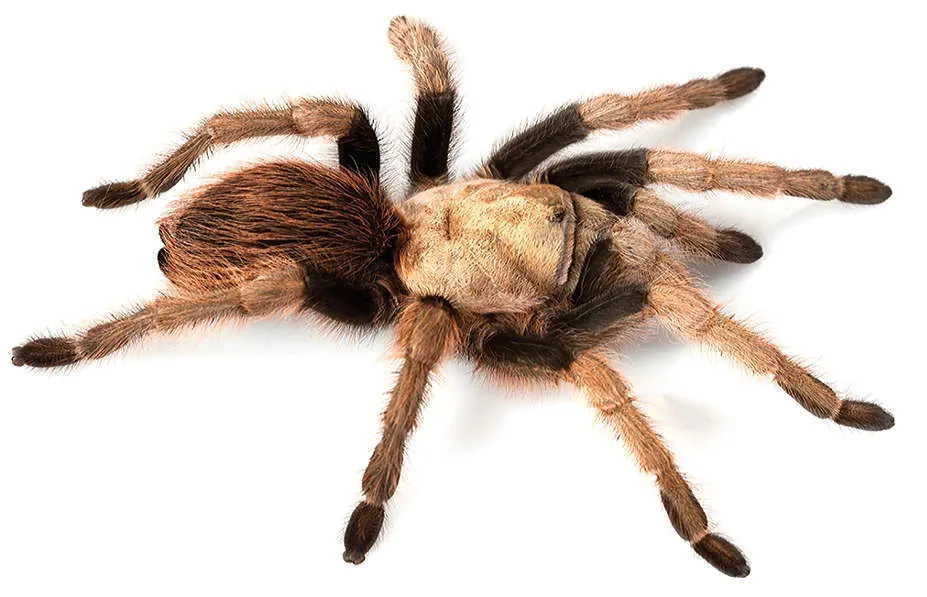
The Arizona blond tarantula is a large, burrowing spider with pale, golden-looking hairs on its front body. It lives in the deserts of Arizona and New Mexico and nearby parts of Mexico. Its venom is considered low in toxicity, so it is not highly dangerous to people.1

 Cómo reconocerlo
- Front body (carapace) covered in dense pale hairs, which gives it the blonde name.1
- Females are usually a uniform tan colour.1
- Males have black legs, a copper-coloured front body and a reddish abdomen.1
- Burrows can be 2.5 to 5.1 cm across, with some strands of silk over the opening.1
- Body length is up to 5.6 cm in females and up to 4.4 cm in males.1
Poder del veneno
El veneno sale por sus colmillos o dientes cuando muerde.
¿Qué hace su veneno?
The venom contains neurotoxins, which attack the nerves. The two named compounds are Apc600 and Apc728. These toxins have not been studied in depth, and the venom is considered low in toxicity for humans.1
¿Qué peligro tiene para las personas?
Peligro para las personas: LeveComo una picadura de abeja o menos. Prácticamente inofensivo para las personas.The venom is not highly dangerous to humans. Compared with a bee sting, its venom level is not significantly higher. It is one of the least dangerous spiders in its family, Theraphosidae.1
 Si muerde
- Lava la mordedura y enfríala. Busca ayuda médica si el dolor es fuerte o la persona se encuentra mal.
Llama siempre primero a tu número de emergencias (112, 000, 911). Esto son pautas generales de primeros auxilios, no consejo médico. Primeros auxilios básicos
 Mantente a salvo
- Nunca toques, atrapes ni molestes a un animal salvaje, aunque sea pequeño y aunque parezca dormido o muerto.
- Déjale espacio. Si te encuentras uno, mantén la calma, retrocede despacio y deja que siga su camino.
- Si te muerde: mantén la calma, no te muevas, llama a tu número de emergencias (112, 000, 911) o ve rápido a un hospital. Recuerda cómo era, una foto ayuda.
No va a por ti. Usa su veneno para cazar o defenderse, y prefiere mil veces esconderse. Más sobre cómo protegerte
¿En qué parte del mundo?
¿Qué tamaño tiene?
¿Cuánto mide?
 más corto que tu dedo meñique
 podría recorrer 100 metros en 220 segundos (el humano más rápido necesita 9,6)
¿Qué tamaño tiene Arizona blond tarantula comparado contigo?
Solo cálculos en tu navegador. No se guarda ni se envía nada a ningún sitio.
¿Qué velocidad alcanza?


Datos
Females can live about 24 to 30 years, while males live about 5 to 10 years.1
Each spider molts about 25 times over two years, going through ten main stages.1
Newborns look like females, and males only show male features after several years of development.1
Its popularity among beginner tarantula keepers is linked to its long lifespan and calm nature.1
Molting is seasonal, and is especially common in March and April, even though tarantulas can molt at any time of day.1
Para expertos en veneno
De dónde salen los datos
- Aphonopelma chalcodes (Wikipedia (CC BY-SA 4.0))
- Aphonopelma chalcodes (iNaturalist): nombres y clasificación.
- Venom Wiki: el nivel de peligro, el tamaño típico y la velocidad estimada son nuestros. Mira cómo los calculamos: Cómo valoramos el peligro.
Cada dato de esta página tiene un número que lleva a su fuente. Si nos hemos equivocado en algo, perdón, somos fans de los animales, no una revista científica. Escríbenos a [email protected] y lo arreglamos.
 ¡El escorpión tiene hambre! Venom Wiki es un proyecto de una sola persona: gratis, sin anuncios y sin rastreadores. Una pequeña propina ayuda a mantenerlo en línea.Alimenta al escorpión
Más del mismo grupo: Tarántulas y arañas de tela en embudo
 Mexican redknee tarantulaTarántulas y arañas de tela en embudoInofensivo
 Ravine trapdoor spiderTarántulas y arañas de tela en embudoInofensivo
 Trinidad chevron tarantulaTarántulas y arañas de tela en embudoSolo duele
 Antilles pinktoe tarantulaTarántulas y arañas de tela en embudoInofensivo
 California trapdoor spiderTarántulas y arañas de tela en embudoInofensivo
 Costa Rican zebra tarantulaTarántulas y arañas de tela en embudoInofensivo
 Terciopelo
 Eastern coral snake
 Eastern diamondback rattlesnake
 Eyelash viper
 Timber rattlesnake
 Western diamondback rattlesnake