
 África
 Asia
Asia Europa
 Sudamérica
 Australia y Oceanía
 Antártida
 Océano Pacífico
 Océano Atlántico
 Océano Índico
 Océano Ártico
 Mar Mediterráneo
 Mar Rojo
 Mar Caribe
 Mar del Coral
 Mar de China Meridional
 Mar de Filipinas
 Mar de Andamán
 Mar del Norte
 Mar de Timor y de Arafura
 Golfo de Bengala
 Golfo de California
Black-banded sea krait
 Mordeduras
The black-banded sea krait is a sea snake with venom that is reportedly ten times stronger than a cobra's. It lives in the warm western Pacific Ocean, mostly around coral reefs. It spends much of its life in water but needs to come up to breathe.1



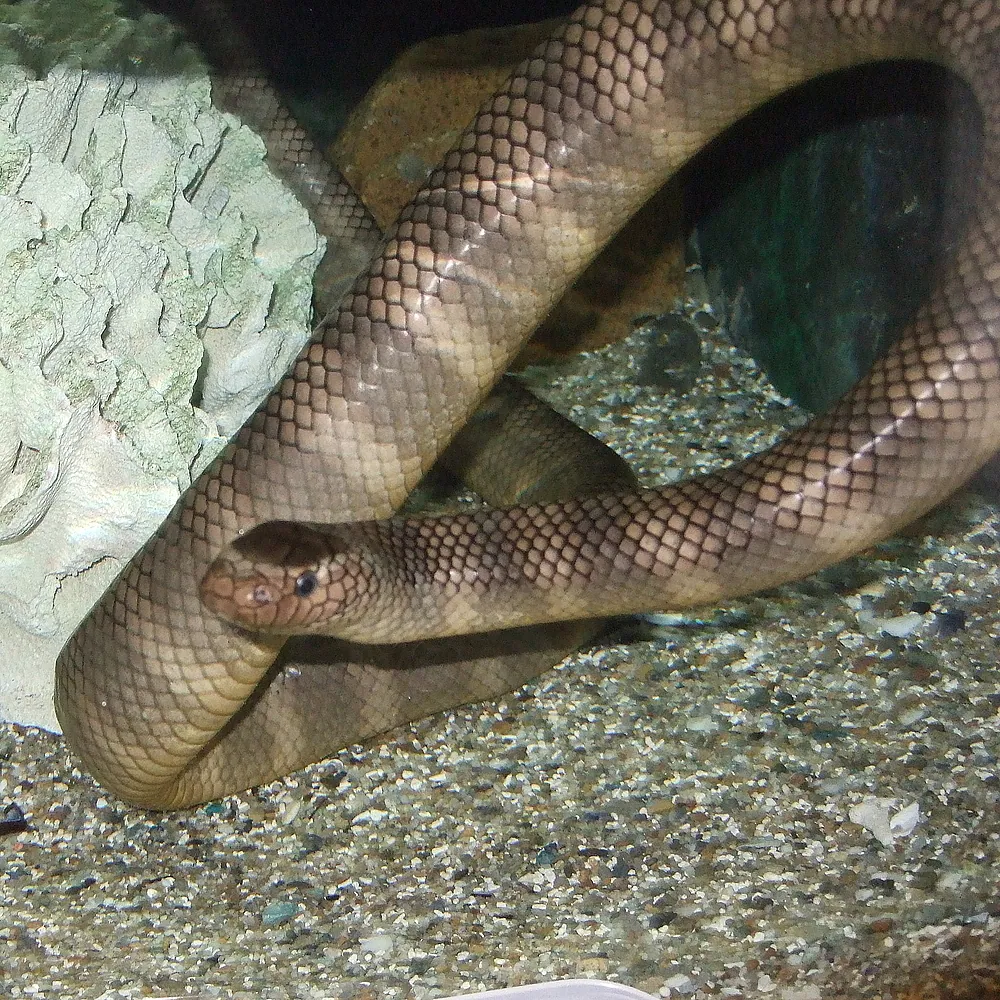
 Cómo reconocerlo
Poder del veneno
El veneno sale por sus colmillos o dientes cuando muerde.
¿Qué hace su veneno?
The bite is highly venomous and paralyses the prey. The venom glands are located behind the eyes.1
¿Qué peligro tiene para las personas?
Peligro para las personas: Muy peligrosoPuede matar a una persona que no recibe tratamiento.Its venom is reportedly ten times stronger than cobra venom, so any bite should be treated as serious.1
¿Qué hace cuando se asusta?
It prefers to save its energy and venom for hunting, so it strikes only as a very last resort when cornered, threatened or provoked.1
 Si muerde
- Inmovilización con presión: envuelve con una venda elástica firme la mordedura y luego toda la extremidad, ponle una férula y mantén a la persona totalmente quieta hasta que llegue la ayuda.
- Saca a la persona del agua y llévala rápido a un hospital.
Llama siempre primero a tu número de emergencias (112, 000, 911). Esto son pautas generales de primeros auxilios, no consejo médico. Primeros auxilios básicos
 Mantente a salvo
- Nunca toques, atrapes ni molestes a un animal salvaje, aunque sea pequeño y aunque parezca dormido o muerto.
- Déjale espacio. Si te encuentras uno, mantén la calma, retrocede despacio y deja que siga su camino.
- Si te muerde: mantén la calma, no te muevas, llama a tu número de emergencias (112, 000, 911) o ve rápido a un hospital. Recuerda cómo era, una foto ayuda.
No va a por ti. Usa su veneno para cazar o defenderse, y prefiere mil veces esconderse. Más sobre cómo protegerte
¿En qué parte del mundo?
¿Qué tamaño tiene?
¿Cuánto mide?
 mide como 3 gatos domésticos de la nariz a la cola
 mide como 9 plátanos puestos en fila
 podría nadar el largo de una piscina grande (50 m) en 43 segundos
¿Qué tamaño tiene Black-banded sea krait comparado contigo?
Solo cálculos en tu navegador. No se guarda ni se envía nada a ningún sitio.
¿Qué velocidad alcanza?
Datos
Its venom is reportedly ten times stronger than that of a cobra.1
It has been observed hunting in cooperative 'alliances' with bluefin trevally, which pick off small fish that the snake flushes from the coral.1
In some warm years, large numbers gather in sea caves and tide pools on the Ryukyu cliffs in search of fresh water and possibly to mate.1
Although it lives in the sea, it lays its eggs on land.1
In southern Japan its meat is used in a winter broth called irabu-jiru, which is said to taste like miso and a little like tuna.1
Its northward spread into waters near South Korea is linked to climate change, which has damaged its habitat.1
Para expertos en veneno
De dónde salen los datos
- Black-banded sea krait (Wikipedia (CC BY-SA 4.0))
- Laticauda semifasciata (iNaturalist): nombres y clasificación.
- Venom Wiki: el nivel de peligro, el tamaño típico y la velocidad estimada son nuestros. Mira cómo los calculamos: Cómo valoramos el peligro.
Cada dato de esta página tiene un número que lleva a su fuente. Si nos hemos equivocado en algo, perdón, somos fans de los animales, no una revista científica. Escríbenos a [email protected] y lo arreglamos.
 ¡El escorpión tiene hambre! Venom Wiki es un proyecto de una sola persona: gratis, sin anuncios y sin rastreadores. Una pequeña propina ayuda a mantenerlo en línea.Alimenta al escorpión
Más del mismo grupo: Serpientes marinas
 Beaked sea snake
 Belcher's sea snake
 Blue-lipped sea krait
 Dubois' sea snake
 Olive sea snake
 Yellow-lipped sea krait
También vive en: Océano Pacífico
 Avispa de marMedusas y picadores marinosMortalNo tocar
 Cono geógrafoCaracoles cono y pulposMortal
 Pulpo de anillos azules mayorCaracoles cono y pulposMortal
 Pez globo tigreOtros animales tóxicosMortal
 Pulpo de anillos azules del surCaracoles cono y pulposMortal
 Hawksbill sea turtleOtros animales tóxicosPuede matar