
 África
 Asia
Asia Europa
 Sudamérica
 Australia y Oceanía
 Antártida
 Océano Pacífico
 Océano Atlántico
 Océano Índico
 Océano Ártico
 Mar Mediterráneo
 Mar Rojo
 Mar Caribe
 Mar del Coral
 Mar de China Meridional
 Mar de Filipinas
 Mar de Andamán
 Mar del Norte
 Mar de Timor y de Arafura
 Golfo de Bengala
 Golfo de California
Eastern copperhead
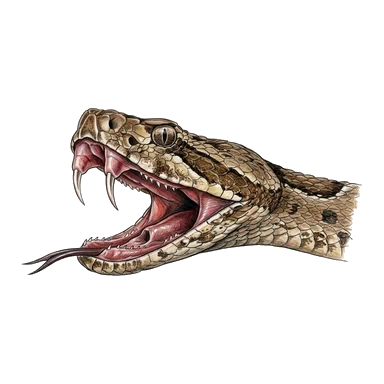 Mordeduras
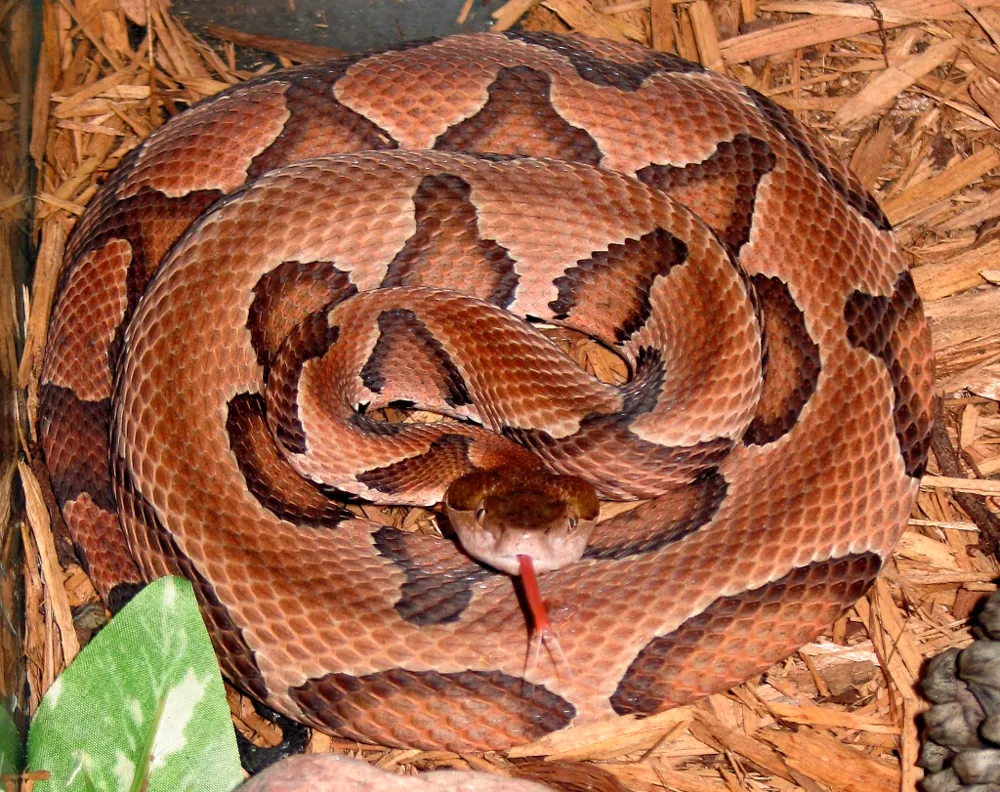
The eastern copperhead is a venomous pit viper that lives across much of the eastern United States. It has hourglass-shaped bands on a tan or reddish-brown body, which help it hide in leaves and clay. It is common, so people sometimes meet it without realising, and it makes up half of the treated snake bites in the United States.1
 Cómo reconocerlo
- Dark brown, hourglass-shaped crossbands on a light reddish-brown or brown background1
- A heavy, stout body rather than a slender one1
- A broad head that is distinct from the neck1
- Young have green or yellow tail tips, which darken to brown or black within a year1
- Adults are typically 50 to 95 cm long, including the tail1
Se confunde a menudo con: The snout slopes down and back, so it looks less blunt than the snout of the cottonmouth. The head also extends further forward than the mouth.1
Poder del veneno
El veneno sale por sus colmillos o dientes cuando muerde.
¿Qué peligro tiene para las personas?
Peligro para las personas: GraveUna mordedura necesita médico. Las muertes son muy raras.Copperhead bites account for half of the treated snake bites in the United States. Bites usually happen when people unknowingly step on or near the snake. It is generally nonaggressive and will strike only if threatened as a last resort.1
¿Qué hace cuando se asusta?
It often freezes instead of fleeing, relying on its camouflage, and may vibrate its tail when closely approached.1
 Si muerde
- Mantén a la persona quieta y tranquila, la extremidad mordida a la altura del corazón, quítale anillos y cosas apretadas y llévala rápido a un hospital.
Llama siempre primero a tu número de emergencias (112, 000, 911). Esto son pautas generales de primeros auxilios, no consejo médico. Primeros auxilios básicos
 Mantente a salvo
- Nunca toques, atrapes ni molestes a un animal salvaje, aunque sea pequeño y aunque parezca dormido o muerto.
- Déjale espacio. Si te encuentras uno, mantén la calma, retrocede despacio y deja que siga su camino.
- Si te muerde: mantén la calma, no te muevas, llama a tu número de emergencias (112, 000, 911) o ve rápido a un hospital. Recuerda cómo era, una foto ayuda.
No va a por ti. Usa su veneno para cazar o defenderse, y prefiere mil veces esconderse. Más sobre cómo protegerte
¿En qué parte del mundo?
¿Qué tamaño tiene?
¿Cuánto mide?
¿Cuánto pesa?
 mide como 2 gatos domésticos de la nariz a la cola
 mide como 5 plátanos puestos en fila
 podría recorrer 100 metros en 100 segundos (el humano más rápido necesita 9,6)
¿Qué tamaño tiene Eastern copperhead comparado contigo?
Solo cálculos en tu navegador. No se guarda ni se envía nada a ningún sitio.
¿Qué velocidad alcanza?


Datos
Its tail can vibrate more than 40 times per second, faster than almost any non-rattlesnake snake.1
Juveniles wave a brightly coloured tail to attract frogs and perhaps lizards, a behaviour called caudal luring.1
Its camouflage is so good that it can be almost impossible to see on dead leaves or red clay.1
In Texas, copperheads have been found in bushes, vines and trees up to 12 metres above the ground, seeking newly emerged cicadas.1
Its venom has potential medicinal value to humans.1
Historically, kingsnakes were major predators of copperheads, and recent copperhead numbers have risen where kingsnake populations have declined.1
Cazamitos
Mito: Copperheads are aggressive snakes that chase people and go looking for trouble.
Verdad: They are generally nonaggressive. They usually freeze or flee, and they strike only if threatened as a last resort. Most bites happen when people step on or near them without noticing.1
Para expertos en veneno
- Nombre científico
- Agkistrodon contortrix
- Grupo
- Víboras de foseta
- Familia
- Viperidae2
- Orden
- Squamata
- Continentes
- Norteamérica
- Crías
- Newborn copperheads are born with green or yellow tail tips, which darken to brown or black within one year.1
- Cómo le va en la naturaleza
- Least Concern (IUCN Red List, v3.1, 2001); population trend stable when assessed in 20071
- Peligro para las personas
- 3 / 5: Grave3
De dónde salen los datos
- Eastern copperhead (Wikipedia (CC BY-SA 4.0))
- Agkistrodon contortrix (iNaturalist): nombres y clasificación.
- Venom Wiki: el nivel de peligro, el tamaño típico y la velocidad estimada son nuestros. Mira cómo los calculamos: Cómo valoramos el peligro.
Cada dato de esta página tiene un número que lleva a su fuente. Si nos hemos equivocado en algo, perdón, somos fans de los animales, no una revista científica. Escríbenos a [email protected] y lo arreglamos.
 ¡El escorpión tiene hambre! Venom Wiki es un proyecto de una sola persona: gratis, sin anuncios y sin rastreadores. Una pequeña propina ayuda a mantenerlo en línea.Alimenta al escorpión
Más del mismo grupo: Víboras de foseta
 Terciopelo
 Eyelash viper
 Cottonmouth
 Cantil
 Central American bushmaster
 Martinique lancehead
También vive en: Norteamérica
 Eastern coral snakeSerpientes coralPuede matar
 Eastern diamondback rattlesnakeSerpientes de cascabelPuede matar
 Timber rattlesnakeSerpientes de cascabelPuede matar
 Western diamondback rattlesnakeSerpientes de cascabelPuede matar
 Arizona bark scorpionEscorpionesNecesita médico
 Brown recluseArañasNecesita médico