
 África
 Asia
Asia Europa
 Sudamérica
 Australia y Oceanía
 Antártida
 Océano Pacífico
 Océano Atlántico
 Océano Índico
 Océano Ártico
 Mar Mediterráneo
 Mar Rojo
 Mar Caribe
 Mar del Coral
 Mar de China Meridional
 Mar de Filipinas
 Mar de Andamán
 Mar del Norte
 Mar de Timor y de Arafura
 Golfo de Bengala
 Golfo de California
Hundred-pace viper
 Mordeduras
The hundred-pace viper is a pit viper that lives in the mountains and hills of southern China, Taiwan and northern Vietnam. It is venomous, and its bite can be dangerous, so it is important to know what it looks like. Its name comes from a well-known but exaggerated local belief about how far a bite victim can walk.1



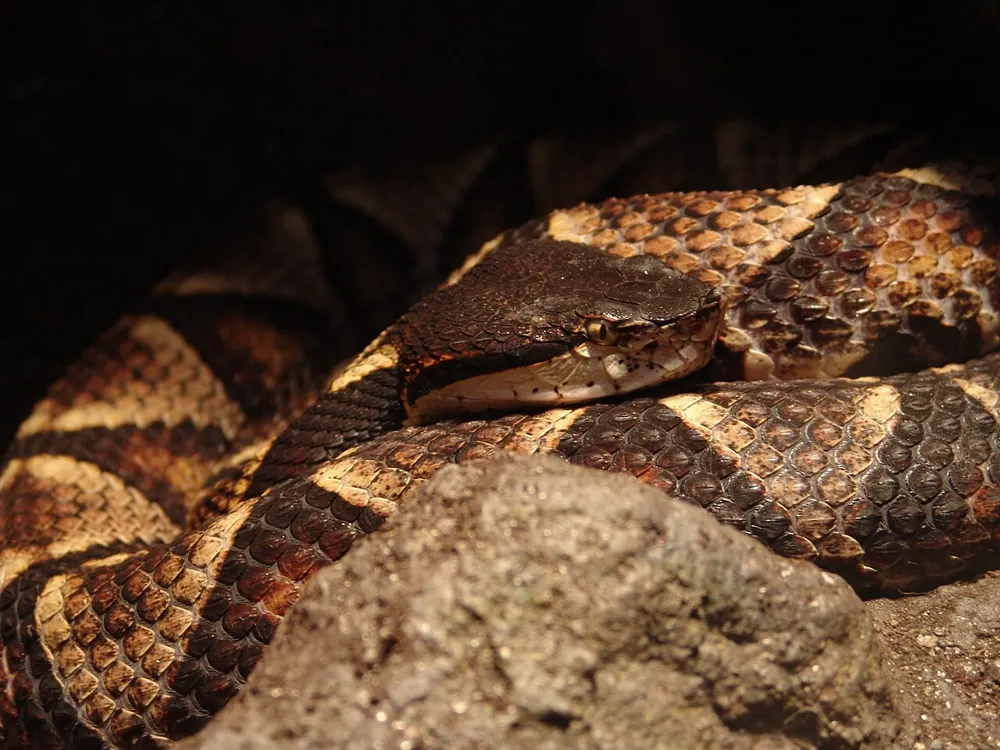
 Cómo reconocerlo
- Light brown or greyish brown, with a series of dark brown triangles along each side1
- About 20 light brown, squarish blotches run along the back1
- Top of the head and upper sides are black, with a black streak from the eye to the corner of the mouth1
- Large, triangular head with an upturned snout, and a very stout body1
- Young snakes are much lighter than adults but have the same pattern1
Poder del veneno
El veneno sale por sus colmillos o dientes cuando muerde.
¿Qué hace su veneno?
Its venom is a potent hemotoxin, which damages blood and tissue and is strongly haemorrhagic, meaning it causes bleeding. Bite symptoms include severe pain and bleeding that may begin almost immediately, followed by swelling, blistering, tissue death (necrosis) and ulceration. Heart palpitations may come on suddenly and relatively soon after the bite.1
¿Qué peligro tiene para las personas?
Peligro para las personas: Muy peligrosoPuede matar a una persona que no recibe tratamiento.The species is considered dangerous, and deaths are not unusual. Its large, hinged fangs can deliver large amounts of venom.1
 Buena noticia: los médicos tienen un medicamento (antídoto) o un tratamiento para esto.1
 Si muerde
- Victims should be treated according to the seriousness of the bite. Cutting off or burning a bitten finger or limb is harmful and can cause further complications. An antivenom is produced in Taiwan.1
- Mantén a la persona quieta y tranquila, la extremidad mordida a la altura del corazón, quítale anillos y cosas apretadas y llévala rápido a un hospital.
Llama siempre primero a tu número de emergencias (112, 000, 911). Esto son pautas generales de primeros auxilios, no consejo médico. Primeros auxilios básicos
 Mantente a salvo
- Nunca toques, atrapes ni molestes a un animal salvaje, aunque sea pequeño y aunque parezca dormido o muerto.
- Déjale espacio. Si te encuentras uno, mantén la calma, retrocede despacio y deja que siga su camino.
- Si te muerde: mantén la calma, no te muevas, llama a tu número de emergencias (112, 000, 911) o ve rápido a un hospital. Recuerda cómo era, una foto ayuda.
No va a por ti. Usa su veneno para cazar o defenderse, y prefiere mil veces esconderse. Más sobre cómo protegerte
¿En qué parte del mundo?
¿Qué tamaño tiene?
¿Cuánto mide?
 mide como 3 gatos domésticos de la nariz a la cola
 mide como 9 plátanos puestos en fila
 podría recorrer 100 metros en 95 segundos (el humano más rápido necesita 9,6)
¿Qué tamaño tiene Hundred-pace viper comparado contigo?
Solo cálculos en tu navegador. No se guarda ni se envía nada a ningún sitio.
¿Qué velocidad alcanza?


Datos
Its popular name, hundred-pacer, is said to come from a belief that a bitten victim can walk only 100 steps before dying.1
A protein from its venom, called ACTX-6, has been shown to cause cell death in isolated cancer cells.1
Its venom is widely used in research. In mice, it attacks the kidneys and the mice die.1
It is one of the few pit vipers that lays eggs. It can keep eggs inside during early incubation, which shortens the time they need to develop after being laid.1
The venom has been used in traditional Chinese medicine for centuries to make antivenin for treating snakebites.1
For the Paiwan people of Taiwan, the viper is the parent of their hero Aljis, and the viper symbol is used on their homes to show power.1
Cazamitos
Mito: A person bitten by a hundred-pace viper can only walk 100 steps before dying.
Verdad: This belief is an exaggeration. The species is still dangerous, and deaths are not unusual. Believing the myth has led people to amputate or burn bitten fingers or limbs, which causes further harm.1
De dónde salen los datos
- Deinagkistrodon (Wikipedia (CC BY-SA 4.0))
- Deinagkistrodon acutus (iNaturalist): nombres y clasificación.
- Venom Wiki: el nivel de peligro, el tamaño típico y la velocidad estimada son nuestros. Mira cómo los calculamos: Cómo valoramos el peligro.
Cada dato de esta página tiene un número que lleva a su fuente. Si nos hemos equivocado en algo, perdón, somos fans de los animales, no una revista científica. Escríbenos a [email protected] y lo arreglamos.
 ¡El escorpión tiene hambre! Venom Wiki es un proyecto de una sola persona: gratis, sin anuncios y sin rastreadores. Una pequeña propina ayuda a mantenerlo en línea.Alimenta al escorpión
 Brown spotted pit viper
 Habu
Habu Hump-nosed viper
 Malayan pit viper
 Mamushi
 Mangshan pit viper
 Escorpión amarillo de Palestina
 Cobra india
 Víbora de escamas aserradas india
 Cobra real
 Víbora bufadora
 Víbora de Russell