
 África
 Asia
Asia Europa
 Sudamérica
 Australia y Oceanía
 Antártida
 Océano Pacífico
 Océano Atlántico
 Océano Índico
 Océano Ártico
 Mar Mediterráneo
 Mar Rojo
 Mar Caribe
 Mar del Coral
 Mar de China Meridional
 Mar de Filipinas
 Mar de Andamán
 Mar del Norte
 Mar de Timor y de Arafura
 Golfo de Bengala
 Golfo de California
Northern short-tailed shrew
 Mordeduras
The northern short-tailed shrew is a small, very active mammal that lives in eastern and central North America. It is one of the few venomous mammals, and it uses venom in its saliva to paralyse the animals it hunts. It is also a voracious eater that can eat up to three times its own weight in food each day.1



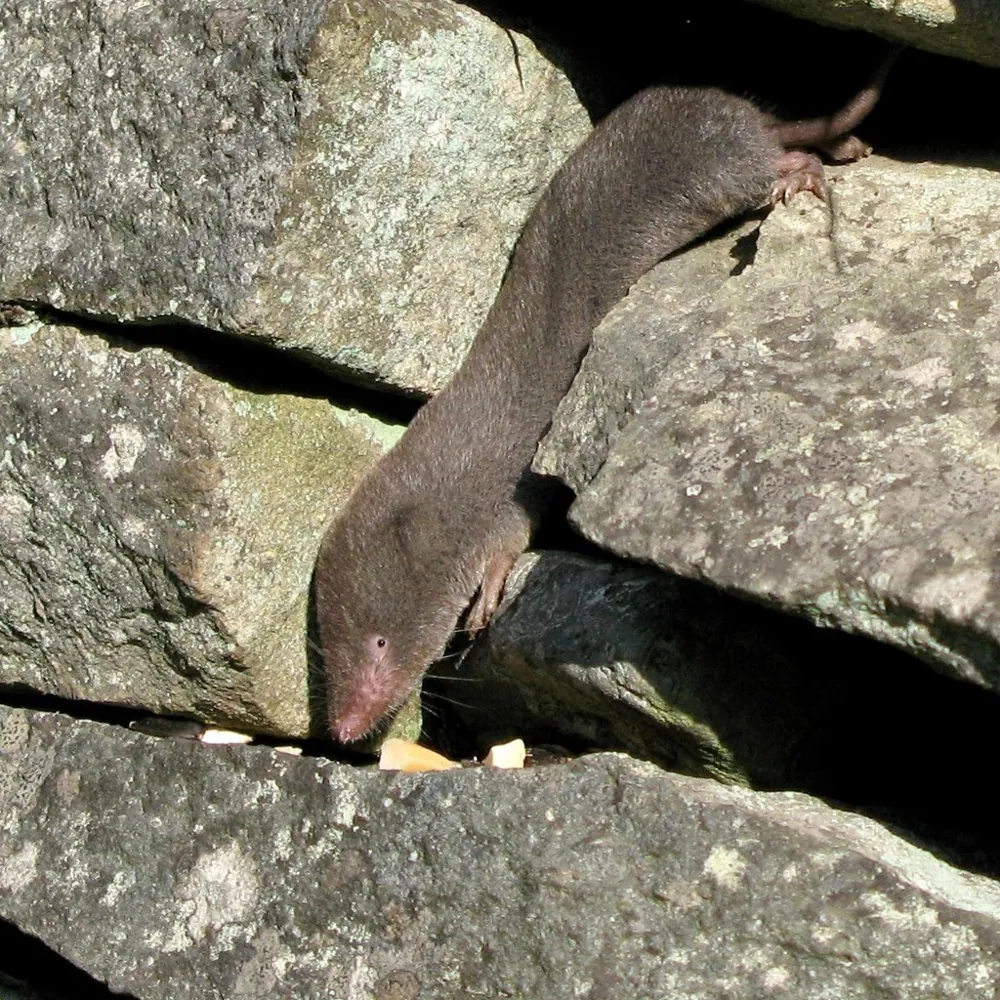
 Cómo reconocerlo
Poder del veneno
El veneno sale por sus colmillos o dientes cuando muerde.
¿Qué hace su veneno?
Its saliva contains a kallikrein-like protease, a toxin that paralyses and subdues prey. The toxin is strong enough to kill small animals, including some somewhat larger than the shrew itself. In people, it causes painful bites when they handle the shrew.1
¿Qué peligro tiene para las personas?
Peligro para las personas: LeveComo una picadura de abeja o menos. Prácticamente inofensivo para las personas.Its bites are painful to people who try to handle it.1
¿Qué hace cuando se asusta?
Its scent glands produce a musky odour that deters mammalian carnivores.1
 Si muerde
- Lava bien la herida y busca ayuda médica.
Llama siempre primero a tu número de emergencias (112, 000, 911). Esto son pautas generales de primeros auxilios, no consejo médico. Primeros auxilios básicos
 Mantente a salvo
- Nunca toques, atrapes ni molestes a un animal salvaje, aunque sea pequeño y aunque parezca dormido o muerto.
- Déjale espacio. Si te encuentras uno, mantén la calma, retrocede despacio y deja que siga su camino.
- Si te muerde: mantén la calma, no te muevas, llama a tu número de emergencias (112, 000, 911) o ve rápido a un hospital. Recuerda cómo era, una foto ayuda.
No va a por ti. Usa su veneno para cazar o defenderse, y prefiere mil veces esconderse. Más sobre cómo protegerte
¿En qué parte del mundo?
¿Qué tamaño tiene?
¿Cuánto mide?
¿Cuánto pesa?

 mide como 4 piezas de construcción de juguete en fila
 podría recorrer 100 metros en 90 segundos (el humano más rápido necesita 9,6)
¿Qué tamaño tiene Northern short-tailed shrew comparado contigo?
Solo cálculos en tu navegador. No se guarda ni se envía nada a ningún sitio.
¿Qué velocidad alcanza?


Datos
It is one of the few venomous mammals, and its saliva is used to subdue prey.1
It can eat up to three times its own weight in food each day.1
It is thought to have a poor sense of smell and very limited vision, so it uses echolocation and a fine sense of touch instead.1
Its winter food intake is 43% higher than in summer, because it must work harder to keep its body warm.1
Its nests can be up to 20 cm across and lined with leaves or vole fur, and its waste is kept in a separate latrine area.1
Para expertos en veneno
- Nombre científico
- Blarina brevicauda
- Grupo
- Mamíferos venenosos
- Familia
- Soricidae2
- Orden
- Eulipotyphla
- Continentes
- Norteamérica
- Crías
- Females usually have two litters a season, each with six to eight young. The young are born hairless and blind, weighing less than a gram.1
- Cómo le va en la naturaleza
- Least Concern1
- Peligro para las personas
- 1 / 5: Leve3
De dónde salen los datos
- Northern short-tailed shrew (Wikipedia (CC BY-SA 4.0))
- Blarina brevicauda (iNaturalist): nombres y clasificación.
- Venom Wiki: el nivel de peligro, el tamaño típico y la velocidad estimada son nuestros. Mira cómo los calculamos: Cómo valoramos el peligro.
Cada dato de esta página tiene un número que lleva a su fuente. Si nos hemos equivocado en algo, perdón, somos fans de los animales, no una revista científica. Escríbenos a [email protected] y lo arreglamos.
 ¡El escorpión tiene hambre! Venom Wiki es un proyecto de una sola persona: gratis, sin anuncios y sin rastreadores. Una pequeña propina ayuda a mantenerlo en línea.Alimenta al escorpión
 Common vampire bat
 Cuban solenodon
 Hispaniolan solenodon
 Hairy-legged vampire bat
 White-winged vampire bat
 Platypus
 Terciopelo
 Eastern coral snake
 Eastern diamondback rattlesnake
 Eyelash viper
 Timber rattlesnake
 Western diamondback rattlesnake