
 África
 Asia
Asia Europa
 Sudamérica
 Australia y Oceanía
 Antártida
 Océano Pacífico
 Océano Atlántico
 Océano Índico
 Océano Ártico
 Mar Mediterráneo
 Mar Rojo
 Mar Caribe
 Mar del Coral
 Mar de China Meridional
 Mar de Filipinas
 Mar de Andamán
 Mar del Norte
 Mar de Timor y de Arafura
 Golfo de Bengala
 Golfo de California
Patagonian bumblebee
 Picaduras
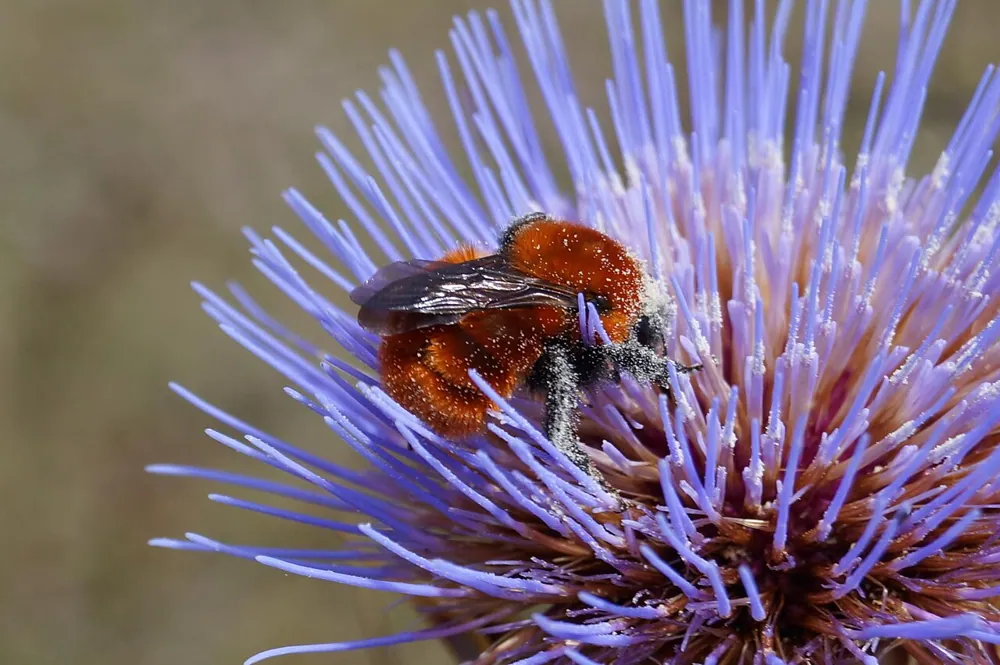
The Patagonian bumblebee is a large, furry bee that lives naturally only in the temperate forests of southern South America. Its queens are among the biggest bumblebees in the world. Its numbers have fallen since other bumblebee species were brought into the region to pollinate crops.1



 Cómo reconocerlo
- Mostly red-orange in colour, with a completely red-orange thorax.1
- The abdomen is a lighter orange, fading slightly towards the end, and has a rounded tip.1
- The head, wings and legs are distinctly black.1
- Long bristles cover most of the body, giving it a very furry look.1
- Queens can reach up to 4 cm from head to tail and weigh around 0.5 to 1.5 grams.1
Se confunde a menudo con: The syrphid fly Aneriophora aureorufa looks very similar to this bumblebee. The two have similar colour and size and can be hard to tell apart in the wild because of their similar flight.1
Poder del veneno
El veneno sale por un aguijón.
¿Qué peligro tiene para las personas?
Peligro para las personas: LeveComo una picadura de abeja o menos. Prácticamente inofensivo para las personas. Si pica
- Raspa el aguijón de abeja y enfría la zona.
- Si a la persona le cuesta respirar, se le hincha la cara o la garganta, o se marea, es una emergencia alérgica: llama a tu número de emergencias y usa su autoinyector de adrenalina si tiene uno.
Llama siempre primero a tu número de emergencias (112, 000, 911). Esto son pautas generales de primeros auxilios, no consejo médico. Primeros auxilios básicos
 Mantente a salvo
- Nunca toques, atrapes ni molestes a un animal salvaje, aunque sea pequeño y aunque parezca dormido o muerto.
- Déjale espacio. Si te encuentras uno, mantén la calma, retrocede despacio y deja que siga su camino.
- Si te pica: mantén la calma, no te muevas, llama a tu número de emergencias (112, 000, 911) o ve rápido a un hospital. Recuerda cómo era, una foto ayuda.
No va a por ti. Usa su veneno para cazar o defenderse, y prefiere mil veces esconderse. Más sobre cómo protegerte
¿En qué parte del mundo?
¿Qué tamaño tiene?
¿Cuánto mide?
¿Cuánto pesa?
 más o menos lo que mide un clip
 tan ligero que no lo notarías en la mano
 podría cruzar volando un campo de fútbol entero en 10 segundos
¿Qué tamaño tiene Patagonian bumblebee comparado contigo?
Solo cálculos en tu navegador. No se guarda ni se envía nada a ningún sitio.
¿Qué velocidad alcanza?


Datos
It is one of the largest bee species in the world, and its furry look has earned it the nickname 'flying mouse'.1
It often visits red flowers, which most bees avoid. It can detect red through a specific receptor system.1
A syrphid fly in Patagonia, Aneriophora aureorufa, has evolved to look and fly much like this bumblebee, which may help it avoid predators.1
In the Maulino forest of central Chile, individuals living in fragmented forest have longer wings relative to their body size, because they need to fly longer distances between patches.1
Its populations began to decline after non-native bumblebees were introduced into Chile to pollinate crops.1
It is the only native bumblebee species in southern South America.1
Para expertos en veneno
- Nombre científico
- Bombus dahlbomii
- Grupo
- Abejas, avispas y avispones
- Familia
- Apidae2
- Orden
- Hymenoptera
- Continentes
- Sudamérica
- Crías
- Queens lay their first eggs in a structure made of pollen and wax inside an underground cavity. The first brood becomes workers after a couple of months, and nests can hold more than 100 workers.1
- Peligro para las personas
- 1 / 5: Leve3
De dónde salen los datos
- Bombus dahlbomii (Wikipedia (CC BY-SA 4.0))
- Bombus dahlbomii (iNaturalist): nombres y clasificación.
- Venom Wiki: el nivel de peligro, el tamaño típico y la velocidad estimada son nuestros. Mira cómo los calculamos: Cómo valoramos el peligro.
Cada dato de esta página tiene un número que lleva a su fuente. Si nos hemos equivocado en algo, perdón, somos fans de los animales, no una revista científica. Escríbenos a [email protected] y lo arreglamos.
 ¡El escorpión tiene hambre! Venom Wiki es un proyecto de una sola persona: gratis, sin anuncios y sin rastreadores. Una pequeña propina ayuda a mantenerlo en línea.Alimenta al escorpión
Más del mismo grupo: Abejas, avispas y avispones
 Tarantula hawkAbejas, avispas y avisponesSolo duele
 Executioner waspAbejas, avispas y avisponesNecesita médico
 Warrior waspAbejas, avispas y avisponesNecesita médico
 Armadillo waspAbejas, avispas y avisponesNecesita médico
 Giant tarantula hawkAbejas, avispas y avisponesSolo duele
 Paulista waspAbejas, avispas y avisponesSolo duele
 Rana dardo dorada
 Terciopelo
 Brazilian wandering spider
 Eyelash viper
 Golden lancehead
 South American bushmaster