
 África
 Asia
Asia Europa
 Sudamérica
 Australia y Oceanía
 Antártida
 Océano Pacífico
 Océano Atlántico
 Océano Índico
 Océano Ártico
 Mar Mediterráneo
 Mar Rojo
 Mar Caribe
 Mar del Coral
 Mar de China Meridional
 Mar de Filipinas
 Mar de Andamán
 Mar del Norte
 Mar de Timor y de Arafura
 Golfo de Bengala
 Golfo de California
Pumpkin toadlet
 Veneno en la piel
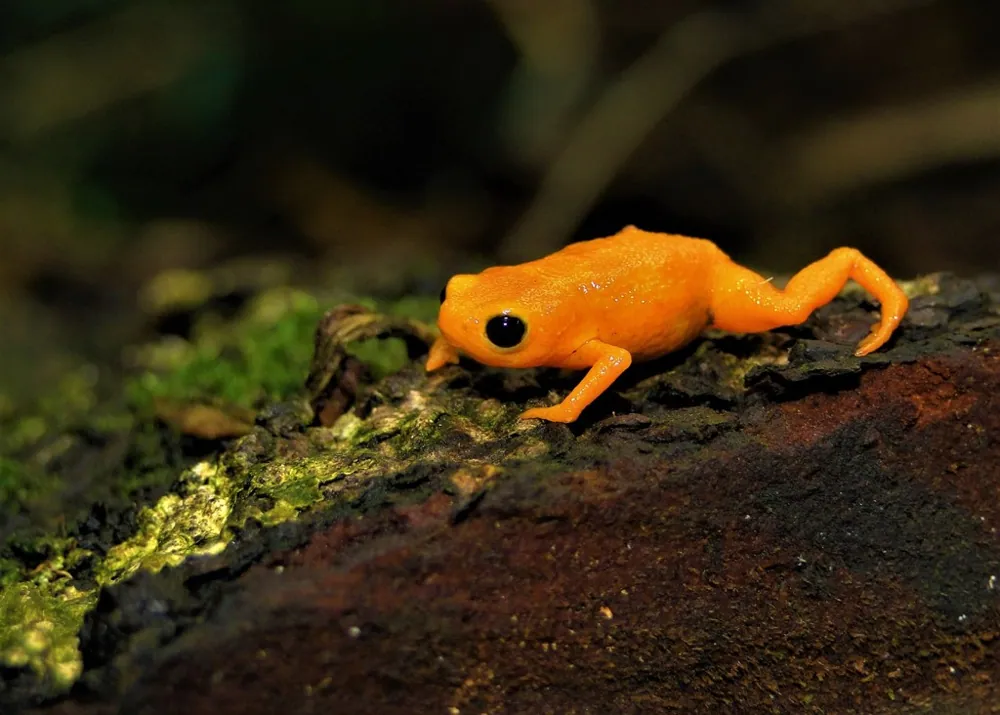
The pumpkin toadlet is a tiny, brightly coloured frog that lives in the leaf litter of the Atlantic rainforests of southeastern Brazil. Adults are bright yellow-orange, a warning sign that their skin and body carry a strong toxin. Scientists have found that the head and back of this frog glow under ultraviolet light.1
 Cómo reconocerlo
- Adults are bright yellow-orange.1
- Newly hatched young are brown and well camouflaged.1
- It is very small, with adults measuring 12.5 to 19.7 mm from snout to vent.1
- Females tend to be larger than males.1
Se confunde a menudo con: It is closely related to the red pumpkin toadlet (B. pitanga), which also glows under ultraviolet light and shares its inability to hear its own call.1
Poder tóxico
Su piel es venenosa. Es peligroso tocarlo, lamerlo o comerlo.
¿Qué hace su toxina?
This frog is poisonous rather than venomous, so it does not inject venom. Its main toxin is 11-oxotetrodotoxin, which is extremely rare in animals, even marine ones, and is four to five times more potent than tetrodotoxin. The toxins are found in the skin and ovaries but are mostly concentrated in the liver.1
¿Qué peligro tiene para las personas?
Peligro para las personas: DolorosoPuede doler de verdad, pero casi nunca es grave.¿Qué hace cuando se asusta?
Its bright yellow-orange colour is a warning display (aposematism) that tells predators it is toxic.1
 Si alguien lo tocó o se lo comió
- Si alguien tocó uno: lávale bien las manos y que no se toque los ojos ni la boca. Si un niño o una mascota lo lamió o se lo comió: llama al centro de toxicología o a emergencias.
Llama siempre primero a tu número de emergencias (112, 000, 911). Esto son pautas generales de primeros auxilios, no consejo médico. Primeros auxilios básicos
 Mantente a salvo
- Nunca toques, atrapes ni molestes a un animal salvaje, aunque sea pequeño y aunque parezca dormido o muerto.
- Déjale espacio. Si te encuentras uno, mantén la calma, retrocede despacio y deja que siga su camino.
- Si lo tocaste o te lo comiste: no te frotes los ojos ni la boca, lávate las manos y busca ayuda médica.
No va a por ti. Su veneno solo está ahí para que nadie se lo coma. Más sobre cómo protegerte
¿En qué parte del mundo?
¿Qué tamaño tiene?
¿Cuánto mide?
 más corto que tu dedo meñique
 podría recorrer 100 metros en 180 segundos (el humano más rápido necesita 9,6)
¿Qué tamaño tiene Pumpkin toadlet comparado contigo?
Solo cálculos en tu navegador. No se guarda ni se envía nada a ningún sitio.
¿Qué velocidad alcanza?


Datos
In 2019, scientists found that the head and back of this frog glow under ultraviolet light because of fluorescent skeletons. Young frogs that have gained adult colours still do not glow.1
Adults cannot hear the frequency of their own calls because their ears are underdeveloped. They communicate with movements such as inflating the vocal sac, gaping the mouth and waving their arms.1
Its main toxin, 11-oxotetrodotoxin, is extremely rare in animals, even in marine species.1
Its young hatch directly into tiny toadlets, skipping the tadpole stage.1
It is among the largest frogs in its genus, Brachycephalus.1
Cazamitos
Mito: Its glow under ultraviolet light is a warning signal to predators.
Verdad: Studies suggest this is unlikely. Predators attack the frogs at the same rate whether or not they glow.1
Para expertos en veneno
- Nombre científico
- Brachycephalus ephippium
- Grupo
- Ranas venenosas, sapos y tritones
- Familia
- Brachycephalidae2
- Orden
- Anura
- Continentes
- Sudamérica
- Crías
- It breeds by direct development. The female lays a few eggs on land, which hatch into young toadlets with no tadpole stage.1
- Cómo le va en la naturaleza
- Not considered threatened1
- Peligro para las personas
- 2 / 5: Doloroso3
De dónde salen los datos
- Pumpkin toadlet (Wikipedia (CC BY-SA 4.0))
- Brachycephalus ephippium (iNaturalist): nombres y clasificación.
- Venom Wiki: el nivel de peligro, el tamaño típico y la velocidad estimada son nuestros. Mira cómo los calculamos: Cómo valoramos el peligro.
Cada dato de esta página tiene un número que lleva a su fuente. Si nos hemos equivocado en algo, perdón, somos fans de los animales, no una revista científica. Escríbenos a [email protected] y lo arreglamos.
 ¡El escorpión tiene hambre! Venom Wiki es un proyecto de una sola persona: gratis, sin anuncios y sin rastreadores. Una pequeña propina ayuda a mantenerlo en línea.Alimenta al escorpión
Más del mismo grupo: Ranas venenosas, sapos y tritones
 Golden poison frogRanas venenosas, sapos y tritonesMortalNo tocar
 Cane toadRanas venenosas, sapos y tritonesNecesita médicoNo tocar
 Dyeing poison dart frogRanas venenosas, sapos y tritonesSolo dueleNo tocar
 Black-legged poison frogRanas venenosas, sapos y tritonesPuede matarNo tocar
 Bruno's casque-headed frogRanas venenosas, sapos y tritonesNecesita médicoNo tocar
 Harlequin poison frogRanas venenosas, sapos y tritonesNecesita médicoNo tocar
 Terciopelo
 Brazilian wandering spider
 Eyelash viper
 Golden lancehead
 South American bushmaster
 Peruvian giant centipede