
 África
 Asia
Asia Europa
 Sudamérica
 Australia y Oceanía
 Antártida
 Océano Pacífico
 Océano Atlántico
 Océano Índico
 Océano Ártico
 Mar Mediterráneo
 Mar Rojo
 Mar Caribe
 Mar del Coral
 Mar de China Meridional
 Mar de Filipinas
 Mar de Andamán
 Mar del Norte
 Mar de Timor y de Arafura
 Golfo de Bengala
 Golfo de California
Queensland whistling tarantula
 Mordeduras
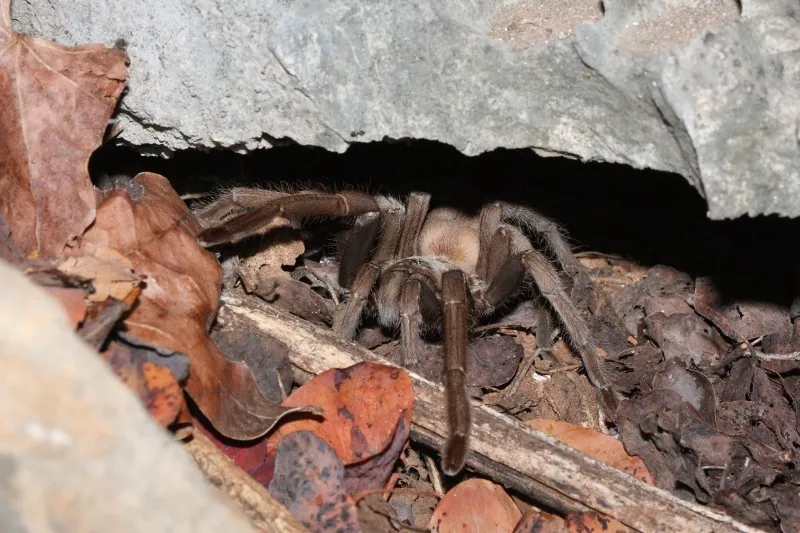
The Queensland whistling tarantula is a large, shy spider from the east coast of Queensland in Australia. It is the largest spider in Australia, and it makes a hissing sound when it feels threatened. Its bite is venomous, but it is not fatal to people.1


 Cómo reconocerlo
Poder del veneno
El veneno sale por sus colmillos o dientes cuando muerde.
¿Qué hace su veneno?
It has venomous fangs up to 1 cm long. A bite can cause up to six hours of vomiting in people. In a 2010 case, a scientist bitten on a finger had intense pain, and the finger and hand became swollen and very sensitive within one hour. The swelling and pain were limited to the hand and lower arm, and eased after 26 hours. The venom can kill a dog or cat within thirty minutes.1
¿Qué peligro tiene para las personas?
Peligro para las personas: DolorosoPuede doler de verdad, pero casi nunca es grave.The bite is not fatal to humans. It can cause severe pain, swelling and up to six hours of vomiting. The venom can cause death in dogs and cats within thirty minutes.1
¿Qué hace cuando se asusta?
When provoked, it makes a hissing noise by rubbing a patch of hairs (setae) on its chelicerae, which are its mouthparts.1
 Si muerde
- Lava la mordedura y enfríala. Busca ayuda médica si el dolor es fuerte o la persona se encuentra mal.
- En Australia, trata cualquier mordedura de araña negra grande como una de araña de tela en embudo: Inmovilización con presión: envuelve con una venda elástica firme la mordedura y luego toda la extremidad, ponle una férula y mantén a la persona totalmente quieta hasta que llegue la ayuda.
Llama siempre primero a tu número de emergencias (112, 000, 911). Esto son pautas generales de primeros auxilios, no consejo médico. Primeros auxilios básicos
 Mantente a salvo
- Nunca toques, atrapes ni molestes a un animal salvaje, aunque sea pequeño y aunque parezca dormido o muerto.
- Déjale espacio. Si te encuentras uno, mantén la calma, retrocede despacio y deja que siga su camino.
- Si te muerde: mantén la calma, no te muevas, llama a tu número de emergencias (112, 000, 911) o ve rápido a un hospital. Recuerda cómo era, una foto ayuda.
No va a por ti. Usa su veneno para cazar o defenderse, y prefiere mil veces esconderse. Más sobre cómo protegerte
¿En qué parte del mundo?
¿Qué tamaño tiene?
¿Cuánto mide?
 mide como 7 piezas de construcción de juguete en fila
 podría recorrer 100 metros en 170 segundos (el humano más rápido necesita 9,6)
¿Qué tamaño tiene Queensland whistling tarantula comparado contigo?
Solo cálculos en tu navegador. No se guarda ni se envía nada a ningún sitio.
¿Qué velocidad alcanza?


Datos
It is often called the barking spider because of the hissing sound it makes when approached.1
It is the largest spider in Australia, and its body can be up to 9 cm long.1
Adults dig silk-lined burrows up to 2 metres long, with a side tunnel leading up to an air pocket chamber that can last a few days.1
Females can live up to thirty years, while males live up to eight years.1
Many of these spiders are taken from the wild, often illegally, which threatens the wild population.1
It is a fast-growing spider and is widely sought after as a pet.1
Cazamitos
Mito: It is a bird-eating spider.
Verdad: This nocturnal ground dweller is not likely to ever encounter or feed on birds. It mainly eats insects, other spiders, and small animals such as geckos, skinks and frogs.1
De dónde salen los datos
- Selenocosmia crassipes (Wikipedia (CC BY-SA 4.0))
- Selenocosmia crassipes (iNaturalist): nombres y clasificación.
- Venom Wiki: el nivel de peligro, el tamaño típico y la velocidad estimada son nuestros. Mira cómo los calculamos: Cómo valoramos el peligro.
Cada dato de esta página tiene un número que lleva a su fuente. Si nos hemos equivocado en algo, perdón, somos fans de los animales, no una revista científica. Escríbenos a [email protected] y lo arreglamos.
 ¡El escorpión tiene hambre! Venom Wiki es un proyecto de una sola persona: gratis, sin anuncios y sin rastreadores. Una pequeña propina ayuda a mantenerlo en línea.Alimenta al escorpión
Más del mismo grupo: Tarántulas y arañas de tela en embudo
 Araña de tela en embudo de SídneyTarántulas y arañas de tela en embudoMortal
 Northern tree-dwelling funnel-web spiderTarántulas y arañas de tela en embudoMortal
 Red-headed mouse spiderTarántulas y arañas de tela en embudoNecesita médico
 Blue Mountains funnel-web spiderTarántulas y arañas de tela en embudoPuede matar
 Darling Downs funnel-web spiderTarántulas y arañas de tela en embudoPuede matar
 Illawarra funnel-web spiderTarántulas y arañas de tela en embudoPuede matar
 Taipán costero
 Víbora de la muerte común
 Serpiente marrón oriental
 Taipán del interior
 Serpiente tigre
 Redback spider