
 África
 Asia
Asia Europa
 Sudamérica
 Australia y Oceanía
 Antártida
 Océano Pacífico
 Océano Atlántico
 Océano Índico
 Océano Ártico
 Mar Mediterráneo
 Mar Rojo
 Mar Caribe
 Mar del Coral
 Mar de China Meridional
 Mar de Filipinas
 Mar de Andamán
 Mar del Norte
 Mar de Timor y de Arafura
 Golfo de Bengala
 Golfo de California
Southern yellowjacket
 Picaduras
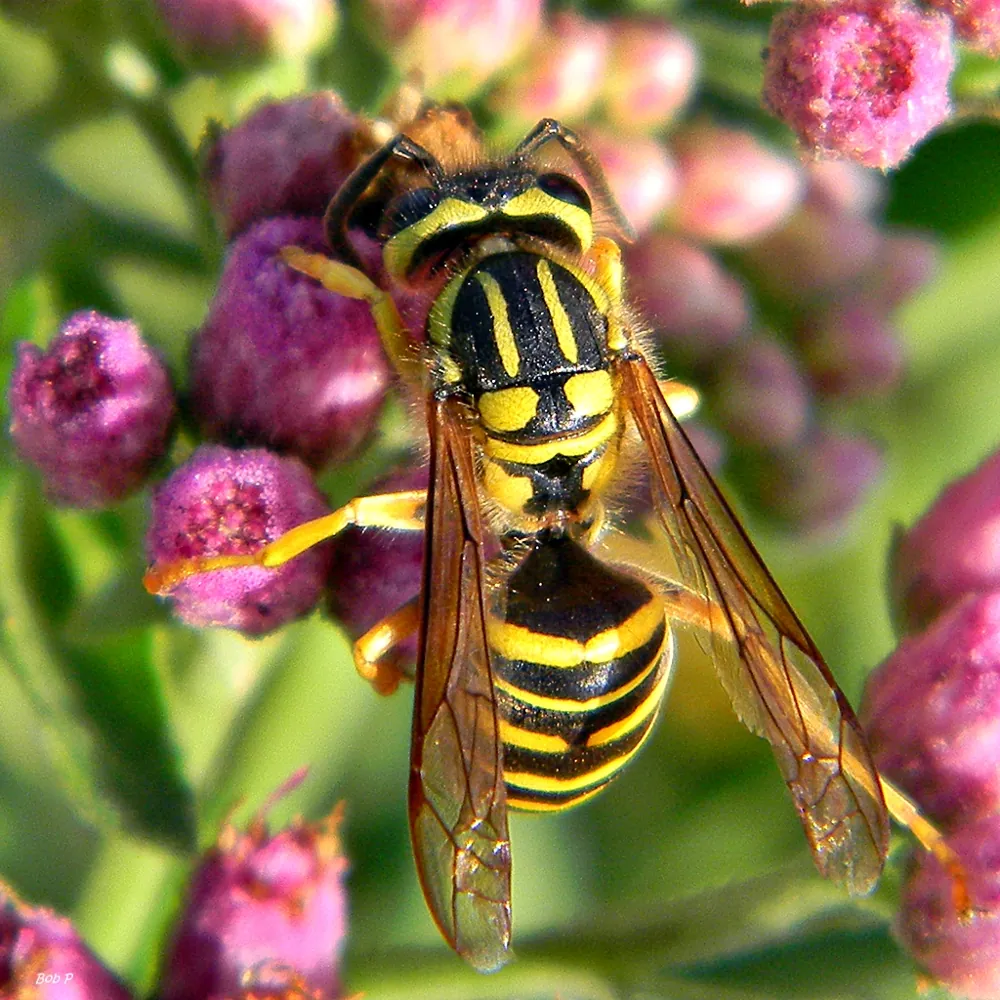
The southern yellowjacket is a social wasp with black and yellow stripes and an orange queen. It lives in eastern North America and further south into Central America. Its nests are often in yards, parks and by roads, so people meet it often, and its stings are painful.1



 Cómo reconocerlo
- Black body with yellow striping over the whole body1
- Clear wings and a hairless body1
- About 1.3 cm long1
- The queen is larger than the males and workers and is more orange in colour1
- Has two stripes on its scuta1
Se confunde a menudo con: Its two stripes on the scuta are shared with V. sulphurea. The queen looks different from the workers and males, so check the colour and size of the wasp you see.1
Poder del veneno
El veneno sale por un aguijón.
¿Qué hace su veneno?
Its stings are venomous, and the venom causes pain. Workers can sting several times in one attack.1
¿Qué peligro tiene para las personas?
Peligro para las personas: DolorosoPuede doler de verdad, pero casi nunca es grave.The species is considered a pest because its nests are close to people and can be large. Close contact with people commonly leads to multiple, painful stings. Disturbing a nest can result in several stings.1
¿Qué hace cuando se asusta?
Workers release alarm pheromones that signal the rest of the colony to attack whatever threatens the nest. Their stings are typically used in defence of the colony.1
 Si pica
- Raspa el aguijón de abeja y enfría la zona.
- Si a la persona le cuesta respirar, se le hincha la cara o la garganta, o se marea, es una emergencia alérgica: llama a tu número de emergencias y usa su autoinyector de adrenalina si tiene uno.
Llama siempre primero a tu número de emergencias (112, 000, 911). Esto son pautas generales de primeros auxilios, no consejo médico. Primeros auxilios básicos
 Mantente a salvo
- Nunca toques, atrapes ni molestes a un animal salvaje, aunque sea pequeño y aunque parezca dormido o muerto.
- Déjale espacio. Si te encuentras uno, mantén la calma, retrocede despacio y deja que siga su camino.
- Si te pica: mantén la calma, no te muevas, llama a tu número de emergencias (112, 000, 911) o ve rápido a un hospital. Recuerda cómo era, una foto ayuda.
No va a por ti. Usa su veneno para cazar o defenderse, y prefiere mil veces esconderse. Más sobre cómo protegerte
¿En qué parte del mundo?
¿Qué tamaño tiene?
¿Cuánto mide?
 tan pequeño que cabe en tu uña
 podría cruzar volando un campo de fútbol entero en 16 segundos
¿Qué tamaño tiene Southern yellowjacket comparado contigo?
Solo cálculos en tu navegador. No se guarda ni se envía nada a ningún sitio.
¿Qué velocidad alcanza?


Datos
Most southern yellowjackets are social parasites: they build their nests around the nests of another species.1
About 85% of colonies start when a queen takes over a small nest of the eastern yellowjacket, V. maculifrons, and only about 15% are founded independently.1
Some nests are very large. One of the biggest reported was in a pine tree and the dirt beneath it, and it had over 50 combs in the trunk alone.1
In Florida and other southern coastal areas, some nests survive the winter and last for several years.1
Workers and queens use pheromones to communicate, with alarm signals for attacks and a different pheromone that attracts males to the queen.1
De dónde salen los datos
- Vespula squamosa (Wikipedia (CC BY-SA 4.0))
- Vespula squamosa (iNaturalist): nombres y clasificación.
- Venom Wiki: el nivel de peligro, el tamaño típico y la velocidad estimada son nuestros. Mira cómo los calculamos: Cómo valoramos el peligro.
Cada dato de esta página tiene un número que lleva a su fuente. Si nos hemos equivocado en algo, perdón, somos fans de los animales, no una revista científica. Escríbenos a [email protected] y lo arreglamos.
 ¡El escorpión tiene hambre! Venom Wiki es un proyecto de una sola persona: gratis, sin anuncios y sin rastreadores. Una pequeña propina ayuda a mantenerlo en línea.Alimenta al escorpión
Más del mismo grupo: Abejas, avispas y avispones
 Tarantula hawkAbejas, avispas y avisponesSolo duele
 Executioner waspAbejas, avispas y avisponesNecesita médico
 Warrior waspAbejas, avispas y avisponesNecesita médico
 Bald-faced hornetAbejas, avispas y avisponesSolo duele
 Cow killer velvet antAbejas, avispas y avisponesSolo duele
 Eastern cicada killerAbejas, avispas y avisponesInofensivo
 Terciopelo
 Eastern coral snake
 Eastern diamondback rattlesnake
 Eyelash viper
 Timber rattlesnake
 Western diamondback rattlesnake
_(7225863346).jpg)