
 África
 Asia
Asia Europa
 Sudamérica
 Australia y Oceanía
 Antártida
 Océano Pacífico
 Océano Atlántico
 Océano Índico
 Océano Ártico
 Mar Mediterráneo
 Mar Rojo
 Mar Caribe
 Mar del Coral
 Mar de China Meridional
 Mar de Filipinas
 Mar de Andamán
 Mar del Norte
 Mar de Timor y de Arafura
 Golfo de Bengala
 Golfo de California
Texas coral snake
 Mordeduras
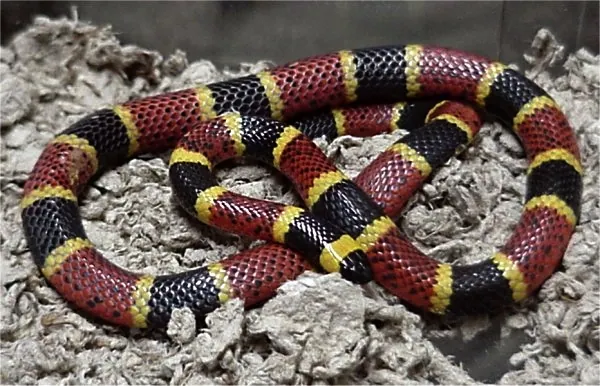
The Texas coral snake is a venomous snake with bright black, yellow and red rings. It lives in the southern and southwestern United States and in parts of northeastern and central Mexico. Its bite can cause paralysis, so it is important to recognise it and keep well away.1



 Cómo reconocerlo
- Black, yellow and red rings, with the rings running onto the belly.1
- Smooth scales, a rounded head and round pupils.1
- Somewhat larger and stouter than the eastern coral snake.1
- Males are typically smaller than females.1
- Shy and secretive, and mostly active at night.1
Se confunde a menudo con: Nonvenomous snakes copy the coral snake's colours as a form of Batesian mimicry. In the United States, the venomous coral snakes can be told apart by red rings touching yellow rings. The common rhyme "red and yellow, kill a fellow" is not always accurate because colours vary, and relying on it is dangerous.1
Poder del veneno
El veneno sale por sus colmillos o dientes cuando muerde.
¿Qué hace su veneno?
The snake has a pair of fixed, grooved fangs at the front of the upper jaw, and venom is injected through them. Its venom contains a neurotoxin, which attacks the nerves, and a myotoxin, which damages muscle. Bite victims may experience paralysis or myolysis (muscle breakdown), which can be potentially lethal.1
¿Qué peligro tiene para las personas?
Peligro para las personas: GraveUna mordedura necesita médico. Las muertes son muy raras.Before antivenom was available, the fatality rate of coral snake bites was estimated at 10%. Deaths were mainly caused by breathing or heart failure from paralysis. A single bite can deliver 10–12 mg of dry venom, about twice the lethal dose for an adult human of 5–7 mg. Many bites deliver no venom at all, known as dry bites.1
 Buena noticia: los médicos tienen un medicamento (antídoto) o un tratamiento para esto.1
¿Qué hace cuando se asusta?
When grabbed suddenly, or sometimes just when touched, it may thrash about, swing around and bite.1
 Si muerde
- Remove any jewellery from a bitten limb, in case of severe swelling. Wrap the bite area moderately tightly in a wide cloth, and move the bitten limb as little as possible. Take the bite victim to the nearest hospital as soon as possible for advanced treatment, such as antivenom.1
- Mantén a la persona quieta y tranquila y llévala rápido a un hospital, aunque la mordedura parezca pequeña: los síntomas pueden empezar horas después.
Llama siempre primero a tu número de emergencias (112, 000, 911). Esto son pautas generales de primeros auxilios, no consejo médico. Primeros auxilios básicos
 Mantente a salvo
- Nunca toques, atrapes ni molestes a un animal salvaje, aunque sea pequeño y aunque parezca dormido o muerto.
- Déjale espacio. Si te encuentras uno, mantén la calma, retrocede despacio y deja que siga su camino.
- Si te muerde: mantén la calma, no te muevas, llama a tu número de emergencias (112, 000, 911) o ve rápido a un hospital. Recuerda cómo era, una foto ayuda.
No va a por ti. Usa su veneno para cazar o defenderse, y prefiere mil veces esconderse. Más sobre cómo protegerte
¿En qué parte del mundo?
¿Qué tamaño tiene?
¿Cuánto mide?
 mide como 2,5 gatos domésticos de la nariz a la cola
 mide como 7 plátanos puestos en fila
 podría recorrer 100 metros en 73 segundos (el humano más rápido necesita 9,6)
¿Qué tamaño tiene Texas coral snake comparado contigo?
Solo cálculos en tu navegador. No se guarda ni se envía nada a ningún sitio.
¿Qué velocidad alcanza?


Datos
A single bite can deliver about twice the lethal dose for an adult human, yet many bites inject no venom at all.1
The Texas coral snake eats other snakes, including venomous ones, and will even eat its own kind.1
Colour variants exist in the wild, including albino, anerythristic, pastel and completely black (melanistic) snakes.1
Cazamitos
Mito: "Red and yellow, kill a fellow. Red on black, friend of Jack" is a reliable way to tell a coral snake from a harmless look-alike.
Verdad: The rhyme is not always accurate because colour patterns vary, and relying on it is dangerous to both people and snakes.1
De dónde salen los datos
- Texas coral snake (Wikipedia (CC BY-SA 4.0))
- Micrurus tener (iNaturalist): nombres y clasificación.
- Venom Wiki: el nivel de peligro, el tamaño típico y la velocidad estimada son nuestros. Mira cómo los calculamos: Cómo valoramos el peligro.
Cada dato de esta página tiene un número que lleva a su fuente. Si nos hemos equivocado en algo, perdón, somos fans de los animales, no una revista científica. Escríbenos a [email protected] y lo arreglamos.
 ¡El escorpión tiene hambre! Venom Wiki es un proyecto de una sola persona: gratis, sin anuncios y sin rastreadores. Una pequeña propina ayuda a mantenerlo en línea.Alimenta al escorpión
Más del mismo grupo: Serpientes coral
 Eastern coral snake
 Central American coral snake
 Sonoran coral snake
 Allen's coral snake
 Brown's coral snake
 Dumeril's coral snake
También vive en: Norteamérica
 TerciopeloVíboras de fosetaMortal
 Eastern diamondback rattlesnakeSerpientes de cascabelPuede matar
 Eyelash viperVíboras de fosetaPuede matar
 Timber rattlesnakeSerpientes de cascabelPuede matar
 Western diamondback rattlesnakeSerpientes de cascabelPuede matar
 Arizona bark scorpionEscorpionesNecesita médico