
 África
 Asia
Asia Europa
 Sudamérica
 Australia y Oceanía
 Antártida
 Océano Pacífico
 Océano Atlántico
 Océano Índico
 Océano Ártico
 Mar Mediterráneo
 Mar Rojo
 Mar Caribe
 Mar del Coral
 Mar de China Meridional
 Mar de Filipinas
 Mar de Andamán
 Mar del Norte
 Mar de Timor y de Arafura
 Golfo de Bengala
 Golfo de California
Yellow-faced whip snake
 Mordeduras
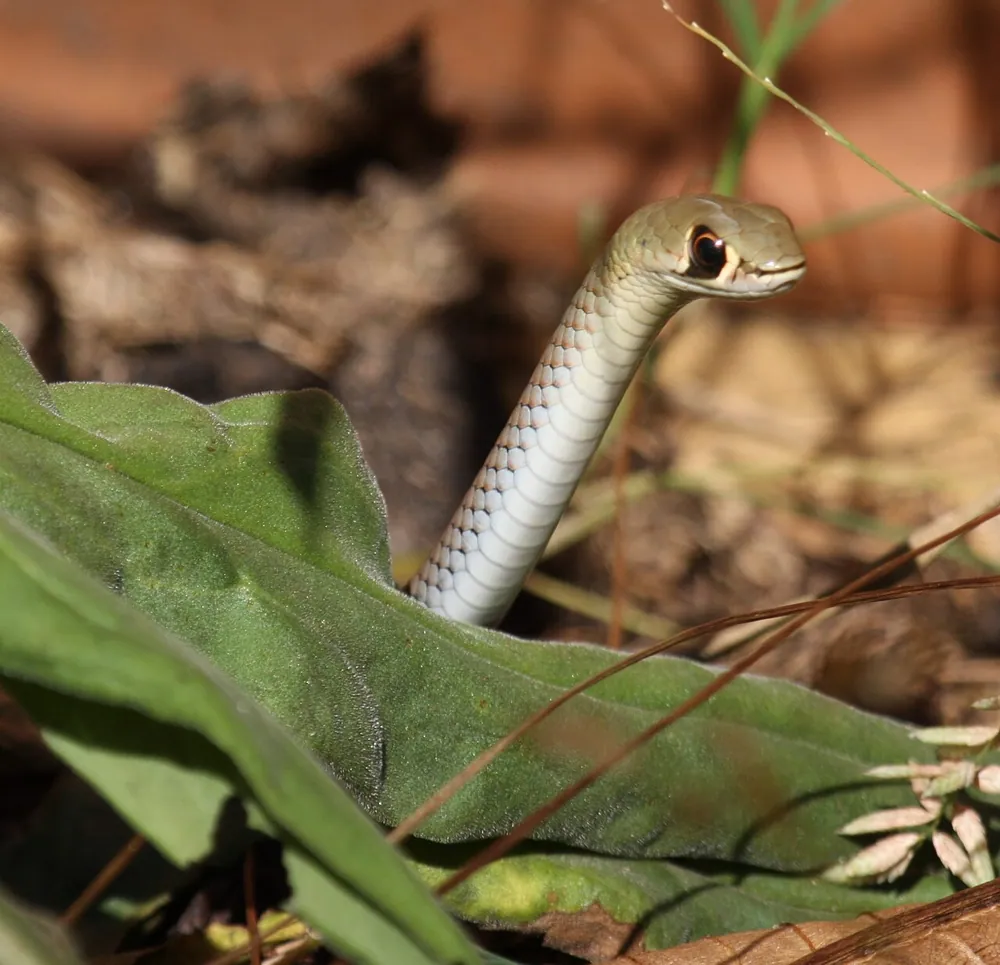
The yellow-faced whip snake is a thin, fast snake with large eyes that lives across most of Australia. It is venomous, but its venom is mainly used on lizards and frogs, and it is not considered dangerous to people. It is one of the most widespread snakes found only in Australia.1



 Cómo reconocerlo
- Has a narrow, yellowish head with a pale ring around each eye1
- A dark marking curves along the upper lip1
- Colour ranges from olive green to grey and brown, often with a red flush along the upper third of the back1
- Has large, prominent eyes, the largest of any Australian snake1
- Young snakes have a white-edged dark line across the snout1
Se confunde a menudo con: It is often confused with the eastern brown snake (Pseudonaja textilis) because the two look similar. Identifying it accurately requires a clear view of the head and counting the dorsal scales at mid-body, which number 15 rows.1
Poder del veneno
El veneno sale por sus colmillos o dientes cuando muerde.
¿Qué hace su veneno?
The venom is toxic and deadly to other reptiles and amphibians, and it slows and eventually kills the prey. The venom is not considered dangerous to humans. Some bites cause systemic symptoms such as paralysis and bleeding, along with localised pain and swelling that can range from moderate to severe.1
¿Qué peligro tiene para las personas?
Peligro para las personas: DolorosoPuede doler de verdad, pero casi nunca es grave.The venom is not considered dangerous to humans, but a bite will be painful. Some bites cause systemic symptoms such as paralysis and bleeding, so medical attention is needed.1
¿Qué hace cuando se asusta?
It is fast-moving and nervous, and it flees quickly when disturbed.1
 Si muerde
- Medical treatment should be sought after any snake bite.1
- Inmovilización con presión: envuelve con una venda elástica firme la mordedura y luego toda la extremidad, ponle una férula y mantén a la persona totalmente quieta hasta que llegue la ayuda.
- No laves la mordedura: en el hospital pueden analizar el veneno que queda en la piel para elegir el antídoto correcto.
Llama siempre primero a tu número de emergencias (112, 000, 911). Esto son pautas generales de primeros auxilios, no consejo médico. Primeros auxilios básicos
 Mantente a salvo
- Nunca toques, atrapes ni molestes a un animal salvaje, aunque sea pequeño y aunque parezca dormido o muerto.
- Déjale espacio. Si te encuentras uno, mantén la calma, retrocede despacio y deja que siga su camino.
- Si te muerde: mantén la calma, no te muevas, llama a tu número de emergencias (112, 000, 911) o ve rápido a un hospital. Recuerda cómo era, una foto ayuda.
No va a por ti. Usa su veneno para cazar o defenderse, y prefiere mil veces esconderse. Más sobre cómo protegerte
¿En qué parte del mundo?
¿Qué tamaño tiene?
¿Cuánto mide?
 mide como 2 gatos domésticos de la nariz a la cola
 mide como 6 plátanos puestos en fila
 podría recorrer 100 metros en 55 segundos (el humano más rápido necesita 9,6)
¿Qué tamaño tiene Yellow-faced whip snake comparado contigo?
Solo cálculos en tu navegador. No se guarda ni se envía nada a ningún sitio.
¿Qué velocidad alcanza?


Datos
It has the largest eyes of any Australian snake, which helps it hunt successfully during the day.1
Snakes often gather in communities, and some communal nests contain 500 to 600 eggs.1
Young snakes often constrict their prey, but adults rarely do so and usually use venom instead.1
Although it is mainly active by day, it also forages at night for nocturnal prey such as geckos and frogs.1
In winter it slows down through brumation and moves mainly to find sun and water.1
Cazamitos
Mito: The yellow-faced whip snake is a dangerous snake to people because it is venomous.
Verdad: Its venom is deadly to lizards, frogs and other reptiles, but it is not considered dangerous to humans. Its bites are still painful and medical care should be sought.1
Para expertos en veneno
- Nombre científico
- Demansia psammophis
- Grupo
- Serpientes australianas
- Familia
- Elapidae2
- Orden
- Squamata
- Continentes
- Australia y Oceanía
- Crías
- It lays eggs in clutches of 5 to 6 or 15 to 20, and some communal nests hold 500 to 600 eggs. Hatchlings measure about 17 cm snout to vent.1
- Cómo le va en la naturaleza
- Least concern (IUCN Red List); near-threatened in Victoria1
- Peligro para las personas
- 2 / 5: Doloroso3
De dónde salen los datos
- Yellow-faced whipsnake (Wikipedia (CC BY-SA 4.0))
- Demansia psammophis (iNaturalist): nombres y clasificación.
- Venom Wiki: el nivel de peligro, el tamaño típico y la velocidad estimada son nuestros. Mira cómo los calculamos: Cómo valoramos el peligro.
Cada dato de esta página tiene un número que lleva a su fuente. Si nos hemos equivocado en algo, perdón, somos fans de los animales, no una revista científica. Escríbenos a [email protected] y lo arreglamos.
 ¡El escorpión tiene hambre! Venom Wiki es un proyecto de una sola persona: gratis, sin anuncios y sin rastreadores. Una pequeña propina ayuda a mantenerlo en línea.Alimenta al escorpión
Más del mismo grupo: Serpientes australianas
 Taipán costero
 Víbora de la muerte común
 Serpiente marrón oriental
 Taipán del interior
 Serpiente tigre
 Collett's snake
También vive en: Australia y Oceanía
 Araña de tela en embudo de SídneyTarántulas y arañas de tela en embudoMortal
 Redback spiderArañasNecesita médico
 Brown tree snakeSerpientes de colmillos traserosSolo duele
 Hooded pitohuiOtros animales tóxicosSolo dueleNo tocar
 PlatypusMamíferos venenososSolo duele
 Northern tree-dwelling funnel-web spiderTarántulas y arañas de tela en embudoMortal