
 Afrika
 Asia
Asia Europa
 Hego Amerika
 Australia eta Ozeania
 Antartika
 Ozeano Barea
 Ozeano Atlantikoa
 Ozeano Indikoa
 Ozeano Artikoa
 Mediterraneo itsasoa
 Itsaso Gorria
 Karibe itsasoa
 Koralen itsasoa
 Hego Txinako itsasoa
 Filipinetako itsasoa
 Andaman itsasoa
 Ipar itsasoa
 Timor eta Arafura itsasoak
 Bengalako golkoa
 Kaliforniako golkoa
Ashe's spitting cobra
 Botatzen du edo tu egiten du
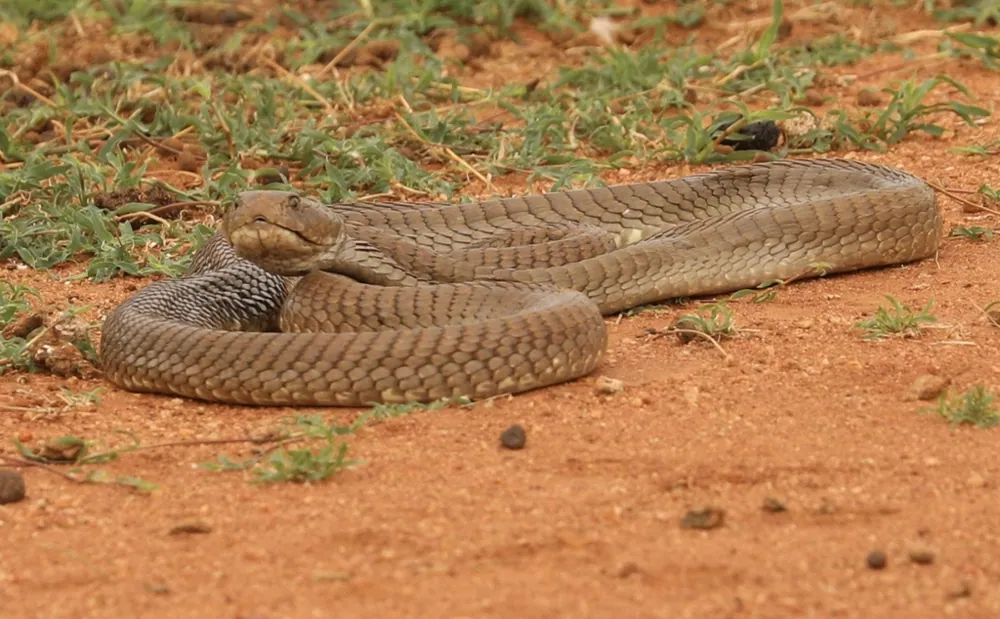
Ashe's spitting cobra is a large venomous snake from eastern and northeastern Africa. It is the largest of all the spitting cobras, and it can spray venom from a distance as well as bite. Its venom can cause blindness if it gets into the eyes and not treated at once.1
 Nola ezagutu
- Very heavily built, with a big head1
- Colour ranges from light grey and pale mustard to dark brown1
- Pale along the belly, sometimes with slight speckling or blotches1
- A dark brown band across the throat1
- Average length about 1.3 to 2.0 m including the tail, making it the largest spitting cobra1
Askotan honekin nahasten da: It was once thought to be a brown form of the black-necked spitting cobra. It was classed as a separate species in 2007.1
Pozoi-ahalmena
Likido mingarri bat botatzen edo tu egiten die erasotzaileei.
Zer egiten du bere pozoiak?
Its venom is neurotoxic, meaning it attacks the nerves, and cytotoxic, meaning it destroys cells. It is very similar to the venom of other spitting cobras, but it can inject a much larger volume in one bite. Its venom also causes strong tissue death around a wound.1
Zein arriskutsua da pertsonentzat?
Arriskua pertsonentzat: Oso arriskutsuaTratamendurik jasotzen ez duen pertsona bat hil dezake.The venom has low whole-body toxicity, so survival is very likely with proper treatment. Survivors may be left disfigured by tissue damage. If venom gets into the eyes and is not treated immediately, blindness is likely. Even with antivenom, amputation may be needed after a full dose from a large specimen.1
 Albiste ona: medikuek badute sendagai bat (antipozoia) edo tratamendu bat honetarako.1
Zer egiten du beldurtzen denean?
It is very defensive and does not hesitate to spit when it feels cornered. It can keep spitting for hours without running out of venom straight away.1
 Kosk egiten badu edo tu egiten badu
- If venom gets into the eyes, rinse them straight away with water or another bland liquid, as delay can cause permanent blindness. Whether the person has been bitten or spat at, they should see a doctor as soon as possible. Treatment is the appropriate antivenom, SAVP polyvalent from South African Vaccine Producers, and the dose may need to be higher than for the average black-necked spitting cobra bite.1
- Eutsi pertsona geldi eta lasai, kendu eraztunak eta gauza estuak, eta joan ospitalera azkar: antipozoia da tratamendua.
- Pozoia begietara tu egin badu, garbitu begiak berehala ur garbi askorekin.
Deitu beti lehenik zure larrialdi-zenbakira (112, 000, 911). Lehen sorospenei buruzko orientabide orokorra da hau, ez mediku-aholkua. Lehen sorospenen oinarriak
 Egon seguru
- Ez ukitu, ez harrapatu eta ez zirikatu inoiz animalia basati bat, txikia izan arren, eta lo edo hilda dagoela badirudi ere.
- Utzi tartea. Bat aurkitzen baduzu, egon lasai, egin atzera poliki eta utzi bere bidetik joaten.
- Batek kosk egiten badizu edo pozoia begietara tu egiten badizu: egon lasai, egon geldi, deitu zure larrialdi-zenbakira (112, 000, 911) edo joan ospitalera azkar. Gogoratu nolakoa zen, argazki batek laguntzen du.
Ez dabil zure atzetik. Pozoia janaria harrapatzeko edo bere burua babesteko erabiltzen du, eta askoz nahiago du ezkutatu. Seguru egoteari buruz gehiago
Munduko zein tokitan?
Zein handia da?
Zein luzea da?
 2,5 txakur muturretik buztanera jarrita bezain luzea
 15 banana bata bestearen atzetik jarrita bezain luzea
 100 metro 41 segundotan egin litzake (gizakirik azkarrenak 9,6 behar ditu)
Zein handia da Ashe's spitting cobra ZUREKIN alderatuta?
Matematika hutsa zure nabigatzailean. Ez da ezer gordetzen, ezta inora bidaltzen ere.
Zein azkarra da?


Datuak
It is the world's largest species of spitting cobra.1
It can spit venom in large amounts for hours.1
The largest specimen recorded, caught in Kenya, measured 270 cm in total length.1
One milked specimen at the Bio-Ken Snake Farm in 2004 produced a wet venom yield of 6.2 ml.1
It is most closely related to the Mozambique spitting cobra.1
Mito-hauslea
Mitoa: It is just a brown form of the black-necked spitting cobra.
Egia: It was classed as a separate species in 2007, after experts recognised its differences from other spitting cobras.1
Datuak nondik datozen
- Naja ashei (Wikipedia (CC BY-SA 4.0))
- Naja ashei (iNaturalist): izenak eta sailkapena.
- Venom Wiki: arrisku-maila, ohiko tamaina eta abiadura-kalkulua geureak dira. Ikusi nola kalkulatzen ditugun: Nola baloratzen dugun arriskua.
Orrialde honetako datu bakoitzak zenbaki bat du, bere iturrira eramaten zaituena. Zerbait gaizki badugu, barkatu, animalien zaleak gara, ez zientzia-aldizkari bat. Esaiguzu [email protected] helbidean eta konponduko dugu.
 Eskorpioia gose da! Venom Wiki pertsona bakar baten proiektua da: doakoa, iragarkirik eta jarraitzailerik gabe. Eskupeko txiki batek sarean mantentzen laguntzen du.Elikatu eskorpioia
 Black mamba
 Egyptian cobra
 Cape cobra
 Eastern green mamba
 Jameson's mamba
 Western green mamba
 Deathstalker
 Puff adder
 Boomslang
 Fat-tailed scorpion
 Gaboon viper
 Western honey bee